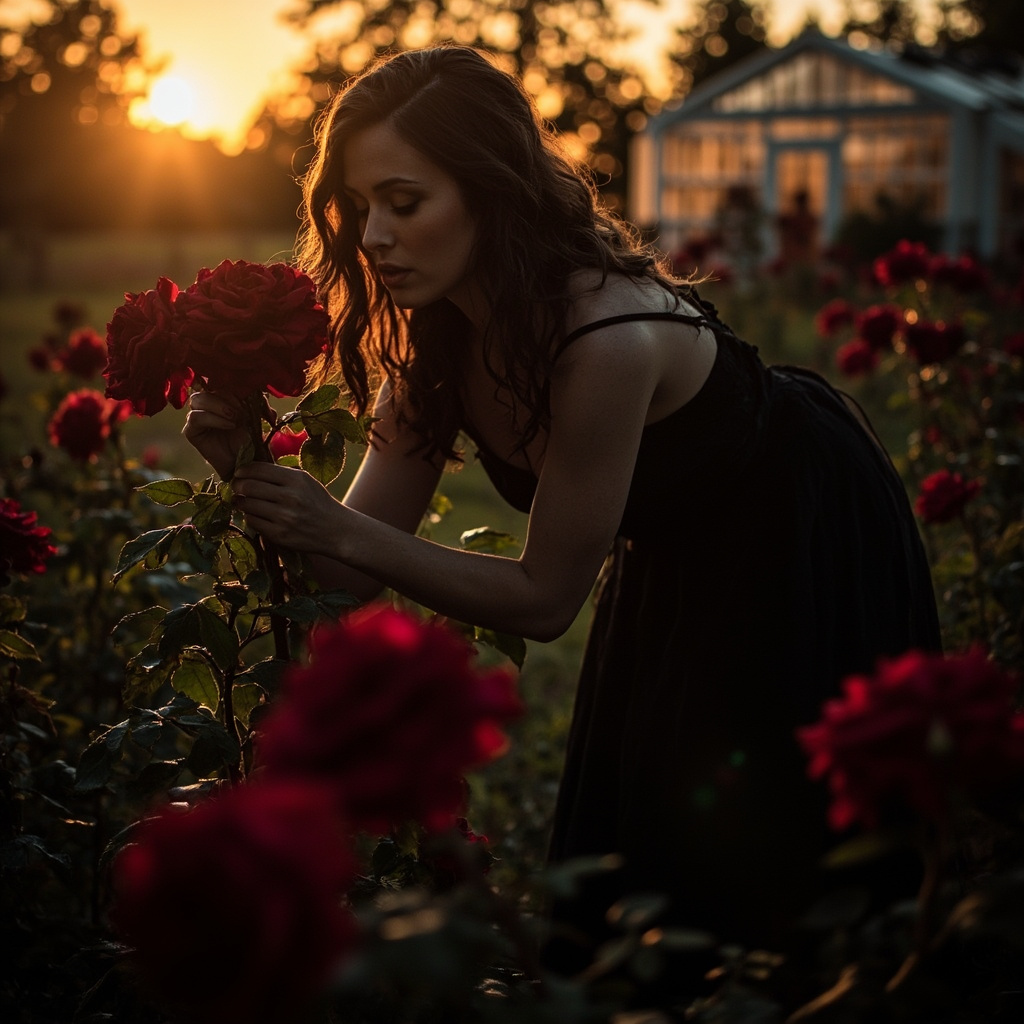
The Roses She Grows
Clara grew roses in the garden behind her house. She had been growing them for twenty years, ever since her mother had died and left her the garden and the house and the feeling that she needed to do something with her hands that would occupy her mind. The roses were not ordinary roses. Her mother had been a horticulturist, and the roses she had bred over her lifetime were a hybrid that Clara had never been able to find anywhere else, a deep red that seemed to darken when the light changed and that smelled like nothing else she had ever encountered in forty years of growing things.
The man who came to look at the roses was not the first person who had come to see them. Clara had been written about in gardening magazines, had been featured on a local news segment about unusual hobbies, had become, without quite intending to, a minor destination for people who were interested in unusual roses. The man said his name was David and that he had read the magazine article and had driven four hours to see the garden. Clara believed him, because people had done stranger things for the roses, and because she had learned that the kind of person who grew obsessed with a specific flower was a particular type, and David fit the type exactly.
He stayed for three hours. He walked around the garden twice, examining the roses with a focus that Clara found simultaneously flattering and unsettling. He asked questions about the breeding program, about the specific characteristics of each variety, about the history of the original cross that her mother had made forty years earlier. Clara answered all of his questions, because she liked talking about roses to people who asked good questions, and because she could see that David was genuinely interested in a way that went beyond casual enthusiasm.
At the end of the visit, David asked if he could buy a cutting from the original plant. Clara said no. She did not give cuttings from that plant, not to anyone, because that plant was her mother’s legacy and she could not bear the thought of it being propagated by someone who might not care for it the way it deserved to be cared for. David accepted this answer without argument. He thanked her for her time and drove back to wherever he had come from, and Clara thought that would be the end of it.
He came back the next weekend. And the weekend after that. Each time he stayed longer, asked more questions, seemed more invested in the garden and in the roses and, Clara began to suspect, in her. She was not interested in being interested in anyone. She was sixty years old and she had been alone since her husband died, and she had made a life that did not include the kind of attention that David seemed to be paying her. But she let him come anyway, because the roses were happy when there were visitors, and because she was lonely in a way that she had stopped acknowledging, and because sometimes it was easier to let someone in than to explain why you wanted them to stay out.
The last time David came, he brought a proposal. Not a marriage proposal—he was too intelligent for that, too aware of the distance between them for that. He proposed a collaboration: he would fund a proper documentation of the roses, a proper breeding program, a proper preservation of what Clara’s mother had created. In exchange, he would receive a stake in the program, a share of whatever came from it, a place in the history that Clara had been too busy maintaining to properly document.
Clara said she would think about it. She thought about it for three days, and on the fourth day she called him and said yes, and on the fifth day he came back and they shook hands on the deal, and that was the beginning of the rest of her life, though she did not know that yet. She knew only that the roses were flowering earlier than they had in years, and that David was smiling in a way that suggested he had gotten exactly what he wanted, and that she was feeling something that she had forgotten the name of, and that she was not sure yet whether it was a good thing or not.