The Map She Finished
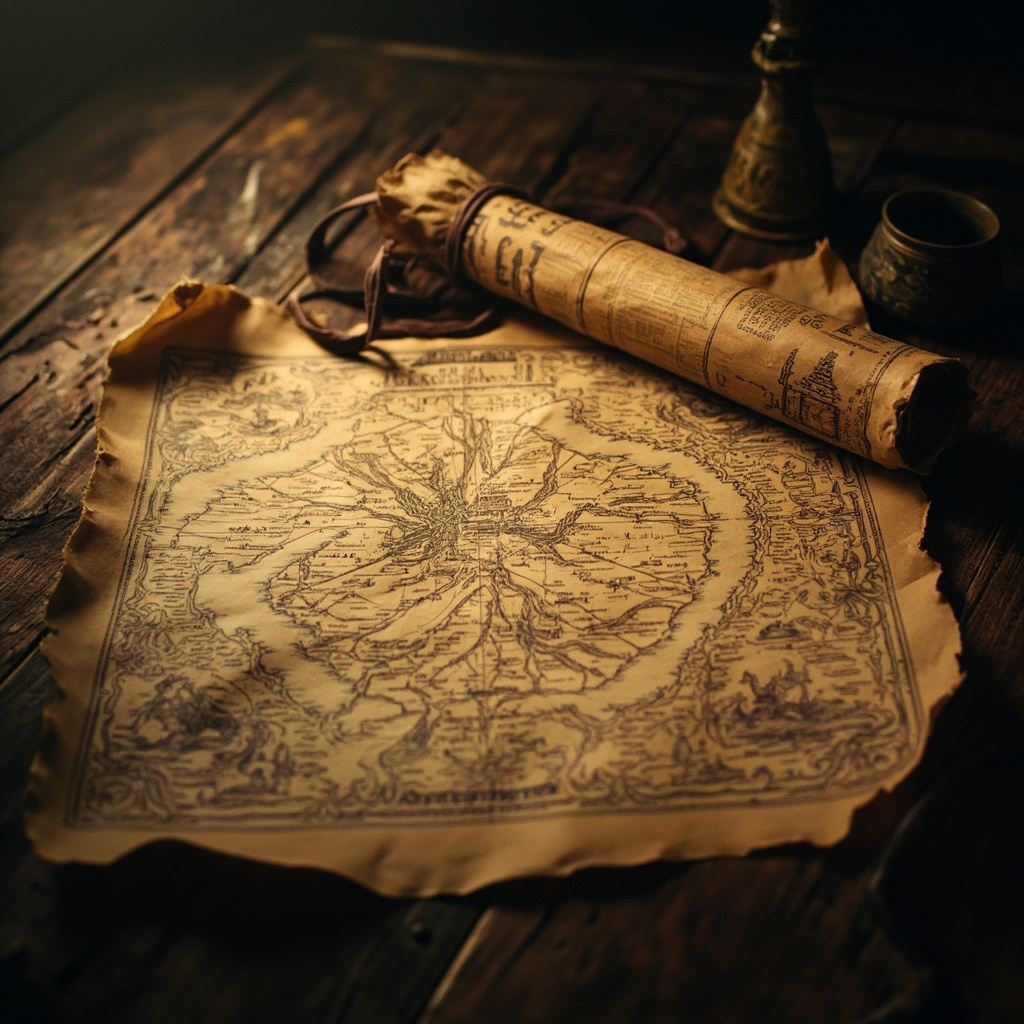
Elena had been working on the map for eleven years. She did not remember starting it—the beginning had been lost in the years before she was old enough to understand what she was doing—but she knew that it had always been there, rolled up in the back of her closet, waiting for her to return to it. She would work on it for a few months and then set it aside and forget about it for a year or two, and then something would remind her and she would take it out again and continue from where she had left off. The map grew slowly, the way a living thing grows, in increments that were not always visible from day to day but that accumulated over time into something that was, finally, almost complete.
The map was of a place that did not exist. Or rather, it was of a place that did not exist anymore, or that had never existed in the form that she was drawing it, or that existed only in the space between what had been and what could have been. She did not know which of these descriptions was accurate. She knew only that the map felt true when she looked at it, true in a way that no other map had ever felt to her, and that the place it depicted was a place that she needed to see completed before she could move on to whatever came next.
The map was made on paper that she had bought from a specialty supplier, paper that was designed to accept ink without bleeding, paper that would last for centuries if it was properly cared for. She used pens that she had ordered from a company in Japan, pens that were designed for technical drawing and that gave her lines that were precise to a fraction of a millimeter. She worked on the map in the evenings, after her job and after dinner and after the rituals of daily life that occupied most of her hours. She worked on it slowly and carefully, because the map deserved that kind of attention, because rushing would have been a kind of disrespect to the place it represented.
When she finished, she rolled it up and put it in a tube and addressed it to a post office box that she had rented for this purpose. She had known, for years, that the map needed to go somewhere after it was finished, that it could not stay with her, that its purpose was not to be possessed but to be delivered. She did not know who would receive it or what they would do with it. She knew only that the map had always known where it was going, and that her job was simply to finish it and let it go.
The post office was crowded that day, and the line was long, and by the time she reached the counter the clerk had already been working for eight hours and was not interested in the tube that Elena was trying to mail to a place that did not appear to exist in any database that the postal system recognized. The clerk asked questions. Elena did not have good answers. The clerk eventually accepted the package, with a look that suggested she was humoring a difficult customer, and Elena walked out of the post office without the map and without the weight that she had been carrying for eleven years.
She did not know if the map would arrive at its destination. She did not know if the destination existed. She knew only that she had finished something that had needed to be finished, and that the finishing of it had been the point all along, and that whatever happened next would happen without her, the way things happen when they are ready to happen and the people who have been holding them are finally ready to let them go.