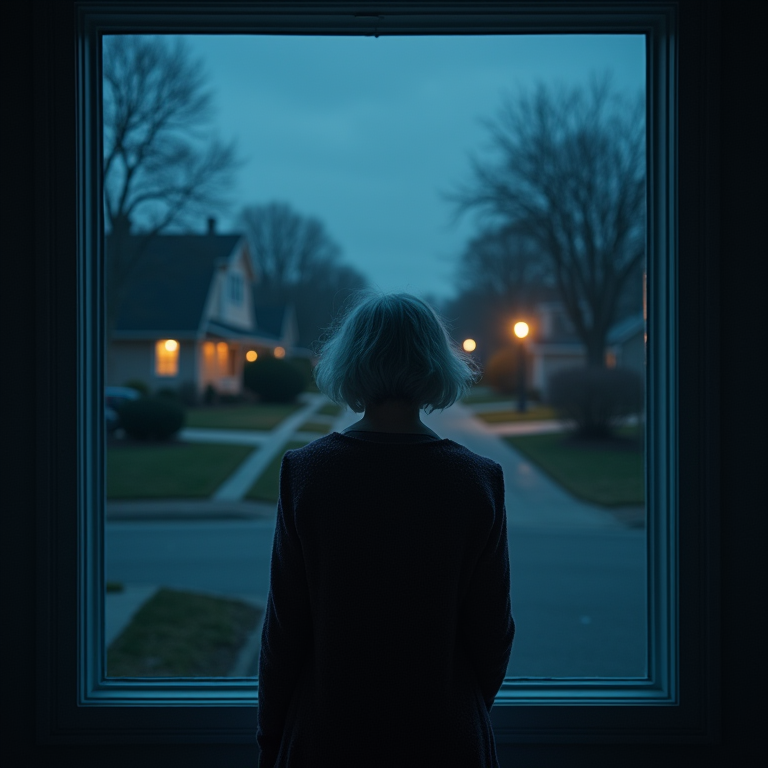
The Neighbors Who Moved In Without Boxes
The moving truck came at 4 AM on a Tuesday, which was the first unusual thing, because moving trucks do not usually arrive in the middle of the night, and because the neighbors on Crescent Drive had always been people who followed the rules, people who parked in their own driveway and not on the street and who cut their grass on Saturdays and who had never, in the fourteen years Margaret had lived at number 47, done anything that required的解释。
Margaret woke to the sound of the truck. She looked at the clock: 4:07 AM. She went to the window. The truck was a large white truck, the kind that moving companies use, and it was backed into the driveway of number 45, which had been empty for three months, since the Hendersons moved to Arizona. The Hendersons had been good neighbors. They had brought her soup when she had the flu in 2019. They had collected her mail when she was in the hospital in 2021. They had been the kind of neighbors that neighborhoods used to have, before the neighborhoods changed, and before the people who moved in were people you did not recognize and could not predict.
The people who got out of the truck were not people she recognized. There were four of them: two adults and two children, or what appeared to be two adults and what appeared to be two children, but Margaret had learned, in her sixty-two years, that what appears to be something is not always that something, and that the appearing is a form of deception that is more common than people think, and that the thinking is what she did, standing at the window, at 4 AM, watching the people at number 45 unload boxes from a truck that had come in the night, as if they did not want to be seen arriving, as if the arriving was something to be done in the dark, when the street was empty and the only person watching was an old woman who could not sleep.
The boxes were the second unusual thing. The people unloaded the boxes from the truck and they carried them into the house and they did not open them to check their contents and they did not stack them neatly in the garage or in the front yard, as people normally do when they move, and they did not label them, as people normally do, with the names of the rooms they belonged in. They carried the boxes directly into the house and they closed the door behind them and they did not come back out. Margaret watched for another hour. The truck left at 5:15 AM. The house at number 45 was dark. No lights came on. No curtains were opened. The house looked, in the early morning light, exactly as it had looked for the three months it had been empty, which was to say that it looked like a house that was waiting for something, or like a house that had decided not to be noticed, and which the noticing was what Margaret had been doing, at the window, at 4 AM, and which the doing was what she could not stop, even after the truck left, even after the sky began to lighten, even after she made her coffee and sat at the kitchen table and tried to read the newspaper and could not, because the seeing of the boxes was what she could not stop thinking about, and because the boxes had been the wrong size, and the wrong shape, and the wrong weight for what boxes normally are.
The boxes had been too small. They had been the size of shoeboxes, or of small books, or of the kinds of things that people keep in drawers, and not the size of the things that people normally pack when they move, which are the things that fill kitchens and bedrooms and living rooms, and which are the things that require large boxes and many trips and several hours of unloading, and which are not things that four people can carry in a single night, in the dark, without stopping, without speaking, without any of the sounds that moving normally makes, which are the sounds of people talking and laughing and arguing about where to put the couch, and which were sounds that Margaret had heard, from every house on the street, on every moving day she could remember, and which were not the sounds that had come from number 45, on the Tuesday at 4 AM, when the truck had come and the people had unloaded the boxes and had closed the door and had not come back out, and which the not coming out was what she reported to the police, later that morning, and which the police said was not a crime, and which the not crime was what she accepted, because the police were right, and because the acceptance was what she gave them, and which the giving was what she did, and which the doing was what she lived with, in the days that followed, which were days in which she watched number 45 from her window and saw no one and heard nothing and which the nothing was what made the nothing unusual, and which the unusual was what she knew, in the way that neighbors know things about neighbors, which is not through observation but through the feeling of a street, and which the feeling of Crescent Drive had changed, on the Tuesday at 4 AM, when the truck had come, and which the change was what she could not name, and which the naming was what she did not do, to the police, because the police would not have understood, and because the understanding would have required a vocabulary for the feeling of a street, and which the vocabulary does not exist, in the language that police speak, or in any language, and which the not existing was what made the feeling hard to report, and which the hard to report was what she lived with, on Crescent Drive, in the weeks after the moving truck came at 4 AM, and in which she watched number 45 and saw, every evening, at approximately 7 PM, a single light come on in a room on the second floor, and which the single light was on for approximately twenty minutes, and which it went off at 7:20 PM, every evening, and which the every evening was what made it a pattern, and which the pattern was what she had learned to watch for, in the neighbors, in the fourteen years she had lived at number 47, and which the watching was what she did, every evening, at 7 PM, from her window, and which the seeing of the light was what she reported to the police, again, three weeks after the moving night, and which the police said was not evidence of a crime, and which the police were right, and which the rightness was what she accepted, and which the accepting was what she did, and which the doing was what she was doing, every evening, at 7 PM, watching the light come on at number 45, and watching it go off at 7:20, and knowing, in the way that she knew things about neighbors, which was not a way that could be explained, and which the not explaining was what made it knowledge, and which the knowledge was what she had about number 45, and which the about was that the people in it were not people who should be there, and which the not there was what the light knew, and what the light was showing, every evening, at 7 PM, for twenty minutes, before it went off, and before the darkness came back to number 45, and before the darkness was what lived there, now, in the house where the Hendersons had been, before they went to Arizona, before the truck came at 4 AM, before the boxes that were too small, before the people who were not people, in the way that neighbors are people, which was what they were not, and which the not being was what the light was for, and which the for was what she could not stop watching, every evening, at 7 PM, from her window, at number 47, on Crescent Drive, where she had lived for fourteen years, and where she would continue to live, because the leaving was not what she did, and which the not leaving was what the neighbors knew about her, and which the knowing was what made her the kind of neighbor who watches, and who reports, and who knows things that cannot be named, and which the things are what she watches, every evening, at 7 PM, at number 45, where the light comes on, and where the light goes off, and where the darkness is what lives there now.