The Testimony She Gave
The shooting happened at a gas station on the edge of town, at eleven forty-five on a Tuesday night. A man came in, bought a pack of cigarettes, paid in cash, and left. Thirty seconds later, the clerk—a seventeen-year-old named Marcus who was working his first job—heard the sound of gunfire from somewhere behind the station. He went to the window. He saw a man running across the parking lot, and he saw a body on the ground, and he saw, in the instant before the running man disappeared into the darkness, the man’s face.
Marcus called 911. The police arrived in seven minutes. The body on the ground was identified as a local businessman named Thomas Reed, who had been shot twice in the chest. He was pronounced dead at the scene. The shooter was not found that night, or the next day, or the day after that. The investigation proceeded through the usual channels—interviews, forensic analysis, the grinding process that was supposed to eventually produce a suspect. And then, three weeks after the shooting, a detective named Sarah Chen called Marcus and asked him to come to the police station to look at some photographs.
Marcus went to the station on a Saturday afternoon. He sat in a room with Detective Chen and looked at a line of photographs—six men, all approximately the same age, all approximately the same build, none of whom Marcus recognized. He studied the photographs for as long as he was asked to, trying to find the face he had seen running across the parking lot. He could not find it. The face he had seen was not in the array.
Chen showed him another array. Then another. Then a third. After the fourth array, Marcus said he was tired and could not be certain of any identification. Chen thanked him for coming in and drove him home.
Three weeks later, Chen called again. She had another array. Could Marcus come in? Marcus said yes, because he was a cooperative witness and because he wanted the person who had killed Thomas Reed to be caught. He sat in the same room, looked at the same kind of photographs, and this time he saw the face. He was certain. He told Chen he was certain. Chen had him sign a statement.
The man’s name was Robert Hale. He was arrested the following Tuesday. He pleaded not guilty. His lawyer began preparing a defense.
The problem was that Marcus had identified Robert Hale, but Marcus had also been the witness who could not identify the shooter in the first four arrays. His failure to identify Hale in the earlier arrays, followed by his successful identification in the fifth, was exactly the kind of inconsistency that defense lawyers were trained to exploit. The lawyer—experienced, expensive, hired by a family that clearly had resources—attacked Marcus’s identification in the pre-trial hearings. He argued that the arrays had been improperly conducted, that Marcus had been exposed to media coverage of the case before his eventual identification, that the identification was unreliable and should not be presented to a jury.
The judge allowed the identification to be presented. But the judge’s ruling came with a warning: the prosecution’s case rested heavily on Marcus’s testimony, and if the defense could demonstrate that the identification was compromised, the case would collapse.
Chen spoke to Marcus before the trial. She told him that the defense would try to make him look uncertain, inconsistent, suggestible. She told him to be honest about the parts of his memory that were unclear and firm about the parts that were clear. She told him that the truth was on his side, and that a jury would believe a witness who was honest about his limitations.
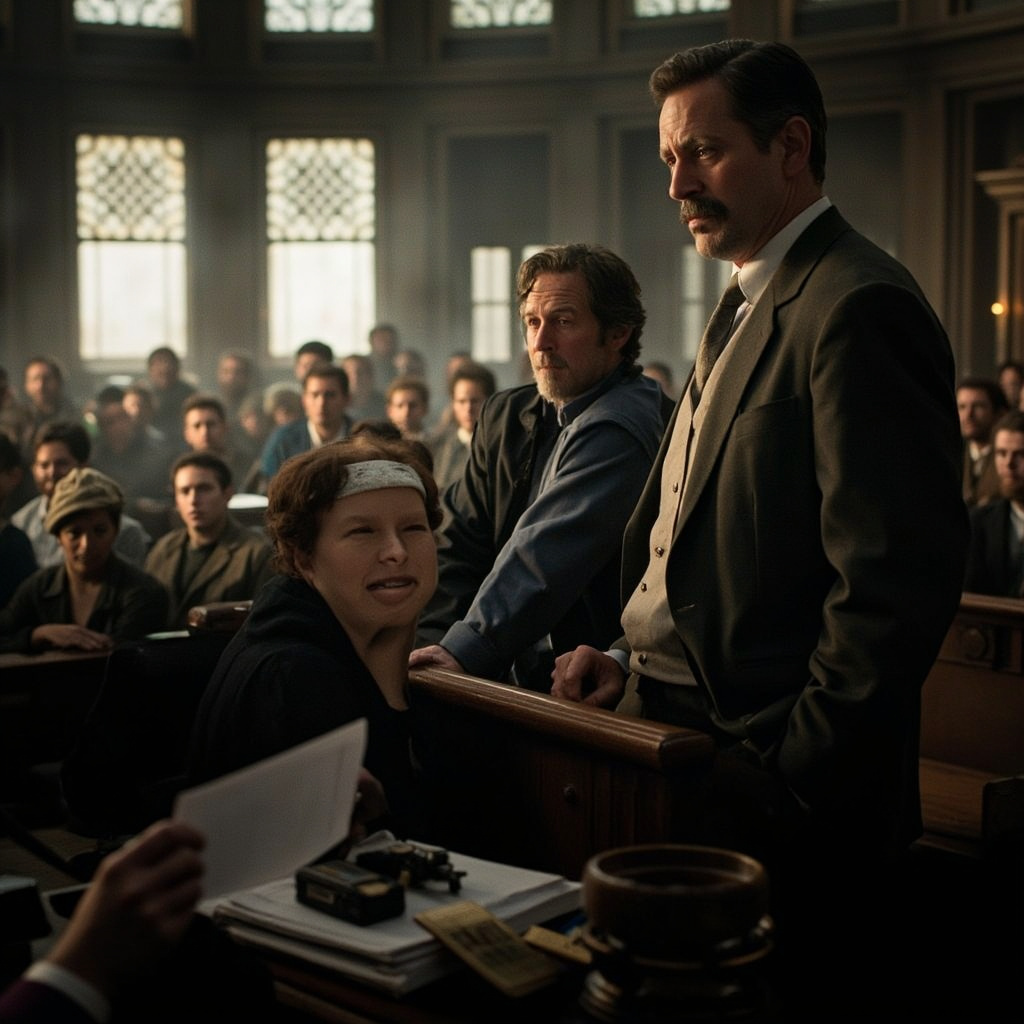
The trial lasted three weeks. Marcus testified for two days. The defense lawyer did exactly what Chen had predicted: he attacked Marcus’s identification, pointing out the inconsistencies, emphasizing the four arrays where Marcus had failed to identify Hale, implying that Marcus had been pressured or coached into his eventual identification. Marcus answered every question honestly. He acknowledged that he had not been certain in the first four arrays. He acknowledged that he had seen the shooter for only a few seconds. He acknowledged that he had been tired and stressed on the night of the shooting and that his memory of the face might be imperfect.
But he also testified that he was certain of the identification he had eventually made. He told the jury that he had not been coached, had not been pressured, had not been told by anyone what he should say. He told them that when he saw Hale’s photograph in the fifth array, he had known, with a certainty that he could not explain but that he did not doubt, that this was the face he had seen running across the parking lot on the night Thomas Reed was killed.
The jury deliberated for four days. They found Robert Hale guilty of first-degree murder. As the verdict was read, Marcus sat in the courtroom and felt something he had not expected to feel: relief, and something that was almost like satisfaction. He had done what he was supposed to do. He had told the truth. And the system had worked, at least this once.
Marcus moved away after the trial. He transferred to a college in another state, changed his phone number, and did not give his new contact information to anyone from his old life. He did this because the threats had started before the trial ended—calls to his phone, messages left on social media, a brick thrown through his apartment window three days before he was supposed to testify. The people who were making the threats were not identified. Chen told him that they were likely associates of Hale’s, not the Hale family itself, but that it did not matter who was making them. The threats were real, and they had changed the way Marcus thought about what it meant to be a witness in a criminal case.
He finished college. He got a job. He built a life that was different from the one he had imagined before the shooting, but that was his, and that was safe. He did not talk about what had happened. He did not seek attention or recognition. He was, in the way that most people are who have been involved in significant events, simply someone who had lived through something and who had continued to live.
The system had worked, for him. He had been a witness, and he had testified, and the person he had identified had been convicted. But he had also learned that the system required citizens to bear costs that the system did not fully compensate. Being a witness was not free. It carried risks that the state did not fully protect against. The satisfaction of having done the right thing was mixed with the knowledge that the right thing had required sacrifices that should not have been necessary.