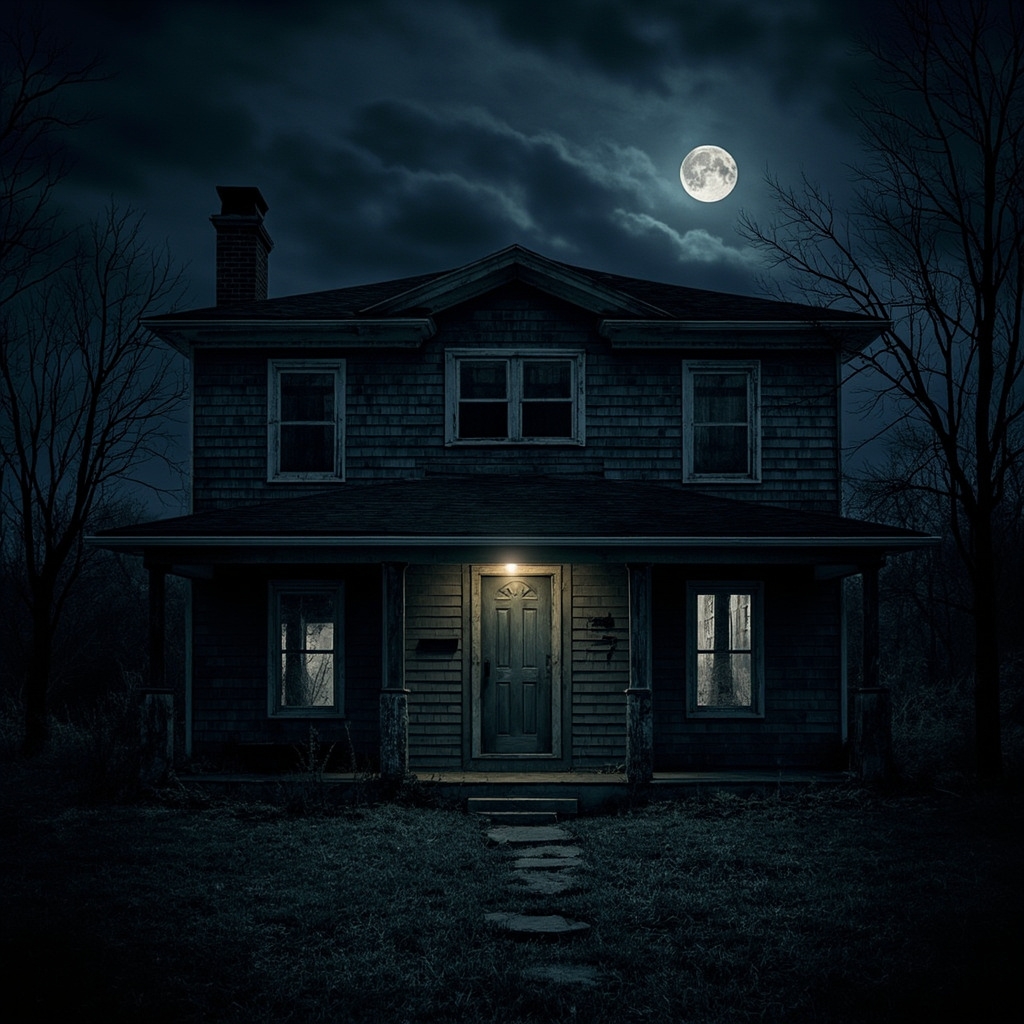
The House That Whispered Back
The real estate listing described it as a “handyman’s special.” This was real estate language for a house that was worse than it looked in the photographs, or that looked worse than it was because the seller knew that buyers who saw the full extent of what needed to be done would run away. Marcus had not run away. He had looked at the price, had calculated what he could afford to spend on repairs, had convinced himself that he could handle a renovation project if he was careful with the budget and realistic about his own abilities.
The house was a two-bedroom bungalow on a street that had been built in the 1920s and had spent the intervening decades declining in increments—declining the way that all things decline when they are not maintained, when the people who live in them are too poor or too tired or too indifferent to keep them going. Marcus was not indifferent. He was twenty-nine and he had saved enough for a down payment and he was ready to put his energy into something that would be his.
The inspection, which he paid for because that was what first-time buyers did, revealed issues that the listing had not mentioned. The foundation needed work. The electrical system was dangerously outdated. The plumbing was a patchwork of different materials that had been added over the years by people who did not know what they were doing. Marcus read the inspection report three times. Then he signed the purchase agreement anyway, because he had already fallen in love with the house, with its porch and its yard and the way the light came through the windows in the afternoon.
Marcus moved in on a Saturday. He slept on an air mattress because the furniture had not arrived yet, in the bedroom that would eventually be the master bedroom, in the house that was now his. He could not sleep. This was not unusual—he had not slept well since the closing, the stress of the purchase and the awareness that he had just committed thirty years of his life to a mortgage weighing on him every time he closed his eyes.
But it was not stress that was keeping him awake. It was the sound. A sound that he could hear beneath the silence of the house, beneath the usual creaking and settling that old houses made. A sound that was almost like breathing, or like the sound that air makes when it moves through a space that is not quite closed. He lay on the air mattress and listened to the sound and tried to tell himself that it was the wind, that it was the plumbing, that it was anything other than what it seemed to be.
The sound continued until approximately three in the morning. Then it stopped, and Marcus slept.
Marcus spent the next week investigating the sound. He searched the house for sources—vents and ducts and any gaps where air might be entering the living space from outside. He found nothing that could explain what he was hearing. He asked the neighbors, who had lived on the street for varying lengths of time. None of them had heard the sound. None of them wanted to talk about the house, which Marcus had thought was a coincidence but which he began, as the days went by, to suspect was something else.
The previous owner of the house had been a woman named Eleanor, who had died at the age of eighty-seven, in the house, of natural causes. The neighbors confirmed this with the kind of matter-of-fact tone that suggested they had had this conversation before, with other buyers, who had asked the same questions. The house had a history. The neighbors were aware of it. They were not willing to discuss it in detail, except to say that it was an old house and that old houses sometimes held onto things that newer houses did not.
Marcus found Eleanor’s obituary in the local newspaper archives. She had lived in the house for sixty-two years. She had been a schoolteacher. She had no surviving family, according to the obituary, which described her as “a beloved member of the community who will be remembered for her dedication to her students and her love of her home.” The obituary did not mention how she had died, or where she had been buried, or whether there was anything unusual about her time in the house.
The discovery happened by accident. Marcus was in the attic, checking the insulation—his latest project in the ongoing renovation—when he found a box that had been hidden behind a beam, in a corner of the attic that was not accessible from the main storage area. The box contained papers: letters, mostly, written by Eleanor to someone named Thomas, and by Thomas to Eleanor. The letters had been written over a period of fifty years, from 1948 to 1998. They had been hidden, not discarded, which suggested that they were not meant to be found.
Marcus read the letters. He read them over two nights, in the living room, while the sound that he had been hearing continued in the bedroom behind him. The letters told a story that was both ordinary and devastating. Eleanor and Thomas had been in love. They had planned to marry. Thomas had gone to war in Korea and had not come back. Eleanor had continued to live in the house they had planned to share together. She had never married. She had spent sixty-two years in the house, in the room that had been meant for their family, alone.
The letters were full of her love for him and her grief at losing him. They were full of the details of the life she had lived without him—the students she had taught, the garden she had planted, the years that had accumulated around her like sediment. They were full of her sense that Thomas was still present, in some way that she could not explain but that she had never doubted.
Marcus did not finish the renovation. He had intended to stay for years, to put the work in, to make the house what he had dreamed it could be. But the sound continued, and the letters sat on his coffee table, and every night when he lay down to sleep he could feel Eleanor’s presence in the house—the same presence that she had felt for sixty-two years, the presence of a love that had not ended when Thomas went to war and did not come back.
He sold the house after eight months, at a loss. The buyers were a young couple who were not afraid of renovation projects and who did not ask about the sound. Marcus did not tell them about the sound. He did not tell them about the letters in the attic. He simply handed over the keys and walked away, into a different life, in a different house, in a neighborhood where the houses were newer and held no one else’s memories.
The sound continued after Marcus left. The new owners, according to what he heard later, stopped noticing it after a few months. They got used to it, the way Eleanor had got used to it, the way people get used to the presence of the people they love who have gone away. The sound was not frightening, in the end. It was just the sound of a house that remembered what had happened in it, and that continued to hold the shape of that memory long after the people who had made it were gone.