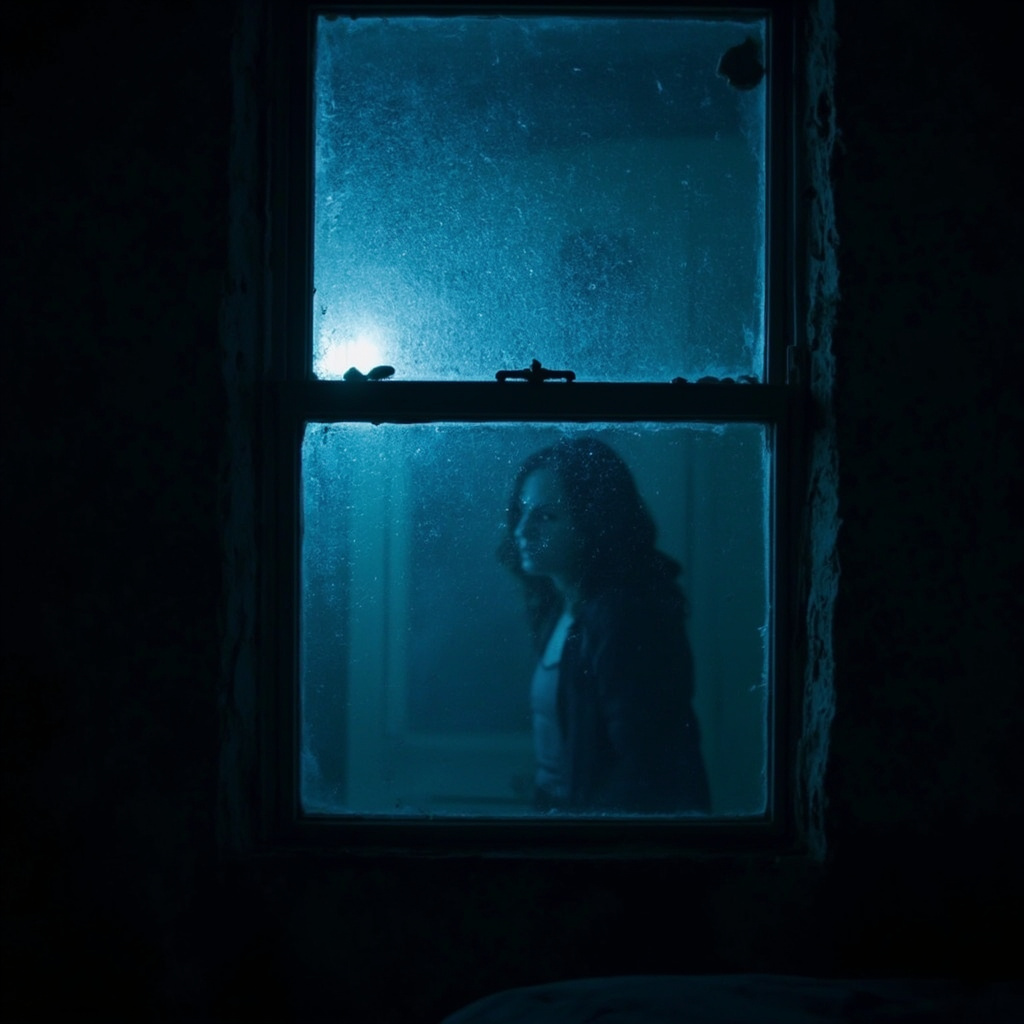
The Window That Faced North
Rent in the city had become impossible, so when Sarah found the apartment that was one-third the price of anything else in her budget, she had not asked questions. She had handed over the deposit and the first month’s rent. She had signed the lease without reading the clause about the window that faced north. The clause was in fine print. She needed a place to live more than she needed to understand why an apartment that was otherwise identical to others in the building was so much cheaper.
The window was in the bedroom. It faced north, toward nothing—in this city, north meant other apartment buildings, their windows, their lights, the accumulated glow of ten thousand lives being lived simultaneously. The window was large and old and difficult to clean. When Sarah moved in and began the process of making the apartment hers, she cleaned it last. She cleaned it last because it was the hardest. The previous tenant had left the apartment in a state that suggested a person who had stopped caring about many things, including the window that faced north.
The first thing Sarah noticed about the window was the cold that came from it. Not drafts—she had checked the seals, had felt along the frame for gaps where air might enter. The cold came from the glass itself, as if the glass had absorbed something during the decades it had been facing north and was now releasing that something into the room in the form of temperature. She bought a heavier curtain. It did not help.
The second thing Sarah noticed was the reflection. Or rather, the lack of reflection—or rather, the wrongness of the reflection. She was brushing her teeth one evening, looking into the bathroom mirror, when she became aware that something in the reflection was not quite synchronized with the room she was standing in. It took her several seconds to understand what she was seeing: in the mirror, the window that faced north was visible, but the light coming through it was wrong. In the mirror, the light was warmer than it should have been. In the mirror, the window faced somewhere else.
Sarah put down her toothbrush. She looked at the window in the bathroom mirror. She looked at the actual window, which was in the bedroom, and which she could see through the open bathroom door. The actual window showed the lights of the city to the north, the same lights she had seen every night since moving in. The reflected window showed something else—a lighter, a warmer glow, as if the view in the mirror was not the view that existed outside the building but the view that had once existed, decades ago, before the buildings that now blocked the light had been built.
She did not tell anyone about the reflection. She told herself that mirrors sometimes did strange things with light, that old glass could produce distortions, that she was tired and stressed and not seeing clearly. She did not believe herself.
The visitor came on a Thursday. Sarah had not invited anyone. She was sitting in the living room, reading, when she heard footsteps in the hallway—not walking past, but stopping. The footsteps stopped outside her door. They waited. She waited too. She sat perfectly still and listened to the silence that filled the space between her and whoever was on the other side of the door.
Then the footsteps continued. They walked past her door and continued down the hallway, toward the end of the corridor, toward the stairs that led to the floor above. Sarah waited until the footsteps had been silent for several minutes. Then she got up and opened her door and looked into the hallway. The hallway was empty. The light at the end of the corridor was on, the way it always was on, humming its fluorescent hum. There was no one there.
She closed the door. She went back to her book. She did not read the same sentence more than three times before she realized that she was not going to be able to concentrate on anything tonight.
Sarah researched the building. This was not difficult. The building was old enough to have a documented history, and in a city like this one, the history of old buildings was often more interesting than the people who lived in them. What she found was this: the building had been constructed in 1923. It had been a residential hotel for the first forty years of its existence. In 1963, it had been converted to apartments. In 1968, there had been a fire on the fourth floor—a fire that had killed three people and that had been attributed to faulty electrical wiring. The fire had been contained before it spread, but the damage to the north-facing rooms had been significant. The building had been renovated after the fire. The north-facing windows had been replaced.
Sarah looked at the window in her bedroom. It was old—she could tell by the thickness of the glass, by the slight waviness that old glass acquired over decades of exposure to temperature changes. But the building records said the windows had been replaced. Why was her window still the original window?
The answer came from a neighbor, an elderly woman who had lived in the building since 1975 and who was willing to talk because talking was what elderly people who lived alone sometimes did. The window in Sarah’s apartment, the woman said, had been a problem since the fire. It had been replaced twice and both replacements had been damaged in ways that could not be explained—by temperature fluctuations that should not have occurred, by a cold that seemed to come from within the glass rather than from outside. The building’s management had eventually given up. They had left the original window in place and lowered the rent to account for what they could not fix.
The cold got worse as winter came. Sarah found herself avoiding the bedroom, spending her evenings in the living room where the temperature was merely uncomfortable rather than actively hostile. She slept with extra blankets. She wore a sweater indoors. She ran the heat constantly and watched her utility bills climb and told herself that this was temporary, that she would find a better apartment when her lease was up, that she was not going to spend another winter in a room that seemed to be actively trying to freeze her.
The visitor came more frequently now. Footsteps in the hallway that stopped outside her door. A presence that she could feel even when she could not see it. She began to hear things at night—not voices, not exactly, but the sound of breathing, slow and regular, as if someone was sleeping in the room with her while she lay awake waiting for morning.
She broke her lease in February. She moved out on a Sunday, carrying boxes down the stairs and out into the light, leaving the north-facing window exactly as it had been for a hundred years, waiting for whoever came next, waiting for the cold to find another person who needed a cheap apartment badly enough to accept the terms that the fine print described.
Some apartments are just apartments. And some apartments are the places where things happened that did not finish happening, where the cold that came from a fire a century ago is still trying to find its way out.