The Trust They Terminated
Alexander Whitmore had established the Whitmore Trust in 1987, the year he turned fifty and the year his doctors told him he had perhaps fifteen years left to live. Alexander had taken this news with the pragmatism that had made him successful: he had immediately begun the process of arranging his affairs in a way that would outlast him, that would continue to generate wealth for his descendants long after he was no longer alive to manage it. The Whitmore Trust was the centerpiece of this arrangement—a legal structure that would hold his assets, manage his investments, and distribute the proceeds to his children and grandchildren according to a formula that he had spent two years developing with his lawyers.
The trust was well-designed. Alexander had studied the structures that other wealthy families used, had identified their strengths and weaknesses, had designed something that was intended to be both efficient and enduring. The trust would pay out over three generations. It would be governed by a board of trustees who were required to follow the investment guidelines that Alexander had established. It would be protected from the kind of family disputes that had destroyed other fortunes by requiring unanimous consent for major decisions and by specifying, in exhaustive detail, exactly what would happen in every contingency that Alexander could imagine.
Alexander died in 2001, at sixty-four, having outlived his prognosis by fourteen years. His children—three of them, ages thirty-one, twenty-eight, and twenty-six at the time of his death—inherited the trust. They became, overnight, the beneficiaries of an asset that was generating returns of approximately eight percent annually, distributed quarterly, providing each of them with income that was sufficient to live comfortably without working. They were, in the language of their father’s lawyers, set for life.
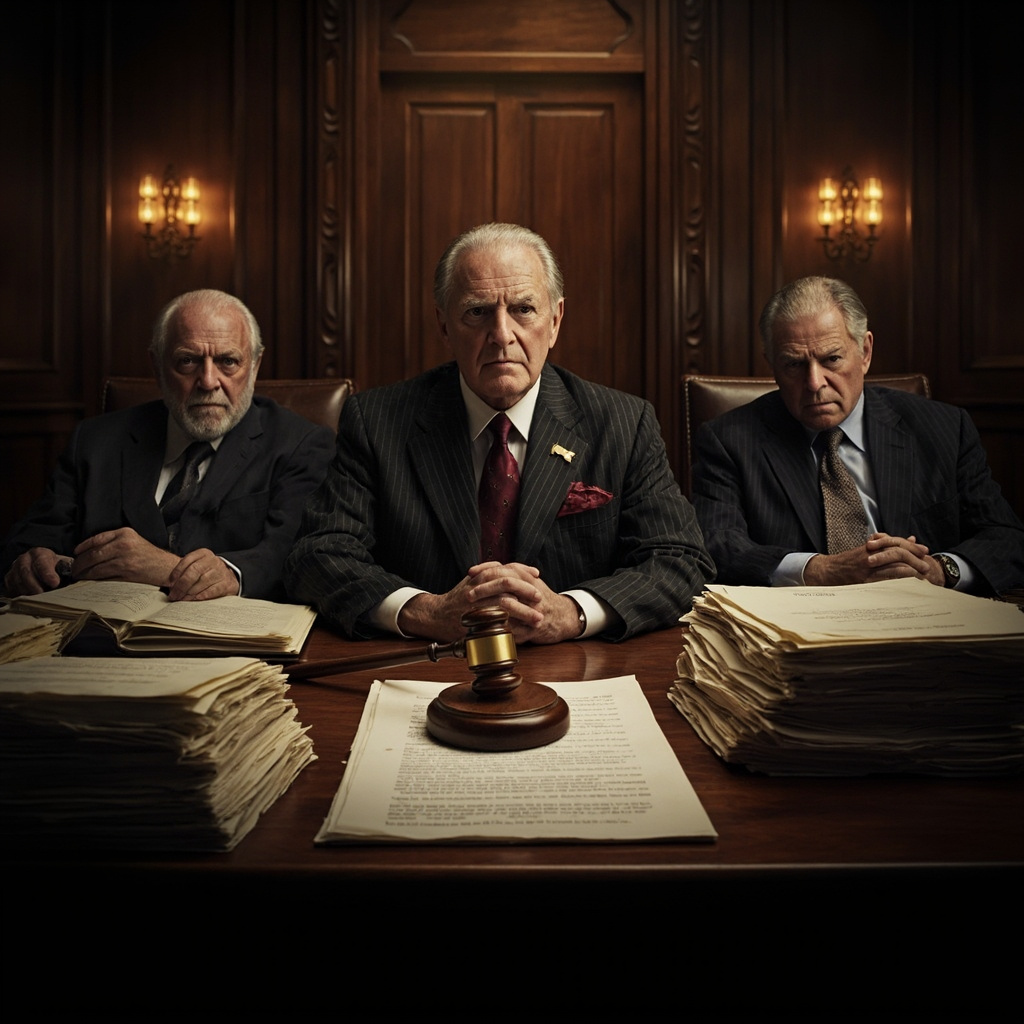
The board of trustees met twice a year, in March and September. The meetings were held in the conference room of the law firm that served as the trust’s primary advisor. The trustees were three: a retired judge named Harold who had been Alexander’s friend, a financial advisor named Patricia who had managed the trust’s investments since its inception, and a professional trustee named Robert who represented the interests of the institutional structures that Alexander had put in place.
The trust’s beneficiaries were not required to attend the board meetings. They received quarterly reports that summarized the trust’s performance. They received their distributions on schedule. They were not, in other words, required to participate in the management of the asset that was providing their income. This had been Alexander’s design. He had believed that his children were not capable of managing large sums of money responsibly, and he had structured the trust accordingly.
His children had accepted this structure for the first decade after his death. They had taken their distributions. They had lived their lives. They had not questioned the board’s decisions, because the board’s decisions had been sound and the returns had been consistent and there had been no reason to question anything.
Then the board made a decision that the children did not agree with.
The decision was to terminate the trust. The termination was proposed by Robert, the professional trustee, who argued that the trust had fulfilled its purpose—that Alexander’s grandchildren had reached the age of twenty-five and had received their distributions, and that the remaining assets could be distributed to the children without further delay. Patricia, the financial advisor, supported the termination, arguing that the administrative costs of maintaining the trust were no longer justified by the benefits. Harold, the judge, dissented, arguing that Alexander had intended for the trust to continue for three generations and that terminating it early violated his explicit wishes.
The termination passed two to one. The beneficiaries were informed by letter, delivered on a Tuesday in November, explaining that the trust would be wound down over the following eighteen months and that their final distributions would be made in the second quarter of the following year. The letter did not explain why the decision had been made. It did not acknowledge that there had been a disagreement on the board. It presented the termination as a fait accompli, to which the beneficiaries were expected to acquiesce.
Alexander’s children were not inclined to acquiesce. They had lived for twenty years under the assumption that the trust would continue, that their income was secure, that the structure their father had built would outlast them. The termination was not just a financial event. It was a violation of the expectation that their father had created, the assumption that had shaped their decisions about careers and marriages and where to live. They had made their lives around the trust. Now the trust was being taken away.
Alexander’s children challenged the termination in court. They argued that the board had exceeded its authority, that the termination violated the terms of the trust agreement, that Alexander’s explicit wishes had been overridden by a board that was more interested in reducing administrative costs than in fulfilling the purpose for which the trust had been established. They retained lawyers who specialized in trust litigation. They spent two years and a significant portion of their own resources building a case that would, if successful, restore the trust and compensate them for the income they had lost during the period of termination.
The case was complicated. The trust agreement was dense and technical, and the language that Alexander had used to describe the board’s authority was ambiguous in ways that his lawyers had not anticipated when they drafted it. The board argued that the termination was within their discretion. The children argued that discretion was not the same as authority, that the board had confused the two and had used its discretionary power to override Alexander’s explicit instructions.
The judge who heard the case was the same Harold who sat on the trust’s board—a fact that Alexander’s children had not known when they had retained their lawyers and that their lawyers had not discovered until the case was already underway. Harold recused himself from the decision, which left the case to be heard by a judge who had no connection to the Whitmore family and who was required to rule on the trust agreement as written rather than as intended.
The ruling was mixed. The judge found that the board had not exceeded its authority but had exercised that authority in a manner inconsistent with the spirit of the trust agreement. The termination was allowed to stand. But the judge also ruled that the beneficiaries were entitled to receive the distributions that would have been made during the eighteen months of termination proceedings, plus interest. The trust was ordered to pay the shortfall, which amounted to a sum that was significant but not catastrophic.
The trust continued. It was not terminated again. The board that had supported the termination—Robert and Patricia—was replaced, over the following two years, with new trustees who were more sympathetic to the beneficiaries’ interests. Harold remained, and he was joined by two new members who had been chosen by Alexander’s children and who were committed to ensuring that the trust operated in the manner its founder had intended.
Alexander’s children received their distributions. They resumed their lives. But they did not forget what had happened—the termination, the challenge, the years of litigation that had cost them money and time and energy that they would never get back. They remained on the board, as observers, in the years that followed. They attended every meeting. They read every report. They asked questions that the trustees sometimes found uncomfortable. They did not trust the structure their father had built, because they had learned, the hard way, that structures could be used in ways that their builders did not intend.
Some trusts are terminated because they have fulfilled their purpose. And some trusts are terminated because the people who manage them have different priorities than the people who created them. Alexander Whitmore had built a structure that he believed would outlast him. He had not anticipated that the people he appointed to manage it would decide, thirty years later, that the structure was no longer worth maintaining. He had built well. He had not built well enough.