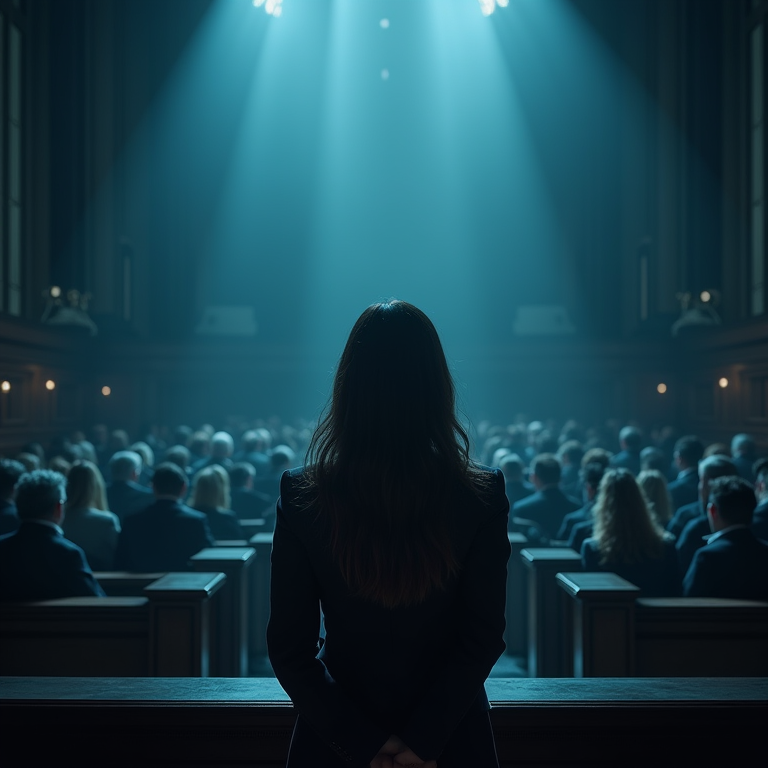
The Witness Who Disappeared Twice
The first time was in 2019. She was twenty-six and she was walking home from a bar in Brooklyn and she saw a car run a red light and strike a pedestrian, and she stopped, and she gave her name and number to the police, and she went to the hospital to give her account of what she had seen, and the police told her that the driver had been charged, and she thought that was the end of it. It was not the end of it. The driver had connections — she did not know this at the time, but she would learn it later, in the way that people learn things that are relevant to their lives, which is slowly and then all at once — and the connections meant that the charges were dropped, and the driver walked, and the pedestrian died, and the family of the pedestrian did not know who she was, and she did not reach out to them, because she did not know how to reach out, and because the whole thing was something she wanted to be over, and she let it be over, and she moved on with her life, and she did not think about it for three years, and then she thought about it all the time, and the thinking was the thing that had replaced the forgetting, and the forgetting was the thing she had chosen, and the choice was the first disappearance, which was not a physical disappearance but was the disappearance of the truth from the record, and the truth was that she had seen what she had seen, and that the seeing was not enough, and that the not enough was the beginning of the second disappearance.
The second time was in 2023. She was thirty, and she was living in Philadelphia, and she had changed her name — not legally, but operationally, in the way that a person changes when they decide that the person they were before is not the person they want to be — and she was working in a coffee shop and she was dating someone named Marcus and she was, by all external measures, fine. The man who found her was a journalist who had been investigating the 2019 accident for three years and who had tracked her down through a combination of police records and social media analysis and the specific kind of determination that characterizes the best investigative journalists, which is the determination to find the person who was there, which is the determination to make the disappearance not complete, which is the determination to understand that the truth does not stop existing just because it has been made to disappear from the record.
The journalist’s name was David. He found her on a Tuesday in October. He came to the coffee shop where she worked and he ordered a coffee and he sat at a table and he waited for her shift to end, and when her shift ended he introduced himself and he told her what he knew, which was everything, and she understood, from the way he told it, that he was not accusing her of anything and that he was not here to make her feel guilty and that he was here because he believed — and she would come to believe, over the following weeks, that his belief was well-founded — that the truth of what had happened in 2019 was a truth that needed to be spoken, and that the speaking required her, specifically, and that she was the person who could speak it, and that the speaking was not optional, and that the not optional was not a legal obligation but was a moral one, and that the moral obligation was the thing she had been running from since 2019, in the way that people run from things that they know they should face but that they do not face because the facing requires a kind of courage that is not available all the time, and that was not available to her in 2019, and that was available to her now, in 2023, because the three years of living under a different name had given her something she had not had before, which was the distance to see clearly, and the clarity was the courage, and the courage was the thing that David had come to find, and that he had found.
She testified. The testimony was public, and the public testimony was the thing that made the difference, because the public testimony was the thing that the record could not make disappear twice. The first disappearance had been the making invisible of the truth by the people who had the power to make things invisible. The second disappearance was the undoing of that invisibility by a journalist who understood that invisibility is not permanence and that the truth, even when it has been made invisible, is still there, waiting, in the way that all truths wait, for the person who is willing to say it out loud, in a room full of people, and to say it clearly, and to say it completely, and to not look away, and to let the looking be the thing that changes something, even if the something is not justice, even if the something is only memory, and the memory is the thing that remains, and the remaining is the point, and the point is that some things, when they are made to disappear, are not actually gone. They are only hidden. And the hiding is not the end. The end is when someone finds them. And the finding is the beginning of the telling. And the telling is the thing that cannot be hidden twice. And the journalist knew this, and she knew this, and the knowing was what brought her to the stand, on a Wednesday in March, and the knowing was what made her speak, and the speaking was what she had been afraid of for four years, and the fear was gone by the time she finished speaking, and what was left was not courage. It was only truth. And the truth was enough. And the enough was what she had been missing, all along, and the missing was over, and the over was the beginning of something that was not justice, and that was not revenge, and that was not healing. It was only the end of the hiding. And the end of the hiding was the beginning of the story that could finally be told. And the telling was the thing she had been born to do,