The Silence in Room 4
The motel had seventeen rooms, and Room 4 was the one the owner never rented out. Nora had worked there for three years and had never once asked why, because she had learned in her first week that asking questions in this town was the kind of thing that made people stop answering your calls.
The regular guests knew the rule. New guests were told the room was undergoing renovations, which was technically true if you considered the fact that no work had been done on it since 1987. That was the year on the maintenance logs for Room 4—the last entry, in handwriting that looked like it had been written during an earthquake, said “cleaning completed, no further action required.”
Nora’s manager was a woman named Dolores who had worked at the motel for thirty-one years and had the particular stillness of someone who had survived things she never talked about. When a guest once asked Dolores directly why Room 4 was always empty, Dolores had looked at her for a long moment and then said: “Some rooms remember what happened in them. Room 4 remembers everything.”
The guest checked out early and never came back.
The night it changed was in October, during a rainstorm that knocked out the power for six hours. The motel had a generator for the lobby and the exterior lights, but not for the rooms themselves, and Nora was sitting at the front desk with a flashlight when she heard the door to Room 4 open.
She knew it was Room 4 because she heard the sound it made—that particular creak that only that door made, a sound she had heard a hundred times when passing by during her shifts but had never heard coming from the inside.
Nora got up from the desk. She told herself she was going to investigate, but she knew what she was really doing, and part of her was already composing the conversation she would have with Dolores in the morning, explaining how the door had been open when she walked by, how she had simply been checking, routine procedure.
The door to Room 4 was open. The room was dark in a way that seemed to have texture—the darkness in it was thicker than the darkness outside, like something solid between her and the interior.
She stepped inside.
The room was empty. Not empty like a vacant hotel room—empty like it had never been used at all. The bed was made with sheets that were crisp and white, the kind of white that didn’t exist anymore, and on the nightstand there was a glass of water that was evaporating from the top down, very slowly, like time was moving differently in this room.
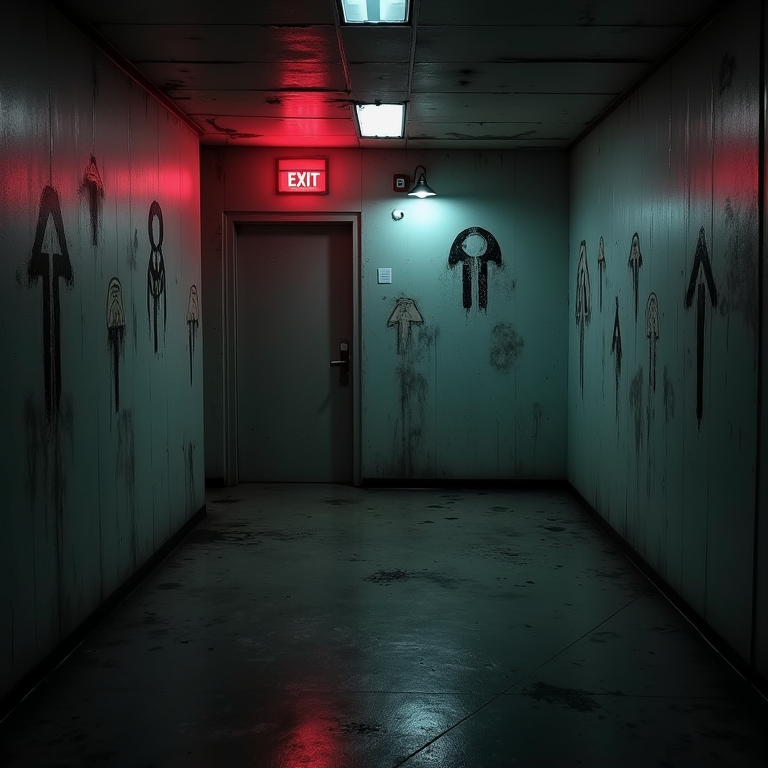
On the wall across from the bed, there were marks. Dozens of them, scratched into the paint in a pattern that Nora recognized from a documentary she had watched once about a case that had never been solved. The marks were tallies. And there were hundreds of them.
The door closed behind her.
Nora didn’t scream. She didn’t have time to scream. She understood, with a sudden and terrible clarity, why Dolores had the particular stillness she had, and why the owner never rented the room, and why the last maintenance log entry had said what it said.
Room 4 remembered everything. And now Room 4 had someone new to remember.