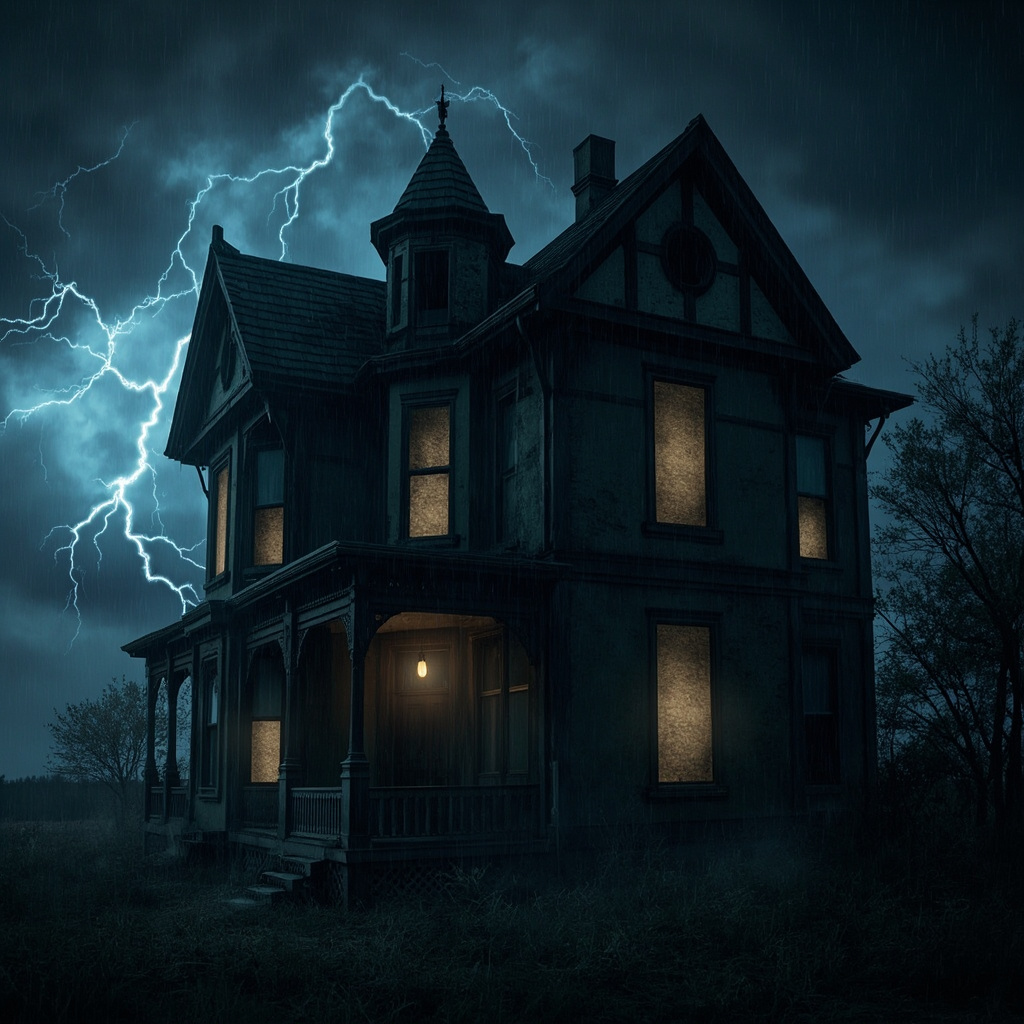
The Silence After the Storm
When Hurricane Helene made landfall on the small coastal town ofMarshwood, everyone followed the same protocol: board up windows, stock up on supplies, and wait. But when the eye passed directly over the town—a statistical impossibility that the meteorologists couldn’t explain—the people of Marshwood experienced something none of them were prepared for.
Twenty-three minutes of absolute calm. The wind stopped. The rain suspended mid-fall like frozen silver threads. And in that silence, every person in town heard the same thing: a child’s voice, calling out from somewhere beneath the earth.
Then the second half of the storm arrived, and the voice was forgotten.
Until it started calling again.
Martha Calloway was seventy-three years old, and she had lived in the same house onMarshwood’s main street for all of her married life. Her husband was twelve years in his grave, her children scattered to cities far away, and her house was paid off. She wasn’t about to leave just because of a hurricane.
But that night, as she sat in her boarded-up living room with a flashlight and a radio, she heard the voice. It came from beneath her floorboards, from the basement that had flooded so many times over the years that she’d finally sealed it up and built a laundry room over the entrance.
“Grammy,” the voice said. “Grammy, I can’t find my way out.”
Martha dropped her flashlight. She didn’t have any grandchildren. Her daughter had never married, had never had children. But the voice was so clear, so specific, so undeniably real that she found herself walking toward the basement door despite every instinct screaming at her to stay put.
The water rose with the storm surge, filling the basement through cracks in the foundation that had never been more than damp spots before. Martha watched from her upstairs window as the street became a river, as cars floated past like abandoned toys, as the old Victorian houses on her block seemed to groan and shift in the flood.
And through the water, she could see shapes moving. Not people. Something else. Figures that walked upright but didn’t move like humans, their limbs bending at angles that hurt to watch, their heads turning toward her house with synchronized precision.
“Grammy, the water’s nice,” the voice said. “Come down and swim with me.”
Martha backed away from the window. Her heart was pounding so hard she could feel it in her teeth. The voice was coming from the basement. The voice had been down there for twenty-three minutes during the eye of the storm, walking around in water that was rising even as she stood frozen in place.
When the waters finally receded three days later, Martha found something in her basement that she didn’t understand. Behind the shelving units she had pushed aside to get to the flooded furnace, there was a door. A wooden door, old and warped, set into the foundation stones as if it had been there since the house was built.
She had lived in this house for forty-seven years. She had never seen this door.
It was unlocked. Of course it was. The voice had been asking her to come down for three days. Why would it lock her out now?
Behind the door was a staircase leading down into darkness. The air that rose from below was cold and smelled of salt and something else—something sweet, like flowers left too long in stagnant water, like the memory of a smell you can’t quite place.
“You found the way,” the voice said. It was closer now. Right at the bottom of the stairs. “I’ve been waiting so long for someone to find the way.”
The townspeople found Martha Calloway’s body in her basement two weeks after the hurricane, when the smell finally became too much for the neighbors to ignore. She was sitting in a rocking chair that no one had ever seen before, her eyes open, her mouth frozen in a smile that looked more like a grimace.
The door in the foundation was gone. The basement floor was solid concrete, no cracks, no water damage, no sign that any of what she had described had ever happened.
But her hands were curled around something—a locket, tarnished with age, containing a photograph of a child no one could identify. And around her neck was a string of sea glass, the colors bright and unnatural: red and black and a shade of blue that shouldn’t exist in nature.
The hurricane had been the strongest storm to hitMarshwood in recorded history. The meteorologists called it an anomaly. The survivors called it a warning.
And in the basement of Martha Calloway’s house, in a room that couldn’t exist beneath a room that had been sealed for decades, something was still waiting. Still calling. Still wanting company in the deep.