The Price of Beauty
The spa was called Aetheria, and it occupied the top three floors of a building that had once been a textile factory in the industrial district. The renovation had cost twelve million dollars and had transformed the grim brick structure into something that looked like a dream of elegance—white marble floors, chrome fixtures, walls of glass that offered panoramic views of the city below. The reception desk was staffed by women who looked like models and men who looked like they had stepped out of a cologne advertisement. Everything about the place radiated an atmosphere of exclusivity so refined that merely walking through the door made Isabelle feel like she had entered a different world.
The treatment they offered was called the Aetheria Transformation, and its promise was simple: make anyone beautiful. Not prettier—beautiful, in the way that the word should be reserved for people like supermodels and movie stars, the kind of beauty that stops conversations in rooms full of already attractive people. The Transformation did not promise to enhance what you had. It promised to replace it entirely with something else.
Isabelle signed up immediately. She was thirty-nine and had spent her whole life being described as “interesting-looking”—a phrase that polite people used when they meant plain, when they meant forgettable, when they meant the kind of face that people glanced at once and then looked away. She had tried everything: diets and exercise programs, expensive skincare products and revolutionary dermatological treatments. She had read books about the science of beauty and articles about the psychology of attraction. Nothing had worked, because nothing could work—not the way she wanted it to.
The consultation took three hours. The aesthetician—a severe woman named Dr. Vance who had the look of someone who had been beautiful once and had done terrible things to stay that way—explained the process in detail. The treatment would take three months. It would involve weekly sessions at the clinic, a strict diet of foods Isabelle had never heard of, and a daily application of a cream that smelled faintly of copper. There were risks, Dr. Vance said, though she did not specify what they were. There were side effects, though she did not elaborate. And there was a price—not just the financial price, though the financial price was significant—but a price that would become apparent as the treatment progressed.
By the end of the first month, Isabelle had lost fifteen pounds without trying. She had also started sleeping differently—not better, but differently, as if her body had begun operating on a schedule that was not quite aligned with the twenty-four-hour day. She would wake at three in the morning and feel wide awake, filled with an energy that did not fade until dawn. Her skin had cleared in a way it never had before—not just clearer but smoother, almost luminous, as if there was a light source inside her that was finally being allowed to shine through.
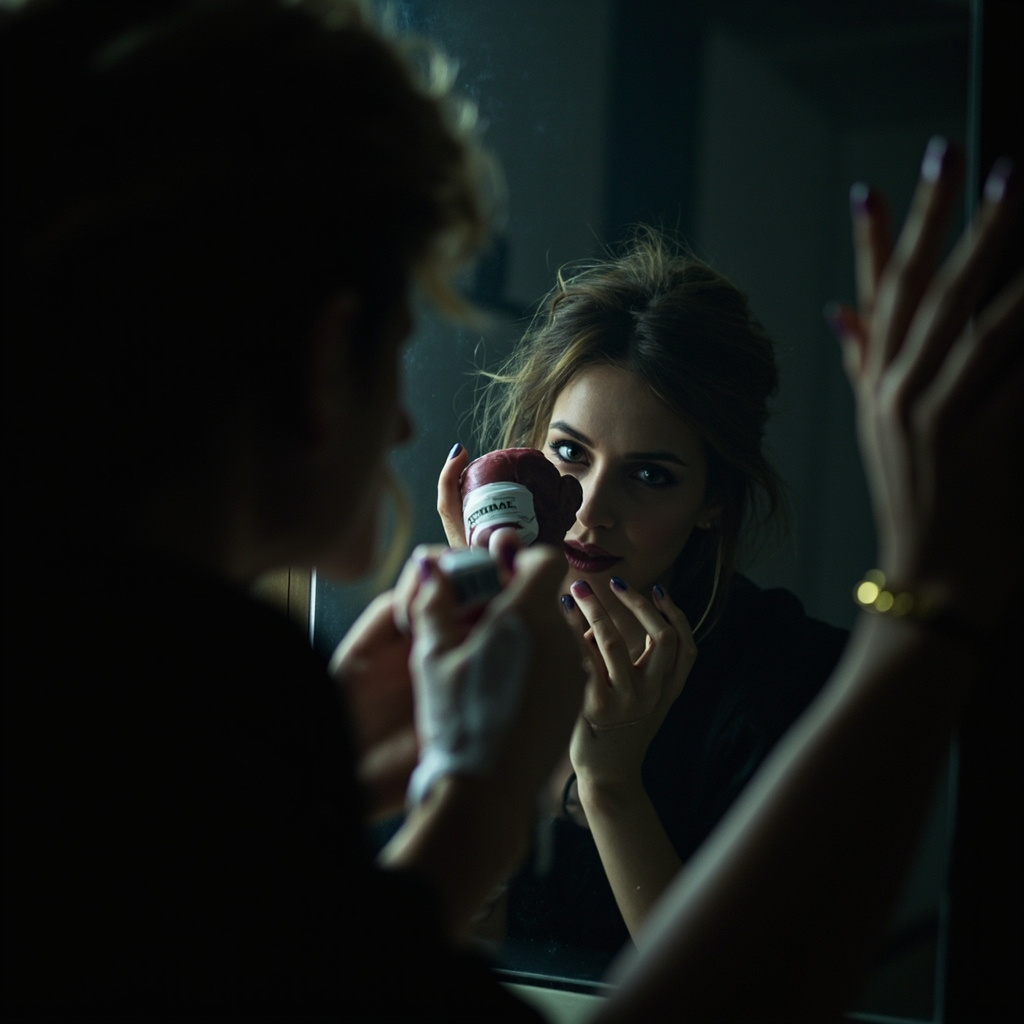
By the end of the second month, her features had begun to shift. It was subtle at first—the curve of her cheekbones, the angle of her jaw, the size and shape of her eyes. She looked in the mirror and saw someone who was becoming beautiful, and the sight filled her with a joy so intense it was almost frightening. She started receiving attention from strangers—men and women both, people who would stop and stare, people who would find excuses to start conversations with her, people who would go out of their way to be near her. She had never experienced anything like it. She had never understood, really, what it meant to be beautiful, because she had never been beautiful, and now she was beginning to understand.
By the end of the third month, she was unrecognizable. She was beautiful—terrifyingly, impossibly beautiful, in a way that felt almost inhuman. Her face had been redesigned at the level of bone structure, not through surgery but through something else, something that was changing her at the most fundamental level of her being. She looked like a supermodel. She looked like a movie star. She looked like someone who had been painted by a genius who had finally found the perfect subject.
She also looked like someone who was no longer entirely herself.
The first thing Isabelle noticed was that people didn’t look at her anymore. Not in the beginning, when she was still becoming beautiful and the attention was intoxicating. Later, when the transformation was complete, when she was the kind of beautiful that she had always dreamed of being. Now, people looked away.
At first she thought it was jealousy—the kind of instinctive response that ordinary people have when confronted with extraordinary beauty, the way you might look away from the sun because it is too bright to stare at directly. She had read about this, about how the truly beautiful were sometimes avoided rather than admired, how their beauty created a distance that ordinary people could not bridge.
But then she noticed that they weren’t just looking away. They were looking past her. They were looking at the space where she stood, but not at her—at something else, something that she could not see but that they could apparently perceive. Their expressions were not jealous or intimidated. They were unsettled. Afraid.
She went to Dr. Vance. The aesthetician examined her with the clinical detachment of someone who was looking at a specimen rather than a person. “The treatment was successful,” Dr. Vance said. “You are beautiful. That’s what you wanted, isn’t it?”
“What did you do to me?” Isabelle asked. “What am I now?”
Dr. Vance smiled. It was not a warm smile. It was not a smile that contained any of the things that smiles are supposed to contain—warmth, or affection, or even the simple social lubrication of human interaction. It was a smile that simply bared teeth, the way animals bare teeth when they are warning you that they are dangerous.
“You’re beautiful,” Dr. Vance repeated. “That’s all. That’s everything. You wanted to be beautiful, and now you are. What happens to you because of that beauty—how other people react to it, what it does to your life, what it takes from you—that’s not part of the treatment. That’s just the nature of beauty itself.”
Isabelle stopped using the cream. The effects did not reverse immediately—they had been designed, she realized, to be cumulative, to become more deeply embedded with each application, to make the transformation more complete and more permanent with every passing day. But they began to reverse, slowly, over a period of weeks that felt like years.
The process was painful. It involved watching herself become less than she had been—not ugly, never ugly, but ordinary, in the way that she had always been ordinary before the treatment. The face that had stopped conversations became a face that people glanced at once and then looked away from, the way they did with anyone. The body that had drawn attention became a body that people walked past without noticing. The extraordinary became ordinary, and the ordinary became, in its own way, a kind of freedom.
But it also involved watching other things change—things she had not expected, things that the treatment had affected in ways she had not anticipated. Her health, which had been perfect during the transformation, began to decline in ways that the doctors could not explain. Her relationships, which had been limited during the transformation, began to renew themselves in ways that felt like compensations for what she had lost. She found herself drawn to people she would never have noticed before, people who were not beautiful, people who were ordinary in all the ways she had once longed to be extraordinary.
She kept a single photo from the transformation—the before, the during, and the after. She looked at it sometimes and thought about the deal she had almost made. About what she had been willing to sacrifice without knowing what she was sacrificing. About the version of herself that had existed at the height of the transformation, when she was beautiful and terrible and not quite human anymore.
Beauty was not worth the price. The price was not your health, or your relationships, or your peace of mind. The price was yourself—the essential self, the self that existed before the transformation began, the self that recognized itself in mirrors and remembered its own name. The treatment had not made her beautiful. It had made her something else—something that wore beauty like a mask, something that fed on the attention of others and gave nothing back, something that was beautiful precisely because it had been emptied of everything that made human beings human.
She chose, in the end, to be plain. She chose to be forgettable. She chose to be the kind of face that people glanced at once and then looked away from, because at least then they were looking at her, and not at the space where she stood, and not at the thing that was waiting behind her eyes.
At least then, she was still herself.