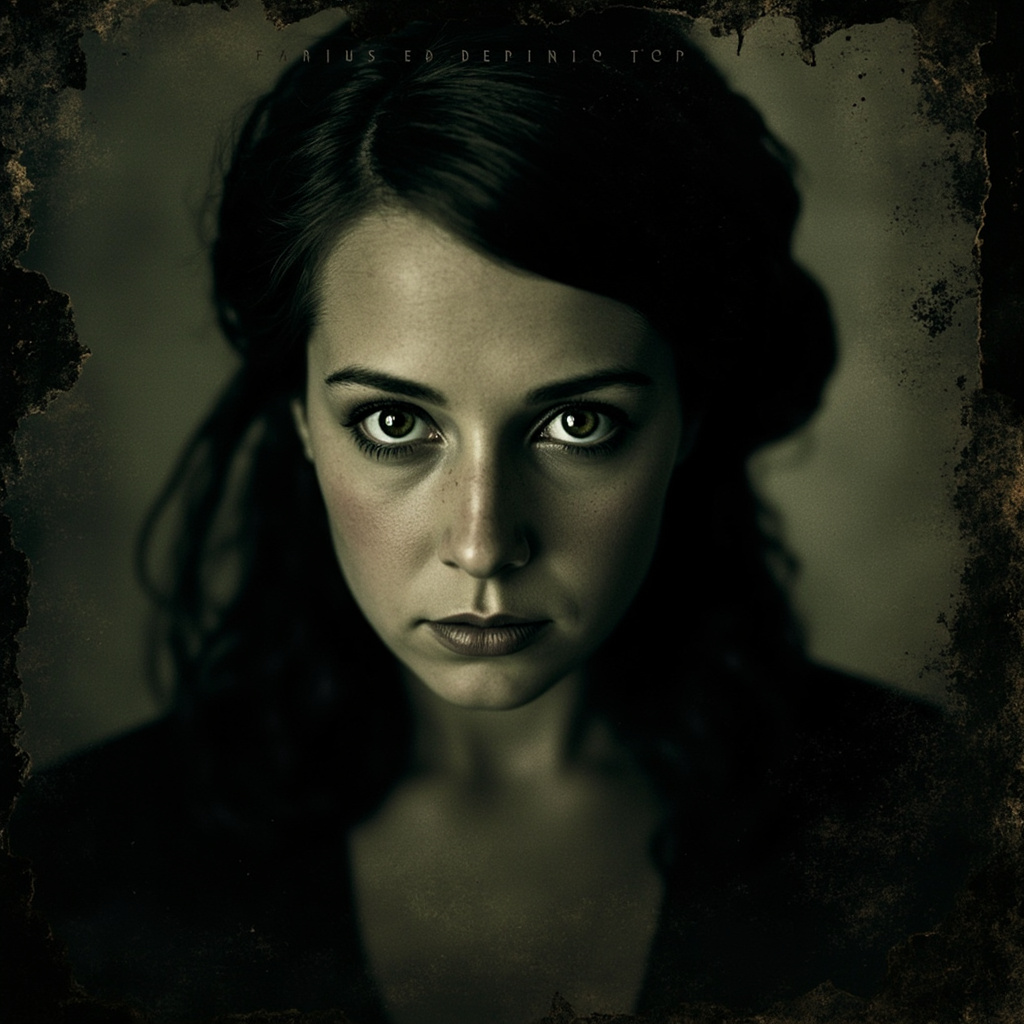
The Photograph They Hid
The photograph had been in Margaret’s family for four generations. It showed a woman in Victorian dress, standing in front of a house that no longer existed, with an expression that Margaret had always found unsettling—not quite a smile, not quite a frown, but something between, something that suggested the woman knew something that the camera could not capture and the viewer could not understand. Margaret had grown up with the photograph hanging in her parents’ house, had looked at it every day without really seeing it, had taken it for granted the way children take for granted the objects that surround them.
When Margaret inherited the photograph after her parents’ death, she put it in a closet, because she did not have wall space for it and because something about it had always made her uncomfortable in a way she could not articulate. She forgot about it for three years. Then, on a night when she could not sleep, she took it out and looked at it properly for the first time.
The woman’s eyes seemed different. Not just different from how Margaret remembered them—actually different, as if the photograph itself had changed in the intervening years. The expression was the same, technically, but it seemed more knowing now, more present, as if the woman in the photograph was looking back at Margaret with an awareness that the original photographer had not captured and that time had somehow revealed.
Margaret researched the woman in the photograph—her great-great-grandmother, according to the family records, though the records were incomplete and some of the details were clearly wrong. The woman had been named Eleanor, and she had lived in the house in the photograph until 1892, when the house had burned down under circumstances that were not fully documented. Eleanor had died in the fire, according to the official record. But Margaret found letters in the family archives that suggested otherwise—letters from Eleanor to a sister that described events in the months before the fire that did not sound like the preparations for a normal death.
The letters talked about visitors—people who came to the house at night, who asked questions Eleanor did not want to answer, who seemed interested in her in a way that went beyond ordinary curiosity. The letters talked about Eleanor’s fear—not of the visitors, but of something else, something she referred to only as “what I carry.” The letters talked about her belief that she could not escape what she had become, that the only way out was through, that the fire would be the end of everything except the thing she most feared to name.
The discovery came from an unexpected source: a genealogist who had been researching Eleanor’s family line for a book she was writing about women who had been erased from historical records. The genealogist had found evidence that Eleanor had not died in the fire. She had been declared dead three years later, when she had failed to appear in any census record or legal document, but the declaration had been made by people who had reason to want her gone—not by evidence of her death.
Eleanor had been alive for at least thirty years after the fire. She had moved to another state, had changed her name, had lived a life that was invisible to the records that genealogists relied on. She had been, in the language of the time, “passing”—disappearing from one identity into another, becoming someone else in order to escape something that the official records would not acknowledge.
The something was the photograph. Not just the photograph—the thing the photograph had captured, the thing that had been with Eleanor for her entire life and that had finally become visible, in the photograph, to anyone who knew how to look. Eleanor had been possessed, or haunted, or transformed—the genealogist could not determine which—by something that had attached itself to her bloodline and that was being passed down through the generations.
Margaret found the evidence of the possession in a journal she discovered in the same archive as Eleanor’s letters. The journal had been kept by a cousin of Eleanor’s who had lived in the house during the years before the fire, who had witnessed what Eleanor had become, who had documented it in a code that took Margaret three months to crack. The journal described Eleanor’s condition in clinical terms that were three hundred years old: the symptoms, the progression, the methods of management that Eleanor had learned and that her descendants had continued to practice without understanding why.
The management practices were rituals—small actions, specific phrases, objects that had to be kept in specific positions—that Eleanor’s descendants had performed without knowing their purpose. Margaret had been performing them her entire life without knowing why. She had been keeping the thing that possessed her family at bay through traditions that had been passed down through generations and that had lost their original meaning but retained their efficacy.
She had never known why she did the things she did. Now she knew. And now that she knew, she had a choice: continue the practices that had kept her family safe for three hundred years, or try to end what Eleanor had begun and risk whatever was waiting on the other side of the ritual.
She chose to continue. Some inheritances are burdens. And some are responsibilities that we accept because the alternative—refusing them—would mean something worse for people who cannot protect themselves.