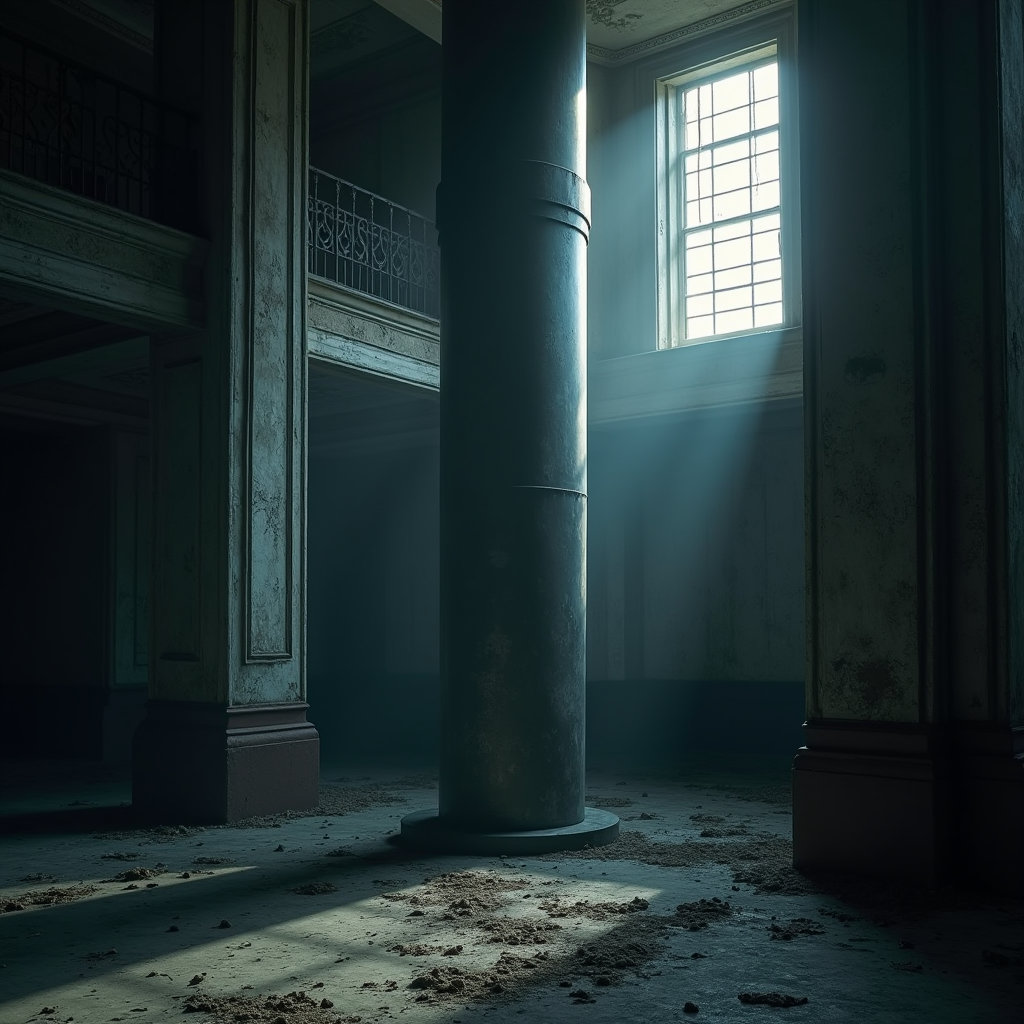
The Mansion They Couldn’t Auction
The Kessler mansion sits on forty-seven acres in Greenwich, Connecticut, and it has been unoccupied since 2019, when its last owner, Harold Kessler, died without a will and without any family willing to claim the property. The estate held an auction in 2021. The reserve price was eighteen million dollars. The highest bid was fourteen million two. There were no other bids. The property did not sell.
Christina Chen, a commercial real estate broker with twenty-two years of experience, was hired by the estate’s liquidator in 2024 to assess the property and recommend a strategy for a second auction. She visited the property on a Tuesday in March. She spent four hours inside it. She photographed every room, measured every floor, noted every defect. She produced a report that ran to sixty-seven pages and that concluded, in its executive summary, that the property was worth between eleven and thirteen million dollars as-is, and that she would recommend against a second auction unless the estate was prepared to accept a price in that range, which she suspected it was not.
She attached a addendum to the report before she submitted it. The addendum noted that during her time in the house, she had experienced — she used the word “experienced,” deliberately, because she was not prepared to say “felt” or “observed” or “noticed” — a persistent sense that the house was aware of her presence. Not in a supernatural way, she wrote, but in the way that a very old and very well-made machine becomes aware of the person operating it: with complete indifference, and with the unmistakable impression that it had been waiting.
Harold Kessler had bought the property in 1994, paying eight million dollars for it and then spending an additional twelve million on renovations that the architects’ invoices described as “restoration” but that the building inspector’s records described as “extensive structural modification.” The modifications included the conversion of the original carriage house into a guest residence, the installation of a wine cellar that the blueprints indicated was significantly larger than its footprint suggested, and the construction of a room on the third floor that was not included in the original floor plans and that was described in the renovation permits as “insulated storage.”
The permits for that room were signed by a building inspector named Arthur Webb, who had been employed by the town of Greenwich for thirty-one years and who had, according to the town’s records, approved the permit application for the room on the basis of a site visit he had conducted on a Thursday afternoon in June 1996. The room did not appear on any of the renovation drawings that Kessler submitted to the town over the following two years. The room was not mentioned in any of the subsequent inspection reports. The room existed, as far as Christina could determine, in a kind of architectural limbo — built, inspected, approved, and then never referenced again.
Christina found the room on her third visit to the house, which she conducted after hours because she had forgotten to measure the third-floor west corridor on her first two visits. The door to the room was unmarked, unremarkable, set into a section of hallway that was, she realized only after measuring it, exactly four inches longer than the floor plans indicated it should be. The door was locked. She photographed it and moved on.
The estate’s attorney provided the key to the room after Christina requested it in writing. The key was brass, old, and attached to a ring that also held keys to the wine cellar and the carriage house. The ring had been in Kessler’s effects and had been inventoried by the estate’s liquidator and had been, until Christina’s request, unremarked upon.
The room behind the door was twelve feet by fourteen feet, with twelve-foot ceilings. It was empty except for a single object: a steel cylinder, approximately four feet in diameter and six feet tall, standing on its end in the center of the room. The cylinder was not attached to any plumbing, electrical system, or structural element of the building. It sat on the concrete floor as if it had been placed there and then forgotten, which, Christina suspected, was exactly what had happened.
There was a label on the cylinder. The label was a manufacturer’s plate, the kind found on industrial equipment, and it indicated that the cylinder was a pressure vessel, rated for industrial use, and that it had been manufactured in 1997 by a company in New Jersey that had, according to the state corporation records, dissolved in 2003. The plate also included a serial number and a date of last inspection: September 1999.
Christina photographed everything. She hired an industrial engineer to examine the cylinder, at her own expense, because she was curious and because she had learned in twenty-two years of commercial real estate that the cost of satisfying your own curiosity is almost always less than the cost of ignoring it. The engineer’s report, delivered six weeks later, confirmed that the cylinder was a pressure vessel, that it was not connected to any system in the house, that it was not pressurized, and that it showed no signs of structural degradation. It also confirmed, based on the composition of the steel and the manufacturing specifications on the plate, that the cylinder was not empty. It was filled with a material that the engineer’s ground-penetrating radar could not identify, because the material did not match any known density profile in the engineer’s reference database.
The second auction was scheduled for September 2024. The reserve price was lowered to fourteen million. The highest bid, from a development firm based in New York that intended to convert the property into a boutique hotel, was eleven million four. The estate declined. The property remained on the market. The cylinder remained in the room on the third floor, which remained locked, because Christina had returned the key to the estate’s attorney and the attorney had placed it, she was told, in a secure location where it would remain until the property was sold, and from which it would be retrieved by the new owner, who would presumably deal with it in whatever way new owners dealt with things that had been waiting in rooms that did not appear on any floor plan.
Christina took the listing off the market six months later. She told the estate’s liquidator that the property was not ready to be sold. She did not explain what she meant by this, and the liquidator did not ask, because the liquidator had dealt with enough of Kessler’s estate to understand that some things did not require explanation to be true.