The Photograph She Kept in Her Wallet
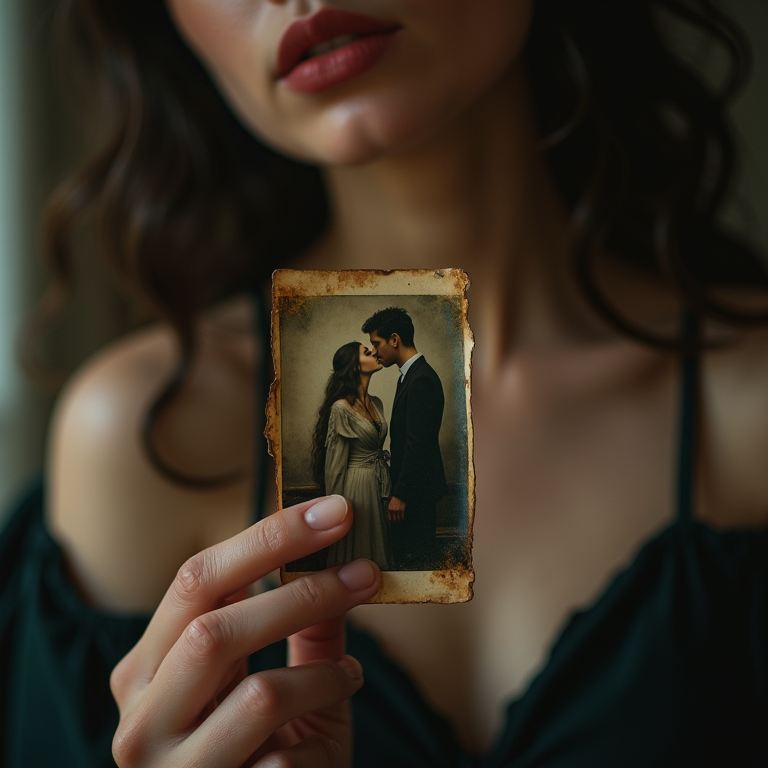
The photograph was taken in 1967, in a photo booth in Grand Central Terminal, and it showed two people — a man and a woman — and the man was her father, at twenty-three, which was the year before he had married her mother, and the woman was not her mother, and the woman was the reason the photograph had been kept in her wallet for forty-one years, which was the number of years since her father had given it to her, on his deathbed, and had said: This is the person I was supposed to be with. I did not choose your mother because I did not know how to choose. I chose your mother because she was there, and because the being there was the only form of courage I was capable of, and because the courage I was capable of was not the courage that was required, and that the required courage was this — this photograph, this booth, this moment, this person — and that the choosing was the thing I did not do, and that the not-doing was the thing I have been living with, and that the living with is what I am giving you, because the giving is the only thing I have left, and because the thing I should have given you was the truth, and the truth is this photograph, and the photograph is the truth of what I was too afraid to do, and the doing was the thing that would have made me who I was supposed to be, and that the being supposed to be is the thing that I denied you, by denying it to myself, and by choosing the wrong person, in the wrong time, for the wrong reasons, and by living the wrong life, in the wrong city, in the wrong marriage, and by fathering you, and by loving you, and by the loving being real, even though the life it happened in was not the right life, and the not right being the thing that I need to tell you about, because the telling is the only form of apology that is available to me now, and because the now is all I have, and the all I have is this photograph, and the photograph is what I am leaving you with, and the leaving is the last thing I will do, and the last thing is the most important, and the most important is: I am sorry. I am sorry for the life you were born into. I am sorry for the mother you were given. I am sorry for the self I did not become. And I am sorry for this photograph, which is the evidence of everything I failed to do, and which is now yours, and which you will carry, and which you will have to decide what to do with, and the deciding is the thing I could not do, and that I am giving to you, because the giving is the only thing left, and because the left is where we always end up, in the end, which is alone, with the things we kept, and the keeping is what I taught you, and the teaching is what this photograph is for.
She kept the photograph. She did not know what else to do with it. She could have thrown it away, which would have been the practical thing, because the woman in the photograph was not her mother and was not her and was not anyone she had ever met, and the photograph was therefore a document of a life that was not hers, that had happened before she was born, that had been lived by a man who had been her father and who had been, in the specific way that the photograph revealed, a person who had wanted something different from what he had gotten, and who had not gotten it, and who had given her the photograph as a form of confession that was also a burden, which was the only kind of confession that is possible from the dead, who cannot answer questions, who cannot explain, who cannot be challenged, who can only give you the evidence and leave you to interpret it, in the light of your own life, in the context of your own choices, with the knowledge that the interpretation will shape the interpreter, and that the shaping is not something you can undo, and that the undoing is not available, and that the not available is the condition of inheritance, which is that we receive the things we receive, and we decide what to do with them, and the deciding is the burden and the gift and the thing that makes us who we are, which is not what our parents made us but what we make of what our parents gave us, and the making is the work, and the work is the life, and the life is the photograph in the wallet, carried every day, for forty-one years, without ever being shown to anyone, without ever being explained, without ever being understood, but carried, because the carrying was the decision, and the decision was hers to make, and she made it, and the making was the inheritance, and the inheritance was the photograph, and the photograph was the truth, and the truth was that her father had loved someone else, and that the someone else was in the photograph, and that the photograph was in her wallet, and that the wallet was where the truth lived, and that the living was the keeping, and the keeping was the love, and the love was not for the woman in the photograph. The love was for her father, who had given her the truth, even though the truth was not what she wanted, and even though the wanting was the thing she could not say, because the wanting would have required her to admit that she understood what the photograph meant, and the meaning was that her parents’ marriage was not what she had thought it was, and that the not what she thought was the foundation of her understanding of her own life, and that the foundation was built on a choice her father had made before she was born, which was the choice to marry the wrong person, for the right reasons or the wrong ones, she would never know, and that the not knowing was the condition of being his daughter, which was the condition she had been born into, and that the condition was the photograph, and that the photograph was in her wallet, and that the wallet was where the secret lived, and that the secret was her father’s, and that she had inherited it, and that the inheriting was what she did with it, which was to keep it, and to carry it, and to never open the wallet in front of anyone and say: This is what I am made of. This is the thing that made me. This is the choice my father did not make, and the not making was the choice he did make, and the making was the marriage, and the marriage was my life, and the life is this photograph, and the photograph is what I keep, and the keeping is what I know how to do, and the knowing is the burden, and the burden is the love, and the love is what he gave me, and what I keep, and what I will carry, and what I will leave, and the leaving is the last thing, and the last thing is the most important, and the most important is: I forgave him. Before he died. I told him I forgave him. And I did. I forgave him for the wrong life, and for the wrong marriage, and for the woman in the photograph, and for the choosing he did not do. I forgave him because the forgiving was the only thing I could give him that he did not already have, and because the having was what he needed, and because the needing was what he had asked for, in the giving of the photograph, and the giving was the asking: forgive me. And I did. I forgave him. And the forgiving was the end. And the end was the photograph. And the photograph was the beginning. And the beginning was this.