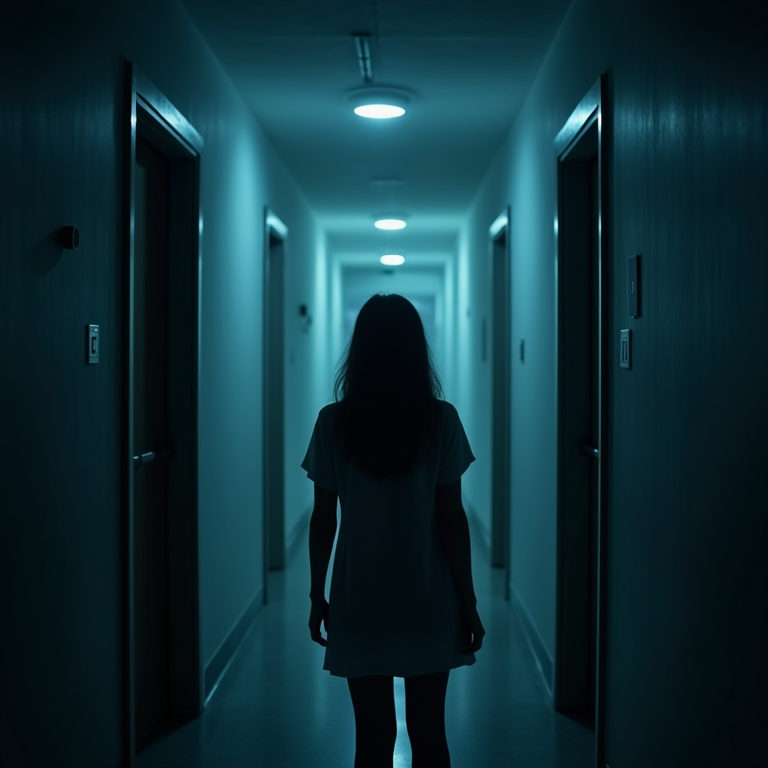
The Tenant Who Did Not Use the Door
She noticed the footsteps first. They were in the apartment above hers, which was vacant, and which had been vacant for the three months since the previous tenant had moved out without explanation, leaving behind a forwarding address that was not a real address and a security deposit that did not cover the damage he had done to the walls. The building manager had said the apartment was being prepared for new tenants, which meant, in the specific language of building managers, that nothing was being done to the apartment and that it would remain empty until someone was found who was willing to pay the rent that the market would bear, which was more than the previous tenant had been paying, because the market had changed, as markets do, in the direction that is always worse for the people who are trying to stay where they are.
The footsteps were there every night, between 2 AM and 4 AM. They were not the footsteps of a person walking. They were the footsteps of a person pacing — the same route, back and forth, the same pace, the same rhythm, the same quality of sound that she had learned to identify, over three months of listening, as the sound of someone who was not going to sleep and who was not going to stop pacing and who was not, in any sense that mattered, a person who was living in the apartment above hers in the normal way that tenants live in apartments, which is to say with doors and lights and the occasional sound of television and the regular rhythm of a life being conducted in the space above your head.
She reported it to the building manager. The building manager said he would investigate. He investigated by going to the apartment and knocking on the door and receiving no answer, which was what he had expected, because he had not made an appointment, and because the apartment was vacant, and because the investigation consisted of the things that could be done without actually entering the apartment, which was not much. He reported back that the apartment was empty. She told him she could hear footsteps. He said old buildings make sounds. She said these were footsteps. He said he was sorry she was having trouble sleeping and that he would add her to the list for a unit on a higher floor when one became available. He did not add her to the list.
She went to the apartment herself. She knocked on the door. No one answered. She put her ear to the door and listened. There was nothing — no footsteps, no sound, no indication that anyone was inside. She stood there for five minutes, and the five minutes were unremarkable, and she went back to her apartment, and that night the footsteps were there again, between 2 AM and 4 AM, the same pace, the same route, the same rhythm, and the rhythm was the thing that bothered her most, because a rhythm is a choice, and the choice implies a person making it, and the person was in the apartment above hers, and the person would not answer the door, and the not-answering was not the behavior of a tenant. It was the behavior of something else.
She moved out at the end of her lease. She did not renew. She told the building manager she was moving for reasons that were not about the apartment, which was true, in the sense that the reasons were about the building, and the building included the apartment above hers, and the apartment above hers was the thing she was leaving, and the leaving was the only form of investigation that was available to her, because the alternative was to stay and to keep listening and to keep not-knowing what was up there, in the apartment that was vacant and was not vacant, that had a person in it who did not use the door and who paced between 2 AM and 4 AM and who had chosen, for reasons she would never know, to be present in a space that was not supposed to be occupied, and to be present in the specific way that the uninvited are present, which is without permission and without explanation and without any of the things that make the presence of another person bearable, which is to say without notice, without schedule, without the basic decency of being audible during hours when the people below are trying to sleep, and the trying to sleep was what she had been doing, every night, for three months, and the three months were enough, and the enough was the reason she left, and the leaving was the answer to the question of what to do when you discover that the space above you is occupied by something that will not identify itself and that will not stop and that does not need your permission to be there, and the answer is: leave. The answer is always leave. The answer is the door you use to get out, because the thing above you does not use doors, and the not-using is the point, and the point is that some presences are not meant to be understood. They are meant to be escaped.