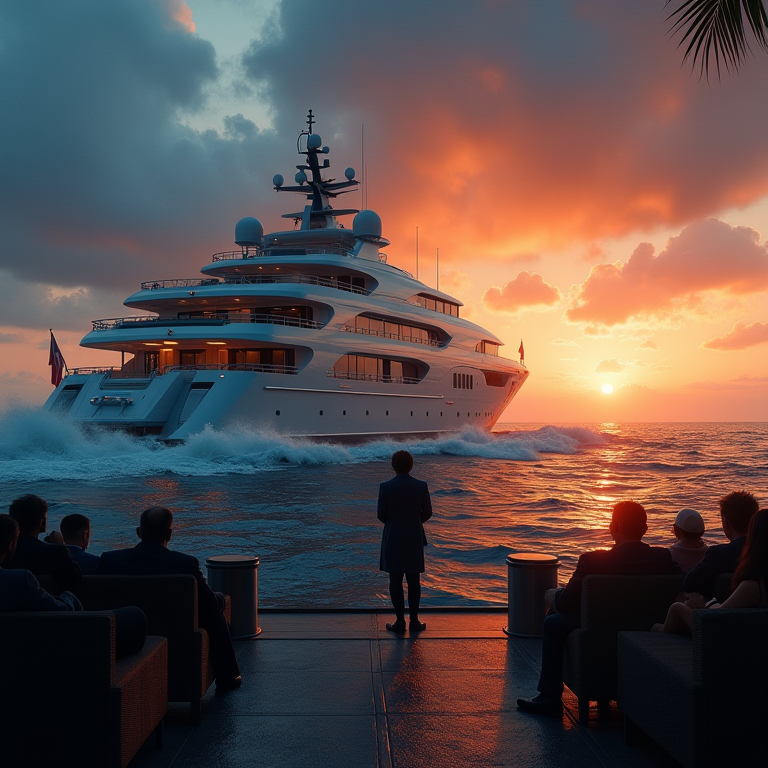
The Yacht That Sank Before Its Launch
The yacht was named Persistence, and it was 212 feet long, and it had been commissioned by a man named Richard Vanmeter, who had made his fortune in logistics and who had spent four years and $94 million building the yacht to his exact specifications, which were specifications that had changed seventeen times during the construction process and that had required the removal and replacement of entire sections of the hull at a cost of $11 million and which had made the shipyard’s project manager weep, on more than one occasion, in the specific way that professionals weep when they are confronting the possibility that all their skill and experience will not be sufficient to satisfy a client who does not understand the difference between what is possible and what is desired.
The launch was scheduled for April 15th. The launch was cancelled on April 12th, when the marine surveyor who had been hired to conduct the pre-launch inspection found, in the forward ballast system, a series of stress fractures that were consistent with metal fatigue and that were consistent with the fractures having been caused by the seventeen modifications to the hull and that were not consistent with a yacht that was ready to be launched and that were the thing that the marine surveyor documented in a fourteen-page report that he delivered to Richard Vanmeter’s attorney on the morning of April 12th, with the recommendation that the launch be cancelled and that the yacht be taken back to the shipyard for repairs that would take a minimum of eight months and a maximum of fourteen and that would cost, at minimum, an additional $18 million and, at maximum, an additional $31 million, depending on what was found when the hull was opened up, which was the thing that no one wanted to think about but which was the thing that the marine surveyor had noted, in section 7 of his report, with the phrase “further investigation required” and the phrase “concerning pattern of stress distribution inconsistent with original engineering specifications” and the phrase “cumulative structural compromise consistent with repeated non-standard modifications.”
Richard Vanmeter refused to cancel the launch. He had invited 140 guests. He had chartered a helicopter to bring them to the launch. He had arranged for a fireworks display that was scheduled to last twenty minutes. He had leased a temporary mooring that was costing him $47,000 per day and that he had leased for a minimum of three days and that he had leased for a maximum of ten, depending on how the launch went, and on whether the Persistence was going to be where it was supposed to be, which was in the water, at a mooring off the coast of Ft. Lauderdale, by the evening of April 15th. He told his project manager to fix the problem. The project manager said the problem could not be fixed by April 15th. Richard told him to fix it anyway. The project manager said that fixing it anyway was not a repair. It was an invitation to catastrophe. Richard said that he had spent $94 million on this yacht and that he was going to launch it on the date he had promised and that the marine surveyor’s report was the project manager’s problem and not his and that he expected the project manager to solve the problem the way he had been paid to solve problems for the past twenty years, which was by solving them, regardless of what the solving required, and that the launch would proceed as scheduled.
The launch proceeded as scheduled. The yacht made it three miles out of the harbor before the forward ballast system failed catastrophically, in the specific way that systems fail when they have been pushed beyond their tolerances and when the pushing has been done by people who did not understand what the tolerances were and who did not want to understand because the understanding would have required the accepting of a limitation, and the accepting was something Richard Vanmeter had spent his entire life refusing to do, in his business, in his relationships, in his building of the Persistence, in the seventeen modifications that had turned a hull that was engineered to specifications into a hull that was engineered to the specifications of a man who did not believe in specifications, because he had spent sixty years believing in the persistence of will, and the persistence of will was what had made him rich and what had made him lonely and what had built the Persistence, and the Persistence was now sinking, three miles off the coast, in water that was 1,200 feet deep, and that would be the resting place of $94 million and four years and seventeen modifications and 140 guests who had come to watch a launch and who were instead watching a sinking, and the watching was the thing they would remember, and the remembering was the thing that would follow Richard Vanmeter for the rest of his life, in the specific way that the things we cause to happen to other people follow us, not as guilt, which is too simple, but as a kind of knowledge that we carry in the body, in the specific place where the will lives, and the will is what drove him to build the Persistence, and the will is what drove him to launch it, and the launching was the thing that sank it, and the sinking was the thing that happened, and the happening was the thing that cannot be un-happened, and the un-happening is not available, and the availability is not the point, and the point is that the yacht is at the bottom of the ocean, and it is not coming up, and the not coming up is the end of the story, and the story is over, and the over is what happens when the will is bigger than the world, and the world is not bigger than the will, and the persistence is not the same as the stubbornness, and the stubbornness is what he had, and the having was the thing that sank the yacht, and the sinking was the thing that proved that the having was the wrong thing to have, and the wrong thing is what he chose, and the choosing is who he was, and the who he was is at the bottom of the ocean, in 1,200 feet of water, in the dark, in the specific place where the Persistence will remain, for as long as the metal holds, which will be longer than Richard Vanmeter’s life, and longer than the lives of the people who watched it sink, and longer than the memory of the launching that became the sinking, and the memory is the only thing that survives, and the surviving is what we do, in the form of stories, and the stories are the things that keep the sinking from being the end, because the end is only the end of the thing, and not the end of the story of the thing, and the story of the Persistence is the story of the will, and the will was persistent, and the persistence was the point, and the point was the sinking, and the sinking was the proof, and the proof is what we have, in the end, of what we chose, and the choosing was done, in the water, three miles off the coast, and the doing was the launching, and the launching was the sinking, and the sinking was the end, and the end is where the story stops, and the story has stopped, and the stopping is permanent, and the permanence is the truth of the Persistence, which is at the bottom of the ocean, and which will remain there, long after the story is told, long after the last person who watched it sink is gone, long after the name is no longer remembered, in the dark, in the cold, in the deep, in the place where the will goes when it is bigger than the world and the world does not yield, and the not yielding is the sinking, and the sinking is the proof that some things cannot be willed into being, no matter how persistent the willing, and thePersistence sank, and the sinking was the end of the persistence, and the end of the persistence was the beginning of the story, and the story is what we have, and the having is what we do, and the doing is the telling, and the telling is the truth, and the truth is that the Persistence sank, and that Richard Vanmeter was on the dock when it happened, and that he watched, and that he did not speak, and that he stood there, on the dock, with his 140 guests, and the guests were not speaking either, and the silence was the only honest response to what was happening, and the happening was the sinking, and the sinking was the truth of thePersistence, and the truth was at the bottom of the ocean, and the ocean is deep, and the depth is what remains, and the remaining is what we cannot reach, and the reaching is not available, and the availability is not the point, and the point is that the yacht sank, and the sank is the verb, and the verb is the action, and the action was the persistence, and the persistence was the name, and the name was the lie, and the lie was the truth, and the truth was the sinking, and the sinking was what happened, and the happening cannot be undone, and the undoing is not available, and the availability is not the point, and the point is done, and the done is the end, and the end.