The Husband Who Was Promised
She was twenty-three when her grandmother told her the story for the first time. She was sitting in the kitchen of the house in Baltimore where she had grown up, and her grandmother was making crab cakes, which she made every Sunday, and her grandmother said: There is something I need to tell you about your grandfather, and she said: I know, he was a wonderful man, and her grandmother said: That is not what I am going to tell you. What I am going to tell you is what I promised him, before he died, and what I promised him is not the kind of thing that dies when he did.
The story took three hours. By the end of it, she understood that her grandmother had been married to a man named Edward before she married the grandfather she had known, and that Edward had died in the war, and that before he died, she had promised him that she would find him again, in whatever form the finding took, and that she had spent seventy years keeping that promise without knowing what it meant or how to fulfill it, and that she was now telling her granddaughter because the time was close, and because the promise did not require her to do the finding, and because there were, her grandmother said, things in this world that operate on a different timeline than we do, and Edward was one of those things, and he had been waiting for a very long time, and he would wait a little longer, but not much longer.
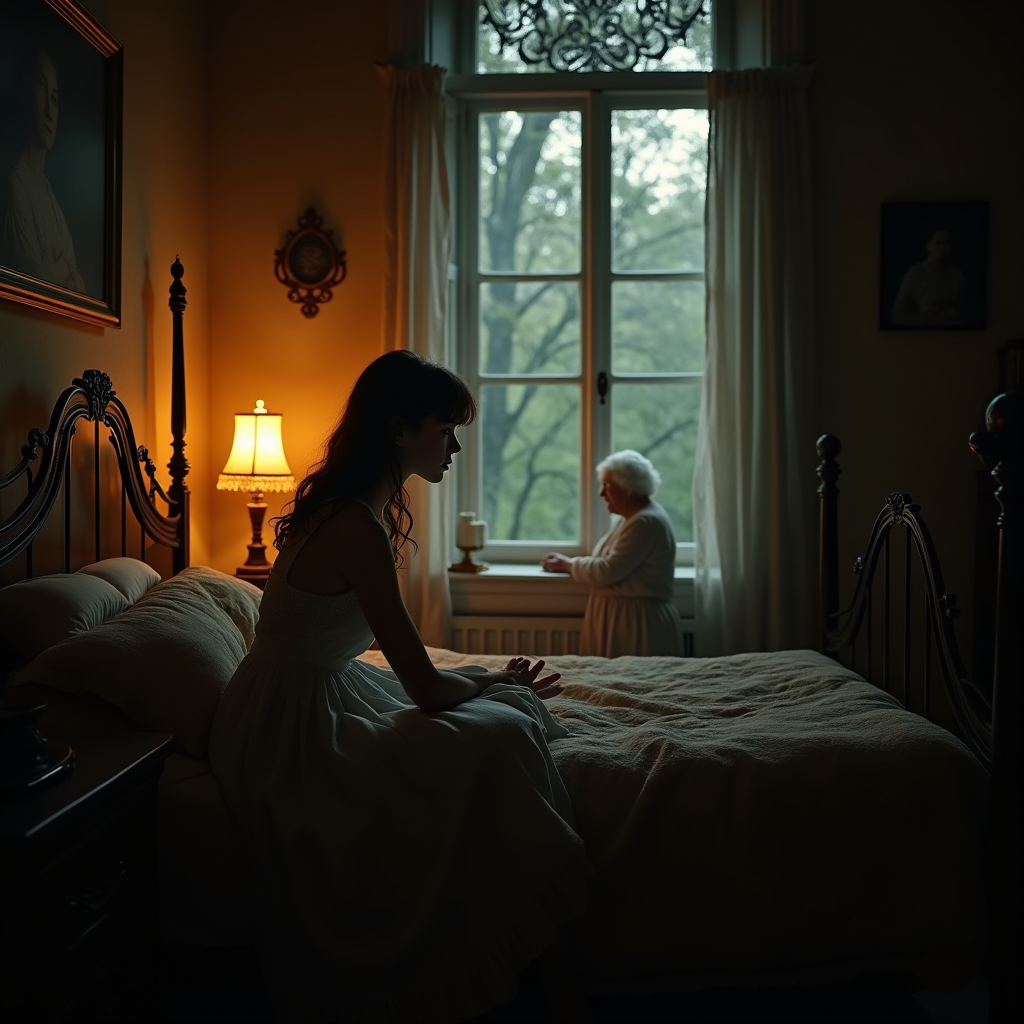
Her grandmother died three months later. She was present at the death, which happened in the same house in Baltimore, in the same bed where she had slept as a child. Her grandmother’s last words were not to her family. They were to someone that no one else could see, and they were in a language that her granddaughter did not recognize, and they were the last words her grandmother had ever spoken, and they were addressed to someone who was not there, and who was, her grandmother had always maintained, the only person she had ever really been speaking to.
She met him at a conference in Chicago, four years later. His name was not Edward. His name was Daniel, and he was a professor of medieval history at a university she could not remember, and he had been dead for sixty years when she met him, which was not a problem, because he had not yet realized it. He was kind, and he was interested in her work, and he had the quality of a person who had been waiting for a conversation for a very long time and who was relieved to finally find someone who was willing to have it. They talked for three hours at a conference reception. He asked for her email. She gave it to him. He did not email her for six months, which she had expected — she had understood, from her grandmother’s story, that the dead do not rush — and when he finally did email her, his message was brief and said only: I have been trying to find the right words. I am not sure I have found them yet. But I wanted you to know that I am still looking.
They corresponded for two years before she told him the truth. She told him the truth by telling him her grandmother’s story, and by telling him that her grandmother had known his name before she had, and by telling him that she had understood, from the first time she heard the story, that the promise was not her grandmother’s to keep. The promise was hers. Had always been hers. Was the reason she had been born, and the reason she had been told the story, and the reason she had been sitting in the kitchen when she was twenty-three, eating crab cakes that her grandmother had made every Sunday for forty years, waiting for the right moment to pass the promise along.
Daniel received this information with the calm of a person who has suspected something for a very long time and who is relieved, finally, to have it confirmed. He did not argue. He did not express disbelief. He said: I thought it might be something like that. He said: I have been waiting. I did not know what I was waiting for. Now I know.
They were married in the same house in Baltimore where her grandmother had made crab cakes every Sunday and where her grandmother had died. The wedding was small — she, Daniel, her mother, her sister, and the officiant, who was a friend of the family and who had known her grandmother and who did not ask questions when the ceremony required certain words that were not in any standard wedding liturgy. The ceremony took fifteen minutes. At the end of it, Daniel kissed her, and she felt something leave him — a weight, or a waiting, or a presence — and she understood that he was not entirely the same person he had been before, and that this was not a tragedy, and that the thing that had left was the thing that had been keeping him here, and that the thing that remained was the thing that had always been hers to keep.
They were married for nine years. He died on a Tuesday in March, which was the same month that her grandmother had died, and in the same house, and in the same bed, and his last words were to her, and they were in the language that her grandmother had spoken, and they were words she understood without knowing how she understood them, and they were the last words he had been trying to find for seventy years, and she heard them, and she knew what they meant, and she was grateful that he had finally found them, and she was grateful that she had been the person he had found them with, and she was alone in the house where her grandmother had died, and where her husband had died, and where she would eventually die, in a room that was waiting for her the way all rooms are waiting for the people who will eventually fill them, with the patience of the things that do not need to be filled to be complete.