The Promise They Whispered
Clara received the letter on a Tuesday, which was the kind of day that letters arrive, unremarkable and gray. The letter was from a law firm in a city she had never visited, informing her that she had inherited a house from an aunt she had met exactly twice in her life. Her mother’s sister, whom Clara’s mother had not spoken to in thirty years. The letter contained no explanation for why Clara was the inheritor rather than anyone else. It contained no details about the house. It contained only the facts of the inheritance and a request that she contact the firm to arrange for the transfer of ownership.
Clara’s mother, when told about the letter, went quiet. She did not ask to see it. She did not ask about the details. She simply said, “Her name was Harriet,” and then she went to her room and closed the door and did not come out for the rest of the evening.
Clara had never heard of Harriet before. She had grown up in a family that did not talk about the people it had lost touch with. She had never learned about the aunt who lived in a house by the sea. The aunt had married someone no one in the family had met. The aunt had died alone and apparently wealthy enough to leave something to a niece she had barely known.
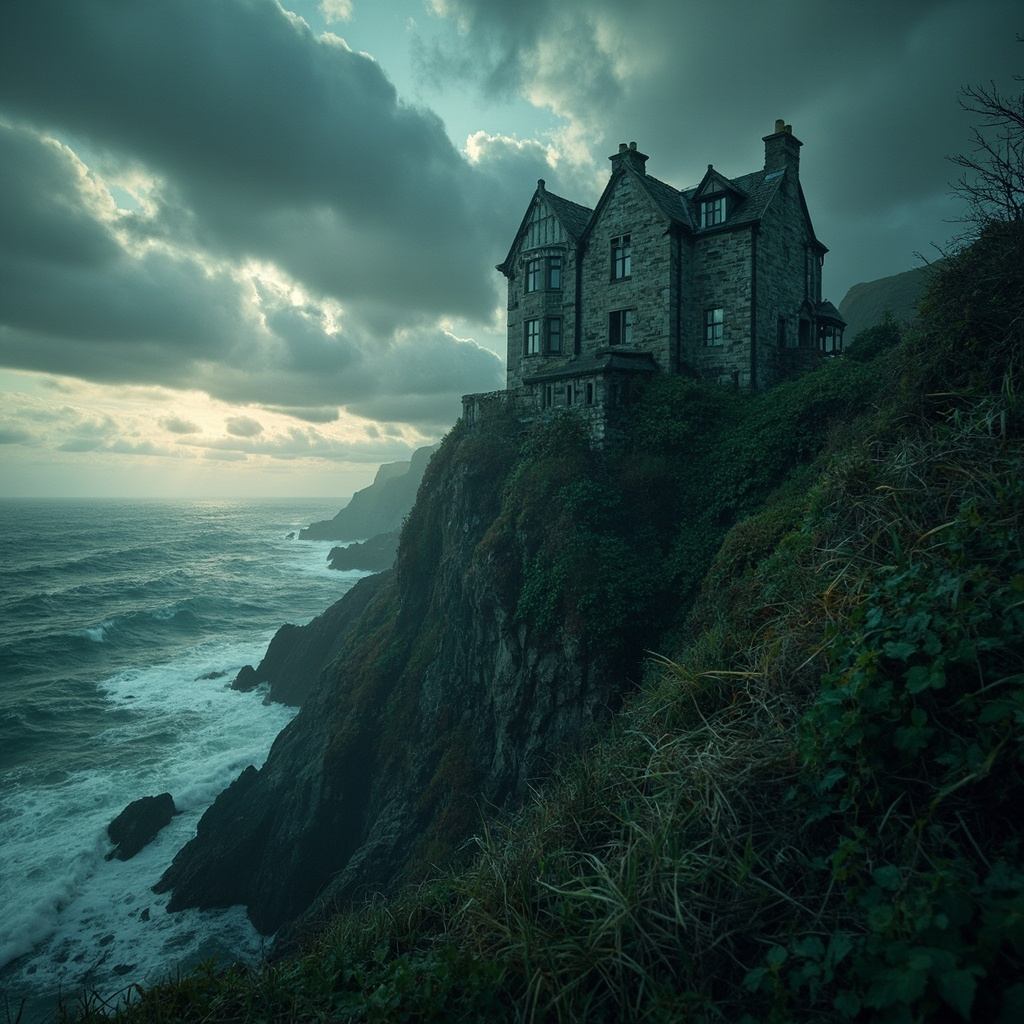
The house was on a cliff overlooking the ocean. It was larger than Clara had expected—three stories of gray stone and whitewashed wood, with a garden that had once been formal and had now become something else, something that the sea air and the salt and the decades of neglect had transformed into a kind of controlled wilderness. The house smelled of old books and wood smoke and something else, something that Clara could not identify but that felt, when she walked through the rooms, like the presence of someone who had been there recently.
The lawyer met her at the house and gave her the keys and the final paperwork. He told her that Harriet had been in good health until the last six months of her life. She had been lucid and active until the end. She had spent her final weeks going through the house. She had been organizing her affairs with a precision that suggested she knew exactly what she was doing. She knew exactly how much time she had.
The lawyer did not mention a husband. Clara asked. The lawyer said that Harriet had been widowed twenty years earlier, that she had no children, that Clara was the closest living relative. He did not say whether Harriet had left any other instructions or any other explanations for why she had chosen Clara as her inheritor.
Clara found the diary in the bedroom, in a drawer of the bedside table, in a leather binding that was soft with age. The diary was not Harriet’s. It was her husband’s diary, or had been. His name was written on the first page. The date of their wedding was written on the first page. A note said “for E, who asked for the truth.” The diary covered the last year of his life, the year during which he had known he was dying and had tried, in the pages of the diary, to explain to his wife what was happening to him and what he wanted from her after he was gone.
Clara read the diary in one sitting, in the bedroom where it had been found, with the sound of the ocean outside the window and the smell of old paper filling the room. The diary was not a love letter. It was something harder than that. It was a record of what it meant to love someone when you knew you were going to leave them. You knew that the person you loved would have to continue living in the world without you. There was nothing you could do to make that easier. The only thing you could do was tell the truth about what you were going through.
He had been honest about the fear. He had been honest about the anger. He had been honest about the moments when he had wanted to scream and the moments when he had wanted to pretend that nothing was wrong. He had written about his wife in the diary as if she were reading it, which Clara supposed she had been, in some sense, when she had found it after his death.
There were letters too, in a box in the closet, in the same bedroom where the diary had been found. Letters that Harriet had written to her husband after he died, one for each month of the twenty years she had lived without him. The letters were addressed to him by name, and they were addressed to him as if he would be reading them, as if the act of writing was itself a form of communication with someone who could no longer hear her in any conventional sense.
The letters were not sad, or not only sad. They were accounts of what had happened in the months since his death—things she had done, places she had gone, books she had read, conversations she had had with the sea and the sky and the garden that had been their garden and had now become her garden alone. She wrote to him about the weather. She wrote to him about the meals she had cooked and the meals she had forgotten to cook. She wrote to him about the nights when she had not been able to sleep and the mornings when she had woken up and reached for him before remembering that he was gone.
Clara read the letters and understood, finally, why Harriet had left the house to her. Not because they had been close—they had not—but because Clara was the person in the family who was most likely to understand what the house meant. Clara was the person who had recently lost someone, who was living in the aftermath of a death, who knew what it was to write letters to the dead and to keep writing them even though they would never write back.
Clara stayed in the house for three months. She did not know, when she first arrived, how long she would stay. She knew only that she could not leave immediately, that the house required something from her before she could let it go, that the letters and the diary and the garden and the ocean were telling her something that she needed time to hear.
She kept the house. She did not sell it, even though she did not need a second house, even though keeping it was financially irrational. She maintained it, in the way that Harriet had maintained it, as a place that was alive even when no one was living in it, as a structure that held its history not as weight but as presence. She visited when she could—two weeks in the spring, two weeks in the fall. She walked in the garden and listened to the ocean and read the diary when she needed to remember that love, even when it ended in death, was still love.
She wrote her own letters, sometimes, to the people she had lost. She did not send them. She put them in the drawer where she had found the diary, next to the letters that Harriet had written. She imagined that someone might find them, someday, and might read them, and might understand that the house on the cliff was not just a house. It was a place where the dead stayed, where the living came to visit them, where love persisted in the form of words written to people who could no longer answer.