The Room They Could Not Find
The house had been in Eleanor’s family for generations. It was a sprawling Victorian in a neighborhood that had once been prosperous and had become something else—rental properties and section eight housing, businesses that catered to people who had nowhere else to go. Eleanor had inherited the house from her grandmother, who had inherited it from her grandmother, who had bought it in 1892 with money that was old even then, money that had been accumulated through means that the family had long stopped asking about.
The house was larger than it appeared from the outside. Eleanor knew this because she had grown up in it, had explored every corner and every closet, had mapped its geography in the way that children map the spaces they inhabit. But there were rooms she had never found—doors that opened onto hallways that led nowhere, staircases that appeared to go up but actually went down, windows that looked out onto views that did not match the house’s location. She had learned, as she grew older, to navigate these anomalies by not thinking about them too much, by accepting that the house was what it was and that the rules that governed ordinary spaces did not apply.
The visitor came on a day in October, when the weather was cold enough that the windows were steaming and warm enough that no one questioned why they were closed. The visitor said he was from the city planning department, that he was doing a survey of historical properties in the neighborhood, that he would only be a few minutes. Eleanor let him in because that was what you did—you did not refuse to speak to city officials who appeared at your door with clipboards and official-looking identification.
The visitor walked through the house with a device that he said was measuring electromagnetic fields. He stopped in certain rooms and made notes. He asked Eleanor questions about the history of the house that she could not answer—who had built it, why the original builder had chosen this specific location, what had been here before the house was constructed. Eleanor did not know. Her grandmother had not known. No one in the family had ever known.
The visitor thanked her for her time and left. Eleanor found his card on the kitchen counter after he was gone. The card said only his name—Marcus—and a phone number. No organization, no title, no address. She put the card in a drawer and forgot about it.
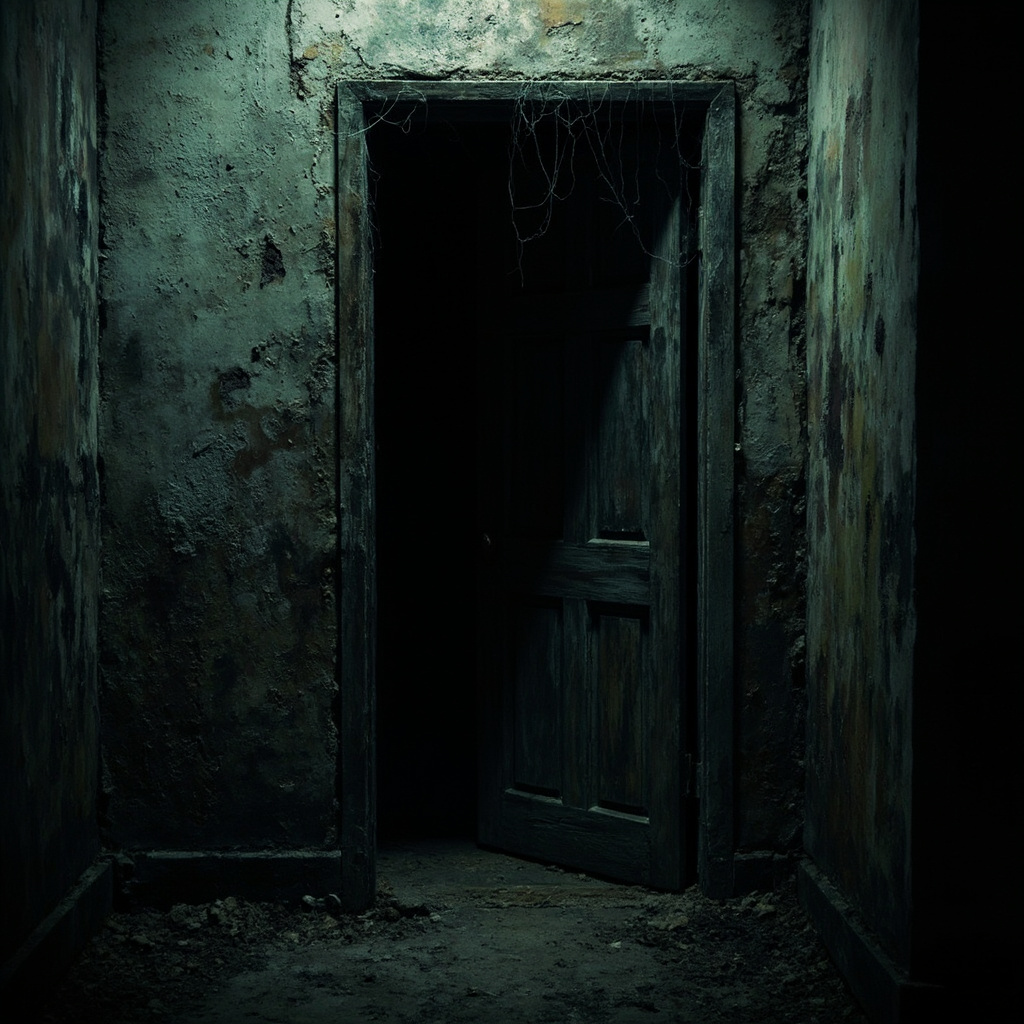
Two weeks after Marcus’s visit, Eleanor found the room. She had been looking for a box of old photographs that her grandmother had promised to leave her, searching in the basement where she thought she remembered seeing something similar years earlier. She found the photographs, and she also found something else: a door that she was certain had not been there the last time she had searched the basement, a door set into a wall that she was equally certain had been solid.
The door was not locked. Behind it was a room that was not large—perhaps twelve feet by twelve feet—but that felt larger, as if the dimensions were not physical but psychological, as if the space contained more than its walls suggested. The room was empty except for a chair, and on the chair sat a book. The book was open to a page that had writing on it—not printing, not any kind of writing Eleanor recognized, but something that was clearly meant to be read.
Eleanor looked at the writing. She felt something she had not felt since childhood: the sense that the house was watching her. It knew she was there. It had been waiting for her to find this room for reasons that she could not understand. She could feel those reasons in the way that you can feel the attention of another person, even when they are not looking at you.
Eleanor never used the room. She closed the door and covered it with a shelf and tried to forget it was there. But she could not forget it. She could feel it, in the moments when she was alone in the house, as if the room was pressing against the walls that separated them, as if the space that the room occupied was expanding and contracting in a rhythm that matched her own breathing.
She died in the house, two years later, in her sleep. The coroner’s report said heart failure. Her family found the house exactly as she had left it—the rooms she had lived in, the spaces she had avoided, the door to the room she had never used hidden behind a shelf that was positioned slightly too high to be convenient. They hired an estate liquidator to clean out the house before selling it.
The estate liquidator found the room. She was in the basement looking for the main breaker when she noticed the door, which was now not hidden at all but perfectly visible, as if it had always been there and she had simply not been paying attention. She opened the door. She looked at the book. She took photographs, which she showed to a linguist at the university where she was taking night classes.
The linguist recognized the script. It was a form of protective writing—not a language in the ordinary sense, but a system of symbols that had been used for centuries to create boundaries between spaces, to mark territories that were not meant to be entered by certain kinds of attention. The book was not a record. It was a warning.
The room was sealed. The house was sold. The new owners were told that the basement had structural issues that required a specific remediation process. They did not ask questions. They paid for the remediation. They moved in.
Some rooms exist in houses that do not want to be found. And some rooms, once found, change the people who find them in ways that cannot be undone.