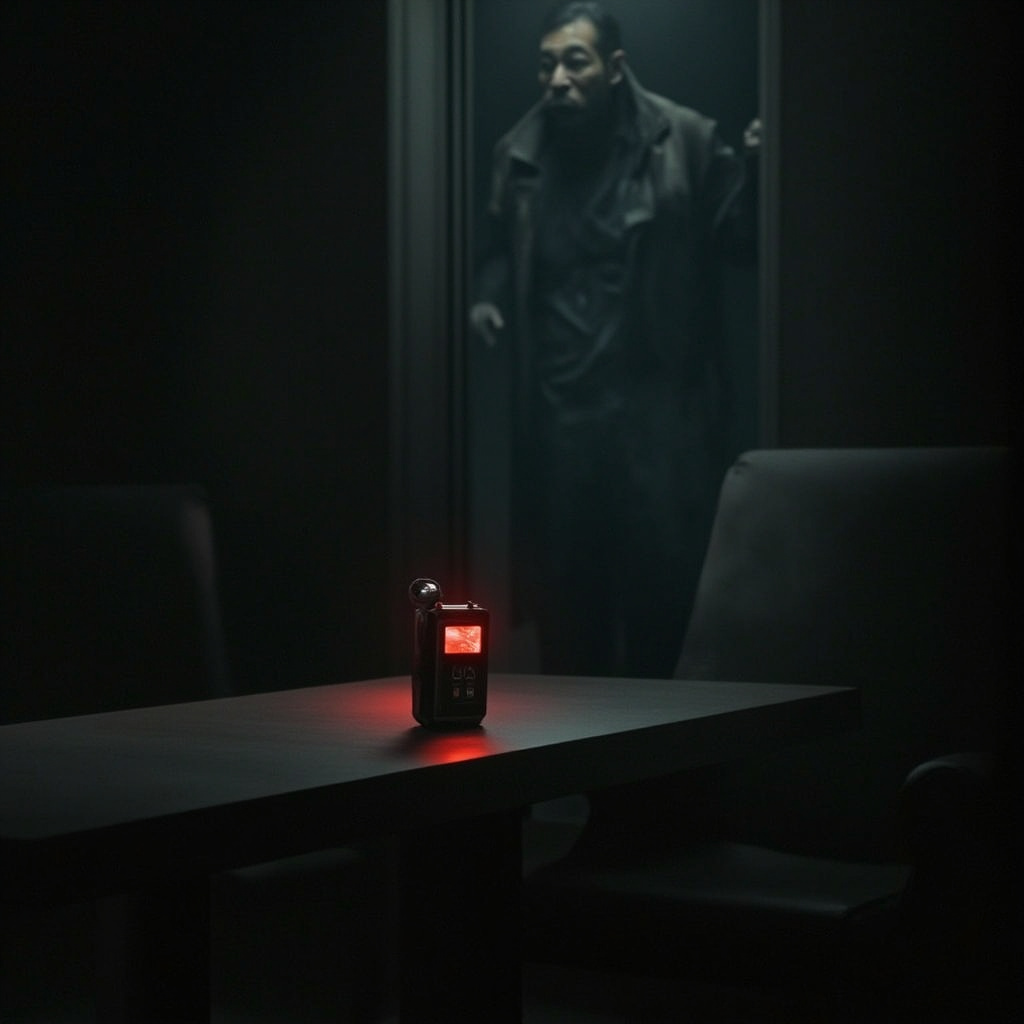
The Interview They Recorded
The journalist had been working on the story for two years. She was not well-known—she wrote for a regional publication that had a small circulation and a reputation for covering issues that the larger outlets ignored. She had found the source through a series of connections that she could not have predicted and that she would not have believed if someone had described them to her in advance. The source was a former government contractor who had worked on a program that he believed was illegal, immoral, and operating with the knowledge of people who should have stopped it.
The interview took place in a hotel room in a city that neither of them had any connection to. The source had chosen the location carefully—neutral ground, no surveillance risks that he could identify, a place where he felt safe enough to talk. The journalist had brought a recorder, which she placed on the table between them, and she had explained, before she turned it on, that she would not use his real name, that she would take precautions to protect his identity, that the story was important enough that she needed him to be as complete as possible in his account.
The source agreed. He spoke for four hours. He provided details that she could verify through other sources, documents that she could cross-reference, names that she could trace through the public record. He was not trying to exaggerate his role or the significance of what he had witnessed. He was trying to document something that he believed the public had a right to know.
The journalist published the story. It was picked up by a larger outlet within days, then by national media within a week. The program’s existence was confirmed by three additional sources who came forward after the initial story ran. The Congressional investigation that followed lasted eighteen months and produced a report that was largely redacted but that acknowledged, in its unredacted portions, that the program had operated outside its legal mandate for a period of years.
The source was identified, three months after the story ran, by someone who recognized his voice in the recording. It was not the journalist who had identified him—she had been careful, had altered the audio in ways that were subtle but effective. It was a former colleague who had worked with him on the program and who had been listening to the coverage with a specific question in mind: did the voice in the recording sound like the person he suspected it was.
The identification led to consequences for the source. He lost his job. He was investigated for the leaks that had led to the story. He was eventually cleared, but the clearance came after months of legal proceedings that had drained his savings and his energy. He had been punished for speaking, even though speaking had been the right thing to do.
The journalist won an award for the story—a national journalism prize that she had not expected and that she accepted with a speech that she had not prepared, in which she talked about the source and what it had cost him to come forward. She talked about the importance of protecting sources, about the responsibility that journalists had to the people who trusted them with information that could change the world. She did not use his name—he had asked that she not, even after he was identified—but she described what he had risked, and she asked the audience to remember that every story like this one depended on people who were willing to speak.
The program was not shut down. It was reformed—its operations modified, its oversight increased, its legal authority clarified in ways that made it slightly more difficult for future administrators to abuse. The reform was incomplete. The program continued to operate. The people who had been harmed by its earlier operations did not receive compensation or acknowledgment. The story had not fixed everything. It had only exposed what needed to be fixed.
The journalist continued working on similar stories for another fifteen years. She was more careful now—more aware of the ways that sources could be identified, more attentive to the technical details of protection, more skeptical of the institutional assurances that promised security. She had learned, from the experience, that the system that was supposed to protect whistleblowers was imperfect at best and that the imperfection fell hardest on the people who could least afford to bear its costs.
The source rebuilt his life. He found work in a different field, in a different city, under a name that was not his original one. He was not the person he had been before—he had been changed by what he had done, by the consequences that had followed, by the years of uncertainty that had accompanied the aftermath. But he was functional, and he was alive, and he believed that what he had done had been worth it, even though the cost had been higher than he had expected.
Some stories change the world. And some stories only change part of the world, in ways that are incomplete and partial and compromised by the imperfect systems through which reform typically happens. The journalist understood this. She did not stop writing because the reform was incomplete. She continued, because even partial reform was better than no reform, and because the people who were harmed by the program were better off with increased oversight than without it.