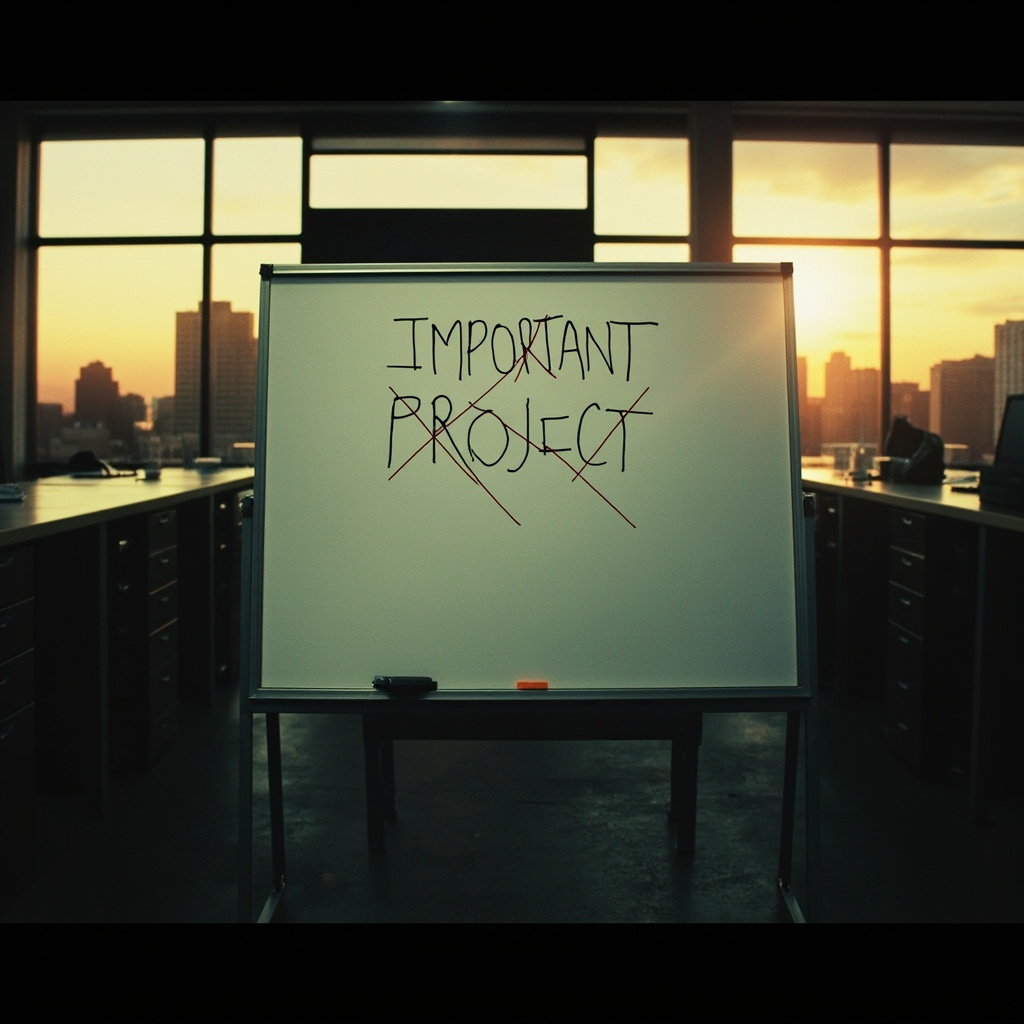
The Project They Canceled
The project had been David’s idea. He had been with the company for eight years, and he had spent those years watching good ideas die not because they were bad ideas but because the company was risk-averse in ways that went beyond prudence and bordered on pathology. He had finally decided to stop watching and start acting, and he had put together a proposal for a new product line that he believed could generate significant revenue within three years.
The proposal was thorough. David had spent six months on it, working evenings and weekends, consulting with colleagues who were sympathetic to his vision, building a financial model that showed conservative estimates and more aggressive estimates and scenarios that accounted for the kinds of setbacks that real businesses actually encountered. He had done everything that the company said it valued: he had followed the process, built the business case, demonstrated market need. He believed he had a real chance.
The project was approved. David was put in charge of leading it. He hired a team, established timelines, began the work of building something from nothing. The first six months went well—better than expected, in some ways. The team was motivated, the development was on track, the early customer feedback was positive.
The project was canceled in the middle of the second year. The reason given was a shift in strategic priorities—the company was refocusing on its core business, the project was not aligned with the new direction, the resources it required could be better deployed elsewhere. These were the official reasons. The unofficial reason, which David learned from a colleague who had heard it from someone who had been in the meeting where the decision was made, was that a senior executive had decided to take credit for the project and had concluded that David was an obstacle to that plan.
David’s team was dissolved. The members were reassigned to other projects or, in some cases, let go. The work they had done was archived, which meant that it would be stored in a format that no one could access and that would eventually be deleted. The customers who had expressed interest were informed that the product would not be coming to market. They were apologetic but unhelpful.
David was offered a different role—a position in a different division, doing work that was less strategic, less visible, less likely to attract the kind of executive attention that had doomed his project. He took it, because he needed the job, because he had a family and a mortgage and obligations that did not pause while he processed what had happened.
David left the company three years later. He had received an offer from a startup that was working on something adjacent to the project he had been fired from, something that used some of the same underlying ideas but that was different enough to be its own product. He took the offer. He did not burn bridges—the company he was leaving did not deserve the satisfaction of being the kind of place that people left in anger—but he did not look back either.
The startup was acquired by a larger company seven years after David joined. The product he had helped build became part of a portfolio that was managed by people who had not been involved in its creation, who did not know its history, who treated it as an asset to be optimized rather than as a creation to be developed. David watched this happen from his position in the acquiring company, where he had become a senior leader. He understood why the acquisition made sense. He did not have to like it.
The product was eventually discontinued. The decision was made by people who did not know what it had taken to build it, who did not know about the team that had been dissolved, who did not know about the customers who had been excited by something that never came to market. The discontinuation was announced in a quarterly report. It was not a significant event. The product line contributed less than two percent of the company’s revenue. Its discontinuation was mentioned in a footnote.
David read the footnote and thought about the six months he had spent building the proposal, the twelve months he had spent leading the team, the three years he had spent in the division where he had been exiled. He thought about the people who had been on his team, who had scattered to other jobs after the cancellation, who had built other things in other places. He thought about the customers who had been excited and who had eventually found other solutions. He thought about how much of what we create is not lasting, how few of our projects survive the organizations that create them.
He kept working. He built other things. Some of them succeeded. Some of them failed. All of them were eventually discontinued, or sold, or absorbed into larger portfolios that were managed by people who would never know what it had taken to build them. That was the nature of work in large organizations. It was not a tragedy. It was just the way things were.