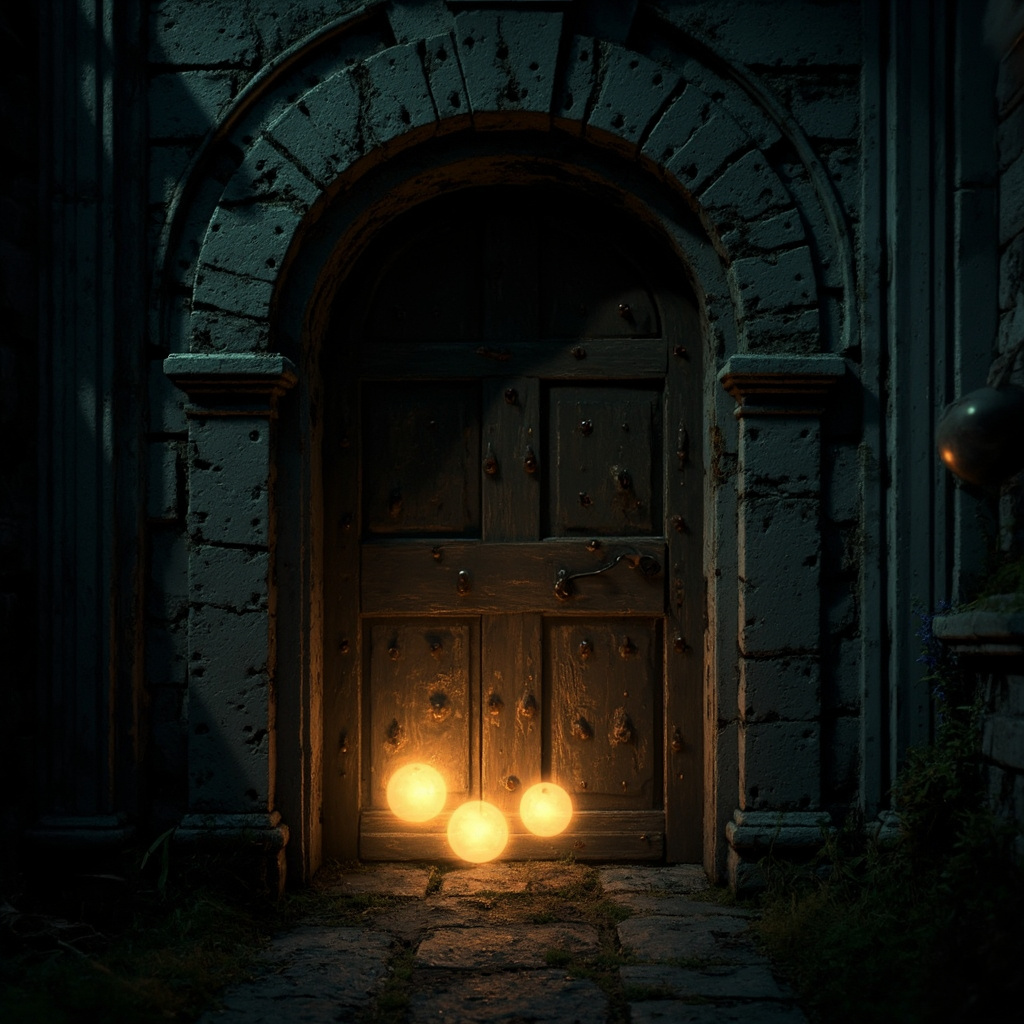
The Name They Could Not Speak
The town of Ashford had been abandoned for thirty years when the documentary crew arrived. They had been hired by a streaming service to investigate reports of strange occurrences—a town that had been evacuated without explanation, whose residents had scattered to other communities and refused, almost universally, to discuss what had happened. The documentary was meant to be a straightforward investigation: interview the former residents, examine the physical evidence, determine what had driven an entire community to abandon their homes.
What the documentary crew found instead was something that could not be explained, could not be understood, and could not be discussed without consequence. Within a week of their arrival, three of the crew members had experienced what they described as “memory events”—moments when they could not remember their own names, their own histories, the basic facts of their own identities. The events passed within hours, but they left behind a sense of unease that spread through the remaining crew like a contagion.
The crew interviewed fourteen former residents over the course of three weeks. Every interview followed the same pattern: the resident would begin talking about their life in Ashford, describing a normal childhood, a normal family, a normal existence. Then, as they approached the period before the evacuation, their speech would change. They would begin to speak around the thing they could not say, describing it through metaphors and circumlocutions, as if the act of naming it directly was something their minds would not permit.
One resident, an elderly woman who had been born in Ashford, came closer than anyone to saying what it was. “It wasn’t a ghost,” she said. “Ghosts are the spirits of dead people. What was in that town wasn’t dead. It was something else. Something that had been there longer than the town, longer than the people, longer than anything that had a right to be there. And when they built on top of it, it started to wake up.”
The physical evidence was more disturbing than the testimonies. The documentary crew found, in the basement of the town hall, a chamber that was not on any blueprint—an underground space that had been carved, over generations, into the bedrock beneath the town. The chamber was circular, approximately fifty feet in diameter, and its walls were covered in markings that were not writing but that had the same repetitive, systematic quality as writing systems found in ancient cultures around the world.
The markings had been made by something. The crew photographed them, measured them, analyzed them with every tool they had available. What they found was that the markings were not random—they encoded information, though no one on the crew could determine what the information meant. They were systematic, hierarchical, organized in ways that suggested meaning even if the meaning could not be extracted.
The crew left Ashford two weeks ahead of schedule. They cited “scheduling conflicts” in the press release they issued. But everyone who had been on the crew knew the truth: they had left because they were afraid. Not afraid in the way that people are afraid of danger, or of the unknown, but afraid in a way that was more fundamental, more primal—an fear that had nothing to do with the mind and everything to do with whatever part of the human organism knows, without being told, when something is wrong.
The documentary was never released. The streaming service cited “creative differences” and “production challenges” in the statement they provided to the press. The footage was never made public. The crew members signed non-disclosure agreements and took jobs in other industries, and none of them ever spoke publicly about what they had experienced in Ashford.
But the non-disclosure agreements did not prevent them from talking to each other. And what they talked about, in the private conversations they had over the following years, was the thing that they had all experienced but that none of them could name. They had been in the presence of something. They had felt its attention on them, like a weight, like a pressure, like the awareness of being observed by something that was older and larger and more powerful than any of the categories they had been taught to use for understanding the world.
They did not know what it was. They knew only that it had been in Ashford, and that the town had been built on top of it. They knew that the people who had lived there had known about it. They had built their lives around its presence. They had learned to live with it. They had developed rituals and practices and unspoken rules designed to manage its attention, to keep it calm, to prevent it from doing what it had always wanted to do: being acknowledged.
The town had been evacuated because someone had spoken its name. And in speaking the name, they had forced it to respond.
The documentary crew had not spoken the name. But they had come close. And the thing in the chamber had noticed them. And they had left before it could do what it did to anyone who got too close to knowing what it was.
Some things do not want to be known. And some things, when they are known, do things that the knower cannot undo.