The Keeper’s Secret
Sarah inherited the lighthouse on her thirtieth birthday. The will had been clear: she would receive the property on the same age her mother had been when she died. Her mother had died in childbirth, which meant Sarah received the lighthouse on her thirtieth birthday, which meant she had spent thirty years not knowing that her mother had been the keeper of a lighthouse that was not, technically speaking, a lighthouse at all.
The lawyer who delivered the news seemed uncomfortable, as if he had read the will too many times and had come to suspect that there was something in it he did not understand. “There’s also a letter,” he said, handing her an envelope that was yellowed with age. “From your mother. She wrote it before you were born, and she asked that it be given to you when you turned thirty.”
The letter was short. Three paragraphs, written in a hand that Sarah did not recognize but that felt, in some way she could not explain, familiar. The first paragraph explained the lighthouse. The second paragraph explained the duty. The third paragraph apologized for not being there, and for what she was about to learn, and for the life that Sarah would now have to live whether she wanted it or not.
The lighthouse was not a lighthouse. It was a beacon—a light that guided the dead to their rest. Sarah’s mother had been the Keeper before her, and her grandmother before that, and every woman in Sarah’s family going back as far as anyone could remember. The duty passed from mother to daughter, and it could not be refused, and it could not be shared, and it would consume whoever held it until they were ready to pass it on.
Sarah drove to the lighthouse on a Tuesday in March. It was located on a promontory that was technically part of the mainland but felt like an island—the road that connected it to the rest of the coast was barely wide enough for a single car, and on either side the land dropped away sharply to rocky shores that the Atlantic had been eroding for millennia.
The lighthouse itself was smaller than she had expected. Two stories, plus the lamp room at the top. A keeper’s cottage attached to one side, currently unoccupied. A small dock that was clearly no longer in use, its wooden planks silver with age and salt. And at the top, the light—a apparatus that Sarah did not recognize, not immediately, but that began to make sense once the sun went down and she climbed the spiral staircase to the lamp room and saw what the lighthouse actually did.
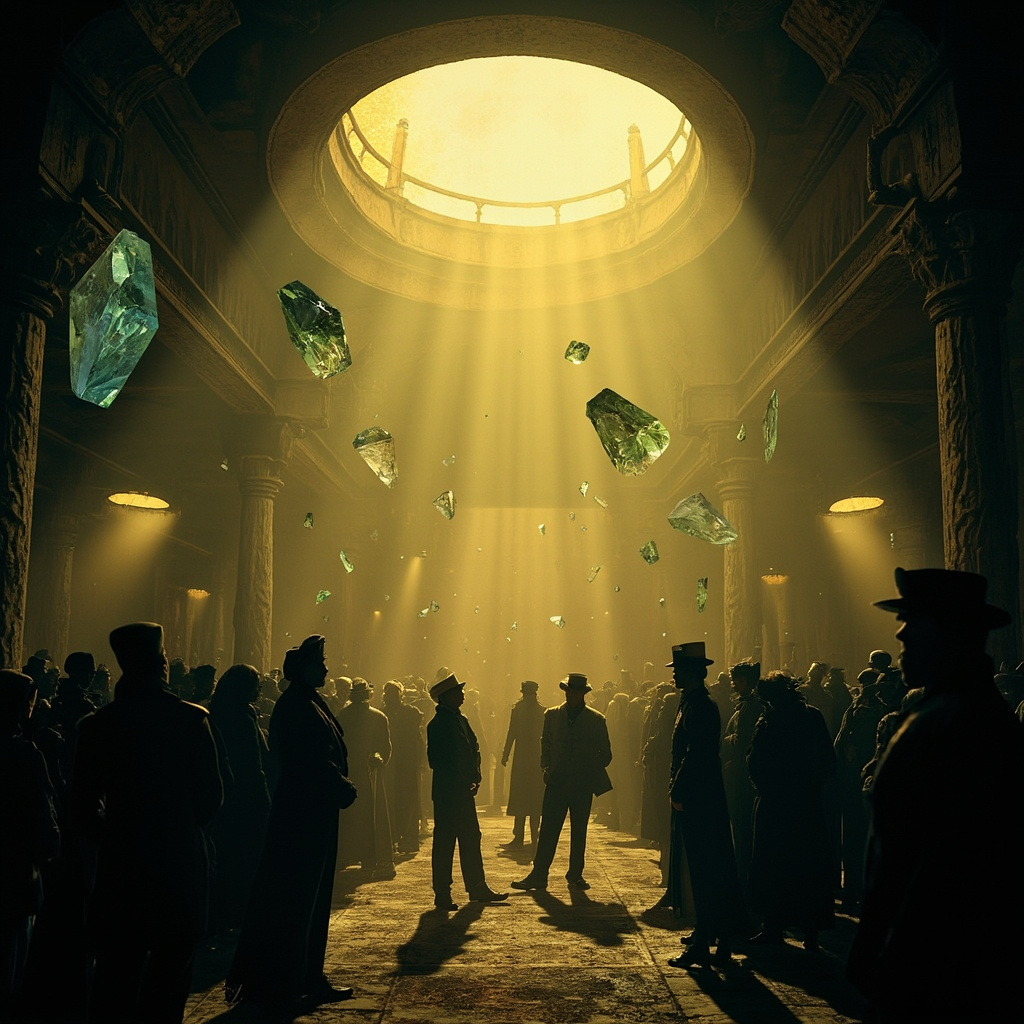
The light did not shine outward. It pulsed inward. It drew things from the darkness—not all darkness, not the ordinary darkness of night, but a specific kind of darkness, a darkness that had weight and presence and intention. The dead, Sarah’s mother had written. The ones who cannot find their way. The ones who have been lost for so long that they have forgotten they were ever alive.
The first time Sarah saw them, she screamed. They were not ghosts in the traditional sense—transparent figures that drifted through walls and made eerie noises. They were something else. They were presences that occupied space in a way that solid objects did, that cast shadows that the lighthouse’s light could not dispel, that spoke in voices that were almost but not quite human.
“How long do I have to do this?” Sarah asked her mother’s ghost, which appeared to her on the third night, standing at the foot of the bed with an expression of infinite patience.
“Until you find someone to pass it to,” her mother said. “Or until you die. Whichever comes first.”
Sarah was thirty years old, and she had built a life in the city—a career in marketing, a relationship that was going nowhere, an apartment that she could almost afford. She had friends, or people she called friends, or people who attended the same gym she did and acknowledged her in the hallways. She had a life that she had chosen, deliberately, carefully, the way people choose things when they are afraid of making the wrong choice.
She gave it all up for the lighthouse. Not because she was selfless, or noble, or called to duty in the way that heroes in stories are called. She gave it up because she understood, after the first month, that she could not do both. The lighthouse demanded attention at night—constant attention, the kind that sleep-deprived her to the point of physical danger. The city life demanded attention during the day—commuting, working, maintaining the relationships and routines that kept a career on track. She could not do both. She had to choose.
She chose the lighthouse. She was not sure, even now, whether it was the right choice. But she understood why she made it. The lighthouse was real in a way that her city life had never been. The dead were real. Their journeys were real. The light that guided them was real. And every morning, when the sun came up and the work was done and she climbed down from the lamp room to a cottage that was slowly becoming a home, she felt something that she had never felt in the city: purpose.
Sarah was ninety-two when she died. She had been the Keeper for sixty-two years. In that time she had guided more souls to rest than she could count. She had learned the names and faces and stories of the dead in a way that made them real to her. She had become something more and something else than the person she had been when she arrived on the promontory with a yellowed letter and a head full of questions.
Her niece inherited the lighthouse. Her niece was twenty-nine years old and had spent her whole life wondering why her aunt had lived in such an isolated place, why she had never married, why she had always seemed to be carrying a weight that her aunt refused to name. She arrived at the lighthouse on the day after Sarah’s death, expecting to find answers.
She found the lighthouse, and the cottage, and the lamp room at the top with its strange apparatus that was not a lighthouse at all. And she found, on the kitchen table, a letter that Sarah had written decades ago and had left unsealed, as if she had known that someday someone would need to read it.
“The light will show you what you need to see,” the letter said. “The dead will come, and they will need your help, and you will give it to them because that is what the Keeper does. It is not a gift. It is not a curse. It is simply what we do, the women in our family, and it has been this way for longer than anyone can remember.”
“You will learn to love it. And when you are ready, you will find someone to pass it to, and they will learn to love it too. That is all. That is everything. And it is enough.”
The niece read the letter, and she climbed the spiral staircase, and she looked out at the dark water and the rocky shore and the nothing that pressed in from every direction. And when the sun went down, she stayed. She climbed to the lamp room. She learned what the light did. And she began the work of becoming what her aunt had been.
And the light, for the first time in sixty-two years, flickered with something that might have been joy.