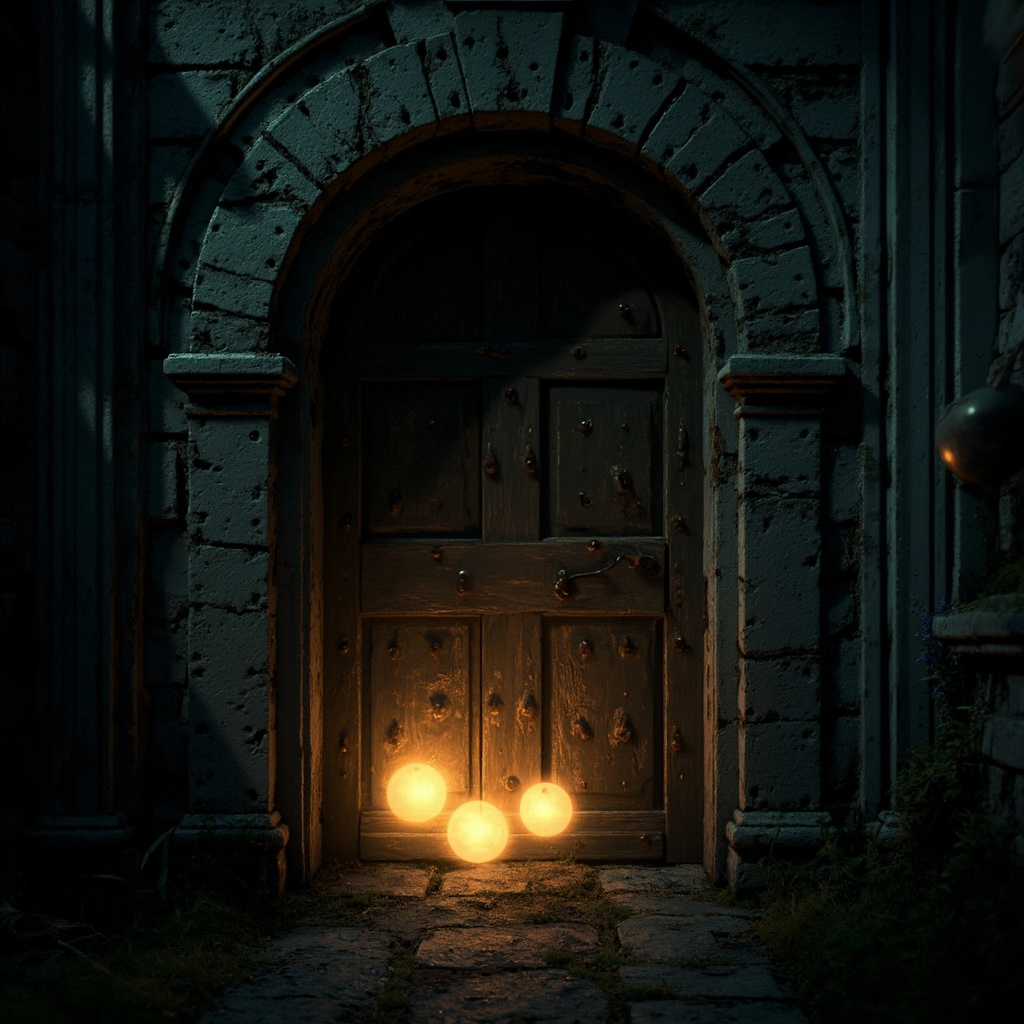
The Cellar That Would Not Forget
The real estate listing called it “a home with character.” Daniel should have asked what kind of character before he signed the rental agreement. The Victorian stood at the end of a quiet cul-de-sac, abandoned for nearly two decades after its previous occupants simply disappeared—no forwarding address, no death certificate, nothing but abandoned furniture and a cellar door that had been sealed from the inside.
The smell reached Daniel on the third day. Not mildew. Not rot. Something sweeter, almost floral, like roses that had been cut and left too long in stagnant water. He traced the scent to the cellar entrance, even through the sealed door—thick, cloying, wrong.
He should have walked away. He knew that now, lying awake at half-past three in the morning, listening to a rhythmic sound from below. Not knocking. Not dripping pipes. Tapping. Three quick, three slow, three quick. A pattern he didn’t recognize but somehow felt was meant for him.
By the fifth night, the nails had begun to work themselves loose. Daniel found this impossible—the screws were old, the wood was swollen, and nothing in the house could have produced that kind of pressure. Yet there they were, jutting out like broken teeth, and when he brushed against them, they were warm. Not warm from sunlight. Warm like skin.
He hired a locksmith. The locksmith took one look at the door and refused the job. “This door’s been opened recently,” he said. “Look at the hinges—they’re not rusted, they’re not caked with dust. Someone’s been using them.”
“The house has been vacant for twenty years,” Daniel said.
The locksmith left without another word. But Daniel caught his final remark as he hurried to his truck: “Then someone’s been making sure it stays that way.”
Daniel found the photograph collection in the attic during the first week of August. Four generations of the same family, based on the clothing styles ranging from the 1950s through the late 1990s. Every photograph showed them posed in front of the house. Every face in every photograph had its eyes shut.
Not sleeping—closed deliberately. Like someone had edited each image, replacing every pair of open eyes with closed ones. The same serene expression across every face, every generation, as if they had all made a mutual decision to close their eyes and never open them again.
The final photograph showed the entire family gathered around the cellar door. Seven people: grandmother, parents, three children, and a newborn. All with closed eyes. All smiling. On the back, written in faded ink: “We Keep Everything.”
Daniel pulled the nails free on the tenth day. He told himself it was just curiosity. He told himself he needed to understand. He told himself the smell wasn’t growing stronger. All comfortable lies.
The cellar stairs groaned beneath him, each step protesting like a wounded creature. At the bottom, a bare light bulb hung from the ceiling—glowing. It had been dark when he’d moved in. He was certain of that. The circuit breaker was upstairs, and the cellar had no power line.
The light revealed a cellar that defied the architecture. The house was a modest Victorian on a narrow lot. The cellar should have been cramped, concrete, maybe eight feet at its deepest. This one stretched forty feet into darkness, walls lined with shelving units, and on every shelf: glass jars. Hundreds of them, neatly aligned, each containing a single item suspended in what appeared to be amber honey.
Eyes. The jars contained human eyes. Some still fringed with lashes, some with irises the color of forgotten skies. Each jar bore a handwritten label with a name and a year. The years stretched back two centuries. The names were not the names of the family in the photographs.
“You’ve found us,” a voice emerged from the deepest shadows, where the light didn’t reach. “We have been waiting for someone capable of seeing.”
Daniel turned. In the far corner, seated in a rocking chair that had belonged to someone important, sat an elderly woman with eyes like fogged glass. Her smile revealed teeth that were too perfect—not human-perfect, but photograph-perfect, like an idealized rendering rather than the real thing.
“The family who owned this house,” she said, “they took our sight. All of it. We were the original inhabitants. We gave them this land, and they took our eyes in exchange. For three generations, we lived in blindness, until we learned to perceive without eyes. We learned to see through memories.”
“I don’t comprehend,” Daniel whispered.
“You will,” she replied, her smile widening. “When we take yours, you will see everything we have witnessed. Every secret. Every wrongdoing. Every moment of joy and terror this house has stored. You will remember it all, and you will contribute your eyes to our collection, and we will see through you for eternity.”
The bulb died. In the complete darkness, Daniel felt cold hands—he counted six pairs—gently cradling his face. A whisper reached him: “Don’t resist. Resistance only makes the remembering more painful.”
Six months later, the real estate listing for the property described it as “available once more.” The new occupant, a young woman named Rebecca, observed that the cellar door was sealed from the inside. She arranged for a locksmith, but before he arrived, she leaned close to the wood and heard something that made her recoil in horror.
Three quick, three slow, three quick. And beneath that, in a voice that sounded like someone reading from an endless journal: “Daniel, 2026. He remembered everything. He screamed for seventeen hours before his eyes were suitable for the collection…”
The door was sealed again. The nails were warm.