The Vanishing Point
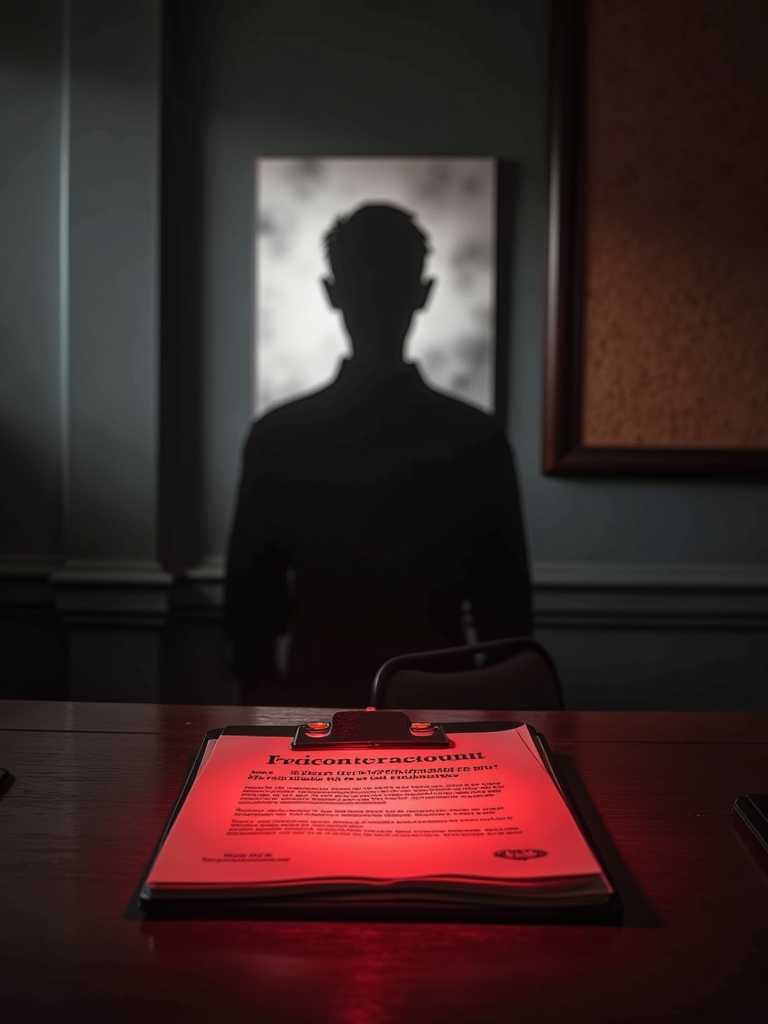
The photograph showed a man who did not exist. At least, that was what Detective Inspector Maya Okonkwo was told by the three people she had shown it to: the victim’s wife, the victim’s business partner, and the victim’s mother. None of them recognized the man in the photograph, and all three of them were very clear about the fact that the man was not the victim.
The victim’s name was Daniel Reeves. He had been found dead in his flat on a Monday morning. The cause of death was a single gunshot wound to the chest. The gun was found beside him, registered to his name, with his fingerprints on the grip. The scene looked like a suicide. Everything about the scene looked like a suicide.
Except for the photograph. It was on his desk, face up, in a position that suggested it had been placed there deliberately. The photograph showed a man standing in front of a building Maya did not recognize. The man was in his forties, clean-shaven, wearing a dark suit and an expression that was neither happy nor sad but something in between.
The Search
Maya’s team ran the photograph through facial recognition databases. No match. They checked the building in the background. It was a standard office building in the City of London, housing approximately two hundred companies. They checked the metadata on the digital copy of the photograph. It had been taken three days before Daniel Reeves died. The location data placed the photograph at an address in Greenwich that did not match the building in the background.
Someone had doctored the photograph. Or someone had taken it somewhere else and the location data was wrong. Either way, the photograph was evidence of something that Maya could not yet name.
She visited Daniel Reeves’s flat with a warrant and a growing sense that she was missing something obvious. The flat was tidy, almost clinically so. No signs of struggle. No signs of forced entry. The kitchen was clean. The bathroom was clean. The bedroom was clean. Everything was clean, the way things are when someone has either a very disciplined routine or a very recent visitor who has tidied up after themselves.
She found the answer in the study. On the shelf behind Daniel’s desk was a row of books, all of them identical in size and binding. She pulled them down one by one. They were journals. Seven of them, each one covering a year of Daniel’s life, written in a precise, methodical hand that suggested the man treated journaling the way other people treat accounting.
The most recent journal was incomplete. The last entry was dated the day before he died. It was one sentence: He found me.
The Connection
Maya cross-referenced Daniel’s contacts with the facial recognition results. She checked his phone records, his emails, his bank statements. And she found a pattern that connected the photograph to a name she had seen before: Thomas Greeley, a farmer from Kent who had disappeared three weeks earlier.
Thomas Greeley had been found alive two days after his disappearance, sitting in a field with an expression that suggested he had seen something he could not explain. The police report noted that he refused to talk about what had happened during the three days he was missing. His wife said he had not been the same since.
Maya visited Thomas. He was sitting in his kitchen, staring at the wall. He looked at Maya with eyes that were focused on something beyond the room, beyond the house, beyond whatever reality she was standing in.
“Did you know Daniel Reeves?” she asked.
He nodded. “He was looking for the same thing I was.”
“What thing?”
“The man in the photograph.”
“Who is he?”
Thomas shook his head. “I do not know his name. I only know what he does. He finds people who have disappeared. And when he finds them, they stop existing. Not in the physical sense. In the social sense. Their families do not recognize them. Their friends do not remember them. Their records disappear. They become ghosts with breathing.”
Maya stared at him. She wanted to dismiss what he was saying as the rambling of a traumatised man. But she could not, because the photograph on Daniel’s desk showed a man who no one recognized, and Daniel’s last journal entry was one sentence: He found me.
“Where do I find him?” she asked.
“You do not find him. He finds you. And when he does, you will understand why no one could remember the man in the photograph.”
Maya went back to the station. She filed the report. She classified the case as a probable suicide. She put the photograph in the evidence locker. And she tried, with limited success, to forget the look in Thomas Greeley’s eyes when he said, He finds you.