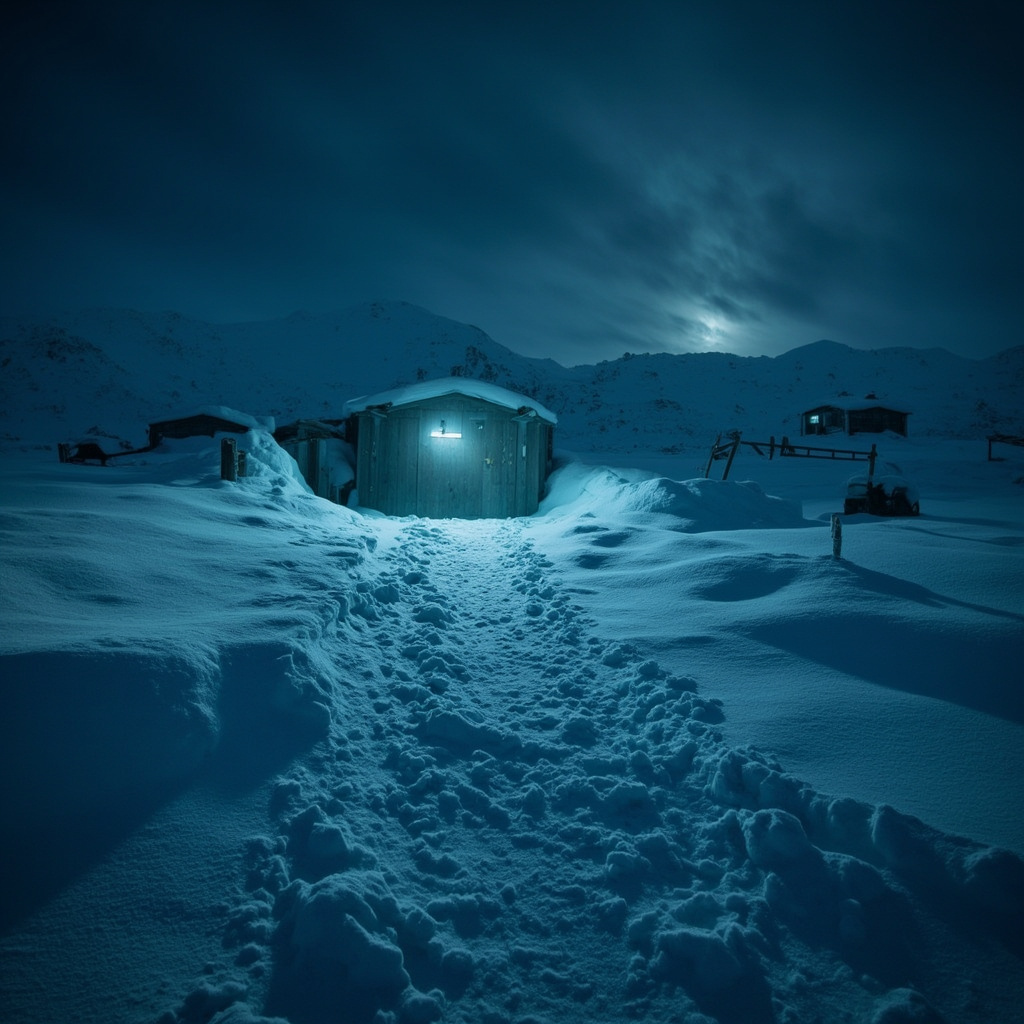
The Moonlit Promise
They married at midnight, under a blood moon, in a chapel that had been abandoned for a hundred years. It was not a legal ceremony—neither of them cared about legality. It was a vow, made in the old way, witnessed by the darkness and the stars and the ancient stones of a building that had been built to honor something that no one remembered anymore.
Elena and Marcus had been enemies for twenty years. Their families had been feuding since before either of them was born—a conflict that had started over a land dispute so old that the original documents were barely legible, and had been perpetuated by generations of family members who had inherited the hatred along with the property. They had been raised to despise each other. They had been trained to fight each other. They had been expected to destroy each other, the way their parents had destroyed each other, and their grandparents before them.
They fell in love anyway.
It happened the way these things always happen in stories that are not quite fairy tales—slowly, improbably, through a series of encounters that neither of them had planned and both of them had tried to prevent. They kept finding themselves in the same places at the same times. They kept having conversations that started as arguments and ended as something else. They kept discovering, in each other, the parts of themselves that they had not known were missing.
By the time they understood what was happening, it was too late to stop it. They were already in love, already committed, already past the point where they could pretend otherwise. And so they had made the only choice that was left to them: they had run away, in the middle of the night, to a chapel at the edge of nowhere, and they had married each other in a ceremony that neither of their families would ever accept.
The families responded exactly as expected. Marcus was disowned. His father signed the papers without speaking, without looking at his son, without acknowledging that the wedding had ever happened. Elena was imprisoned in her father’s house—a gilded cage, comfortable and inescapable, from which she wrote letters to Marcus that were intercepted and burned.
They had planned for this. They had known, when they made their vow, that it would cost them everything. What they had not planned for was how much they would lose. The families’ hatred had been inherited, not earned. When Marcus and Elena were removed from the equation, the feud did not die—it intensified. Each family blamed the other for the lovers’ disappearance. The violence escalated. People died who had not needed to die, in conflicts that were fed by the fuel of two young people who had dared to love across enemy lines.
Marcus and Elena heard about it from the villagers who brought them food, who had known about the secret chapel for generations and who protected it as a place of refuge for anyone who needed to escape the feuding. The news was always bad. A cousin killed in a raid. A barn burned. A child orphaned by a retaliation that was responding to a retaliation that was responding to something that had happened before any of them were born.
“This is our fault,” Elena said, one night, when the reports had been particularly grim.
“No,” Marcus said. “This is their fault. They chose to kill each other. We didn’t make them do that.”
“But if we hadn’t—”
“If we hadn’t loved each other, we would have married people from our families, and we would have raised our children to hate each other, and the feud would have continued for another generation. At least this way, it ends with us.”
Elena escaped on the third month. It was not easy—she had been watched constantly, guarded by men who had been loyal to her father for decades—but the villagers had allies on the inside, and with their help she slipped through a window in the middle of the night and ran until she reached the chapel.
Marcus found her there, barely alive, with frostbite in her toes and a fever that had been building for days. He had been surviving on what the villagers brought them, supplementing with hunting and fishing, waiting for the day when she would find her way back to him. He had not expected her to come back like this—broken, exhausted, a shadow of the woman who had laughed with him in the moonlit forest on the night they had sworn to belong to each other.
They had planned to run further. To the coast, to another country, to anywhere that was far enough away from the families and their endless war. But the families had followed. There was no running from a feud that had lasted a hundred years. There was no escaping a hatred that had been cultivated for so long that it had become as natural as breathing.
“We have to end this,” Elena said. She was weak, and she was tired, and she knew that she did not have the strength to run anymore. “Not by running. By facing it.”
“They won’t listen to us,” Marcus said. “They’ve spent a hundred years not listening.”
“Then we make them listen. We call a gathering. Both families, all survivors, everyone who’s been touched by this. We tell them the truth about how it started. And we give them the chance to choose something different.”
They returned to the chapel where they had married. They sent word to both families, through channels that had been used for centuries to communicate in times of crisis. They waited.
The gathering took three days. Both families came, armed and suspicious, prepared for betrayal. But Marcus and Elena had made a promise, on their wedding night, that the chapel would be a place of peace—that no violence would ever happen within its walls. And they held to that promise, even when it would have been easier to break it.
They spoke the truth about what had happened: how the feud had started on a lie, how the original land dispute had been manufactured by a man who wanted both families’ property and had succeeded by turning them against each other. How the lie had been perpetuated by people who profited from the hatred—the weapons merchants, the lawyers, the intermediaries who had no interest in peace because peace would have put them out of business. How the feud had consumed everyone it touched, generation after generation, because no one had ever stopped to ask whether the original grievance was real.
The truth was not enough to heal everything. Twenty years of hatred cannot be undone in three days, no matter how compelling the evidence. But it was enough to stop the killing. The families agreed to a truce—not a peace, not yet, but a cessation of hostilities that would allow everyone to catch their breath and consider whether the cycle they were trapped in was really the one they wanted to continue.
Elena and Marcus rebuilt the chapel. They called it the Church of the Moonlit Promise—a place where enemies could become lovers, where hatred could transform into something else, where the cycle that had consumed their families for a hundred years could finally be acknowledged for what it was and broken.
They lived the rest of their lives in the shadow of the chapel. They had children, who grew up knowing both families and belonging to neither. They watched the truce hold, and then weaken, and then hold again. They knew that the feud would probably never truly end—that it was too old, too deep, too embedded in the identities of both families to be erased completely.
But they had made their promise. And they had kept it. And that was all they could do—show the world that another way was possible, even if that way was harder than the way that had come before.
Some promises are not about the words spoken. They are about what you are willing to do to keep them. And Elena and Marcus had been willing to do everything.