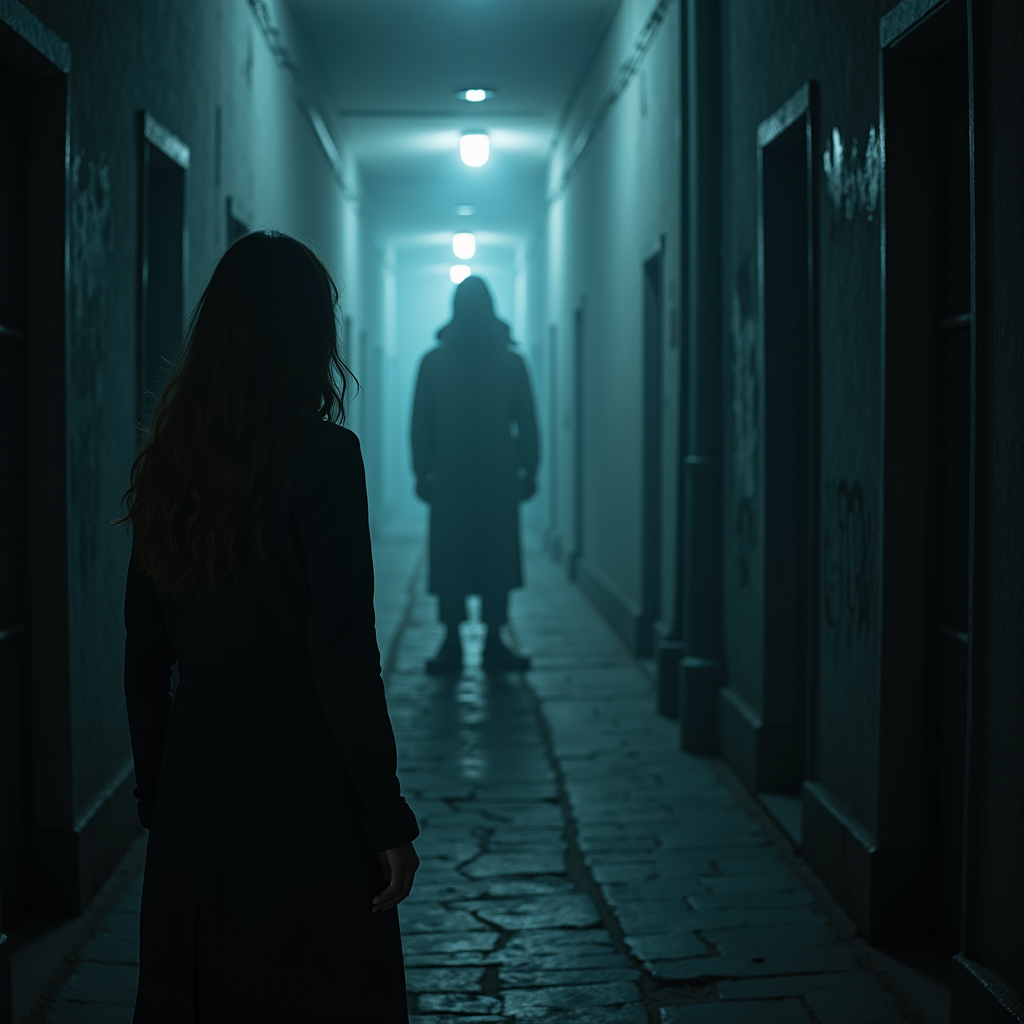
The Memory Eater
Dr. Sarah Chen noticed the gaps in her patients’ memories first. Not the usual gaps that come with trauma or age. These were precise, surgical absences—entire days removed from people’s lives with the accuracy of a surgeon removing a tumor, leaving clean edges and no scar tissue.
Her patient David could not remember three consecutive days. He remembered going to work on Tuesday. He remembered waking up on Friday. The days in between existed only as a blank space in his mind, like pages torn from a notebook with such precision that the remaining pages showed no sign they had ever been there.
“Did anything unusual happen before Tuesday?” she asked.
“I walked home past the old theater on Market Street. There was a man standing in the doorway. He looked at me and smiled. That is the last thing I remember.”
The Pattern
Sarah had three other patients with identical symptoms. Each one had walked past the old theater. Each one had seen a man standing in the doorway. Each one had lost exactly three days of memory.
She visited the theater on a Saturday afternoon. The building had been closed for years. The windows were boarded up. The entrance was chained. Nobody could have been standing in the doorway.
But she saw the marks on the pavement. Footprints in the dust, leading from the doorway to the street and then in two directions. The footprints were fresh, as though someone had been standing there within the last few hours.
She took photographs. She measured the distance between prints. She documented everything with the thoroughness of a scientist who knows she is observing something extraordinary.
The Confrontation
She returned on Monday evening with a flashlight and a notebook and a growing sense that she was about to make a serious mistake. The chains on the door were broken. The doorway was open, and from inside she could hear the faint sound of someone humming—a low, tuneless melody that seemed to vibrate in her chest more than her ears.
She stepped inside. The theater was dark but not empty. She could feel a presence somewhere in the auditorium, sitting in one of the rotting seats.
“Who are you?” she called out.
The humming stopped. A figure emerged from the darkness—a man, ordinary-looking, the kind of face you forget while you are still looking at it.
“I am collecting,” he said.
“Collecting what?”
“Memories. The painful ones. The ones people would rather forget. I take them away and they never have to carry them again.”
“You took three days from my patient.”
“I took the day his daughter died. I took the funeral. I took the moment he realized he would never hear her laugh again. I did him a kindness.”
“You do not get to decide what people need to remember.”
“Do not I?” He smiled. It was the same smile her patients had described. “What about the memories you carry, Doctor? The ones you would give anything to forget. Would you like me to take those too?”
She felt it then—a pressure behind her eyes, like hands reaching into her mind through the back of her skull, searching for the memories she kept locked away. The memory of the accident. The memory of the hospital. The memory of the last thing her brother said to her before he stopped speaking forever.
She ran. She ran out of the theater and down the street and did not stop running until she reached her apartment, where she locked the door and sat on the floor and tried to remember if the memories were still there.
They were. All of them. The accident. The hospital. The silence. Every painful moment she had spent years trying to forget was still intact, still vivid, still as sharp as the day it happened.