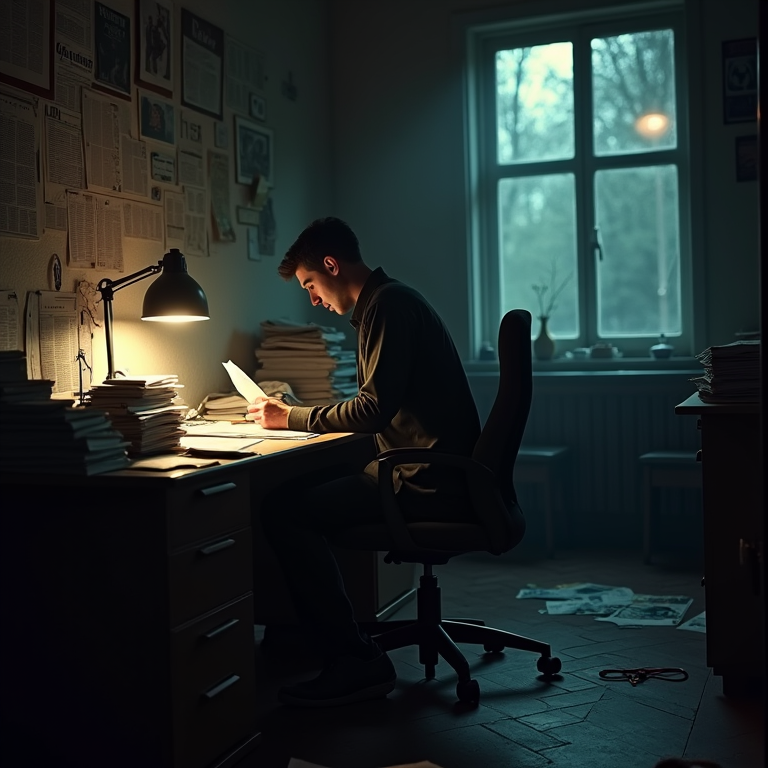
The Deadline
The editor-in-chief of the Tribune had been dead for six hours before anyone noticed, which was less a comment on his importance than on the efficiency of modern newsrooms, where senior editors worked late enough and alone enough that their absence was just another variable in the noise.
Marcus was the night editor, which meant he was the one who found the body, which was also less dramatic than it sounded—he was actually looking for his predecessor’s notes on a story about a city councilman and his connections to a logistics company that might have been moving things through the port that weren’t on any manifest.
The body was at the desk by the window, which was unusual because the previous editor had preferred the interior offices, the ones without natural light, as though he was punishing himself for something. The body was also seated very upright, in a posture that looked intentional, hands folded in lap, head tilted slightly toward the window as if he was watching something outside that Marcus couldn’t see.
Marcus called 911 and then he called the publisher, and then, because he was a reporter before he was an editor and had been trained to think about the story first, he photographed the scene with his phone before the paramedics arrived.
The photos showed something Marcus hadn’t noticed in the moment—on the desk, partially obscured by the body’s arm, was a sticky note with three words in the dead man’s handwriting: “They know everything.”
The story Marcus had been investigating was about a city councilman and a logistics company. The story the night editor had apparently been working on was something else entirely. Marcus could see, from the papers on the desk, that it involved the same logistics company, the same councilman, and a third entity that Marcus’s reporting hadn’t touched—a shipping container that had come through the port eighteen months ago and been flagged and then unflagged within forty-eight hours, with no explanation in any of the records Marcus had filed public records requests for.
The night editor had sources Marcus didn’t have. The night editor had been at the paper for fifteen years, which meant he had sources that predated the digital archive, sources that existed in the kind of institutional memory that didn’t get written down anywhere.
Marcus started going through the dead man’s files with the methodical intensity of someone who understood that death was sometimes the beginning of a story and not the end. The night editor’s personal drive was right where it should have been, his password was something Marcus didn’t know, but his paper files told a story that was bigger than anything Marcus had imagined.
The container hadn’t just been unflagged. It had been tracked after it left the port, and the night editor had a team of people—contacts, sources, maybe just obsessive note-takers—who had been watching where it went. It had gone to a warehouse in the industrial district. From there, it had been broken down into smaller shipments that were distributed across the city over a period of six months.
The last entry in the night editor’s notes was from three days before his death, and it said: “Subject confirmed. Meeting arranged. If I don’t check in by Thursday, notify Marcus.”
It was Thursday.
Marcus understood, with the cold clarity of someone who had just become the story, that he was holding the last piece of work done by someone who had been killed for it, and that the people who had done the killing almost certainly knew he was reading it now.