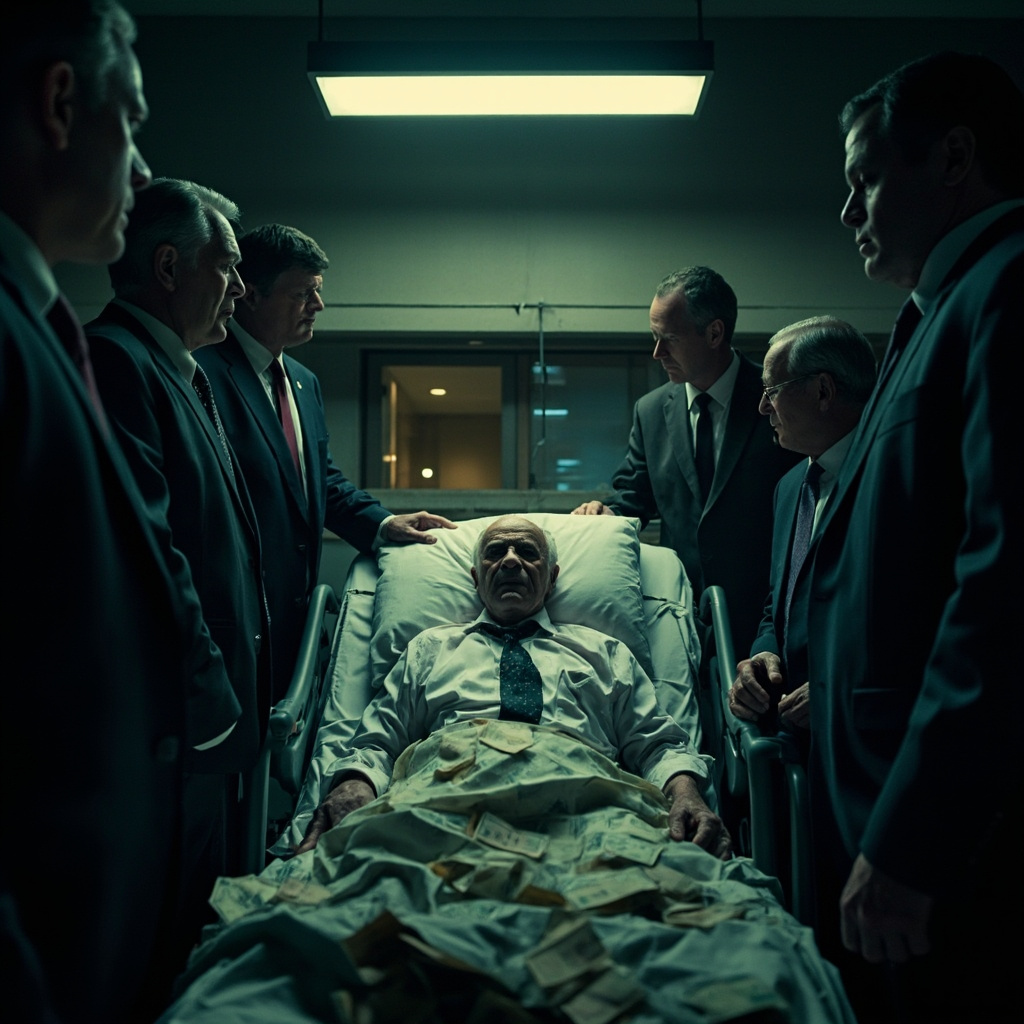
The Contract That Changed
The contract was twelve pages long and written in language that ordinary people could not understand. Victor had signed it without reading it—a decision he would regret for the rest of his life, or at least for the next three years, which was how long it took for the consequences of that decision to fully manifest. He had been twenty-eight years old, ambitious, impatient, and convinced that the opportunity in front of him was too good to be questioned. The opportunity was a job at one of the most prestigious law firms in the country, and the contract was the price of admission.
The contract contained a clause—a clause that Victor’s lawyer, had he bothered to consult one, would have flagged as unusual. The clause stated that any intellectual property created by Victor during his employment, in any context, for any purpose, would be the sole property of the firm. Not just intellectual property created during work hours. Not just intellectual property related to his job. Any intellectual property, created at any time, in any location, for any reason.
Victor had been an inventor since childhood. He had patents pending on three separate technologies when he signed the contract. He had ideas, dozens of them, brewing in the back of his mind, waiting for the right moment to be developed. He did not know, when he signed, that the moment would arrive eighteen months into his employment, when a late-night coding session produced an algorithm that would eventually be worth billions.
The algorithm was not supposed to be valuable. Victor had written it at two in the morning, in his apartment, on his personal computer, during a weekend when he should have been resting but could not sleep because his mind was occupied with a problem he had been thinking about for years. The problem was a optimization challenge—how to allocate resources in a complex system with multiple competing variables—and Victor’s solution was elegant, efficient, and unlike anything that had been published in the academic literature.
He had not intended to tell anyone at the firm about it. He had intended to file a patent application on his own time, using his own resources, and to either license the technology or start a company to commercialize it. He had not counted on the contract clause. He had not counted on the firm having lawyers who read their employees’ emails and monitored their personal devices through network logs that they had the legal right to access because their name was on the router.
The meeting with the firm’s managing partner happened on a Tuesday. The partner was a woman named Elizabeth, who had been with the firm for thirty years and who had the particular combination of intelligence and ruthlessness that characterized the most successful people in the legal profession. She was not unkind—ruthlessness and unkindness were different qualities, and Elizabeth had always made a point of distinguishing between them. But she was direct, and she did not waste time on pleasantries.
“We’ve identified an algorithm in your personal repository,” Elizabeth said. “According to your contract, it belongs to the firm. We’re going to file a patent application, and we’re going to list you as the inventor, and you’re going to sign the documentation that transfers all rights to the firm. In exchange, we’re prepared to offer you a bonus that reflects a small percentage of the patent’s eventual value.”
Victor consulted a lawyer—the same lawyer he should have consulted before signing the original contract. The lawyer told him that the contract clause was enforceable, that the firm had been careful to ensure its legality, that Victor’s chances of winning a legal challenge were approximately five percent. Victor thanked him and paid the consultation fee and went home and sat in his apartment and thought about what to do.
The option he chose was not the smart option, or the safe option, or the option that his lawyer would have recommended. The option he chose was to fight. Not through the legal system—the legal system had been designed by people who wrote contracts like the one he had signed, and it was not going to protect him. But through the court of public opinion, which had its own rules and its own justice and its own power to destroy reputations that the legal system could not touch.
Victor wrote an article. He did not name the firm—he was not stupid, and he understood the defamation risks. But he described, in general terms, the situation that he and countless other employees had experienced: the contracts that took everything, the clauses that were buried in legal language that no one read, the companies that claimed ownership over ideas generated on personal time. The article was published in a technology journal that had a reputation for investigating exactly these kinds of practices.
The article went viral. Within a week, it had been read by millions of people. Within a month, three class-action lawsuits had been filed against the firm, all of them citing Victor’s article as the catalyst for employees who had been afraid to come forward. The firm settled all three lawsuits for amounts that were not disclosed but that were widely reported to be substantial. Victor received nothing from the settlements—he had not been part of the lawsuits, had not been named as a plaintiff, had not sought damages—but he received something else: the satisfaction of watching the institution that had tried to take everything from him scramble to protect itself.
Victor left the firm eighteen months after the article was published. He had been pushed out—the firm had found pretexts, documented performance issues, built a case for termination that was technically legal and completely retaliatory. He was not surprised. He had known, when he wrote the article, that there would be consequences.
He started his own company three months later. The algorithm, the one that had started everything, was still his—the firm’s lawyers had determined that the contract clause did not apply because Victor had not used any firm resources in developing it, a determination that was either a genuine legal interpretation or a convenient way to make the problem disappear. Either way, Victor owned the algorithm, and he built his company around it.
The company was successful. Not trillion-dollar successful, not unicorn successful, but successful in the way that mattered: profitable, sustainable, providing value to customers who paid for it and recommending it to other customers who paid for it too. Victor was not a billionaire. He was not even a millionaire, not in the way that the term was used in Silicon Valley. But he was independent, and he was building something that belonged to him, and he did not have to sign contracts that gave away everything he might ever create.
That, in the end, was worth more than the billions the firm had tried to steal from him. Not the money—the money was not the point, never had been the point. The point was that he had fought back, and he had won, not through the legal system that had been designed to crush him but through the court of public opinion that operated by different rules. And in doing so, he had helped other people who had been in his position, and he had forced an institution that thought it was untouchable to reckon with the fact that its power was not absolute.
Some fights are not about winning. They are about refusing to lose. Victor had refused. And that was enough.