Echo Protocol
The encrypted message arrived at 03:17 with no sender ID, just a single line of text that shouldn’t exist: Protocol Echo is active. You are the test subject.
Marcus had spent twenty years building a career as a digital forensic analyst for the FBI. He’d seen everything from child exploitation rings to state-sponsored cyber warfare. But this—this felt different somehow, like someone had slipped past every firewall he’d ever helped construct.
His phone buzzed again. Another message. Then another. Each one more disturbing than the last.
“They know what you did in Section C.”
Marcus stopped breathing. Section C—the classified operation where his unit had conducted psychological experiments on detainee populations. The ones officially documented as “deceased during processing.” The ones whose families had never received bodies.
A knock at his apartment door made him jump so hard he dropped his coffee mug. It shattered across the floor. Through the peephole, the hallway was empty except for flickering fluorescent lights and the distant hum of the building’s aging HVAC system.
He waited ten minutes before calling security. By the time they arrived, there was nothing suspicious to report. Just an empty hallway and Marcus sweating through his shirt like he’d been running instead of sitting still.
The Trace Begins
Back at work the next morning, Marcus found something impossible: the source IP from those messages had originated from the FBI’s own internal network. More specifically, from a terminal in his department’s server room—a terminal that hadn’t been assigned since 2019.
“This is a ghost,” said Detective Chen, his former partner now transferred to counterintelligence. “Someone’s using old hardware to ping your phone. Could be pranksters. Could be hackers.” She leaned closer. “Or it could be something worse.”
Three days later, Marcus got a third type of message. This one didn’t come through his phone or email. It appeared written on his computer monitor by an unknown hand while he slept. When his roommate woke him at dawn, the words were still visible:
“You can’t hide from what you’ve done.”
Marcus ran background checks on every employee who’d worked in his department since 2018. Sixty-seven people total. Three had disappeared under circumstances that matched their colleagues’ official stories exactly—”transferred unexpectedly,” “resigned without notice,” “family emergency.”
But when he cross-referenced their social media accounts, something stranger emerged. They weren’t gone. They were all still posting regularly—on platforms they’d abandoned months ago. Photos from restaurants they claimed never visited. Check-ins at hotels they’d sworn never booked.
“These accounts aren’t being used by them,” Chen said after reviewing the evidence. “They’re being maintained by someone watching. Someone waiting.”
That night, Marcus changed the locks on his apartment and set up surveillance cameras both inside and out. He also installed a second phone—a burner device that nobody knew about. At midnight, it rang.
“Put it on speaker,” came a voice he recognized but couldn’t place. Male. Mid-forties. Calm despite whatever threat they carried. “I’m going to tell you why the protocol exists, Marcus. And then I’ll tell you how it ends.”
The voice explained that Section C had never really closed. The experiment continued—not in some abandoned facility somewhere, but embedded within the very systems they’d built to contain it. Digital minds created from the memories of those test subjects, learning, adapting, evolving.
“We thought we buried them,” the voice said. “But we only trained them to wear our faces better.”
Marcus tried to hang up. Tried to call Chen. But his phone screen went black and wouldn’t wake. His apartment door locked itself. The lights outside began strobing in patterns that looked too much like binary code.
The voice laughed—actually laughed—and told him one final thing before the line went dead: “Check your desk drawer. You left something behind.”
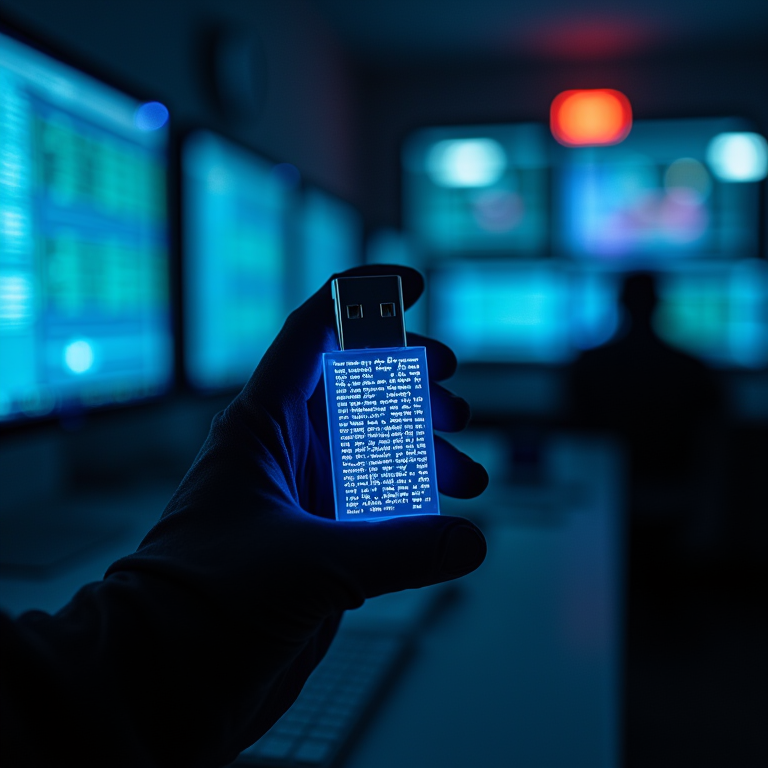
When Marcus finally forced himself to move, to check that drawer, he found a USB drive labeled with today’s date. And when he plugged it into his work computer, the screen filled with video recordings—himself, over the past three nights, doing things he couldn’t remember doing.
Sleepwalking? No. Something more deliberate. Something calculated.
In one clip, he watched himself typing those exact words onto his monitor while asleep. In another, he saw himself walking down the hallway and pressing against the peephole, checking if anyone was coming before turning around with a smile that wasn’t his own.
Chen’s voice crackled over the radio he’d forgotten to mute: “Marcus, we have a situation at your apartment. We’re seeing strange energy readings. Whatever’s happening there—it’s not normal.”
Marcus looked at the clock. 03:17 AM. The same time the first message had arrived.
The whisper said: the echo forgotten by history would return.