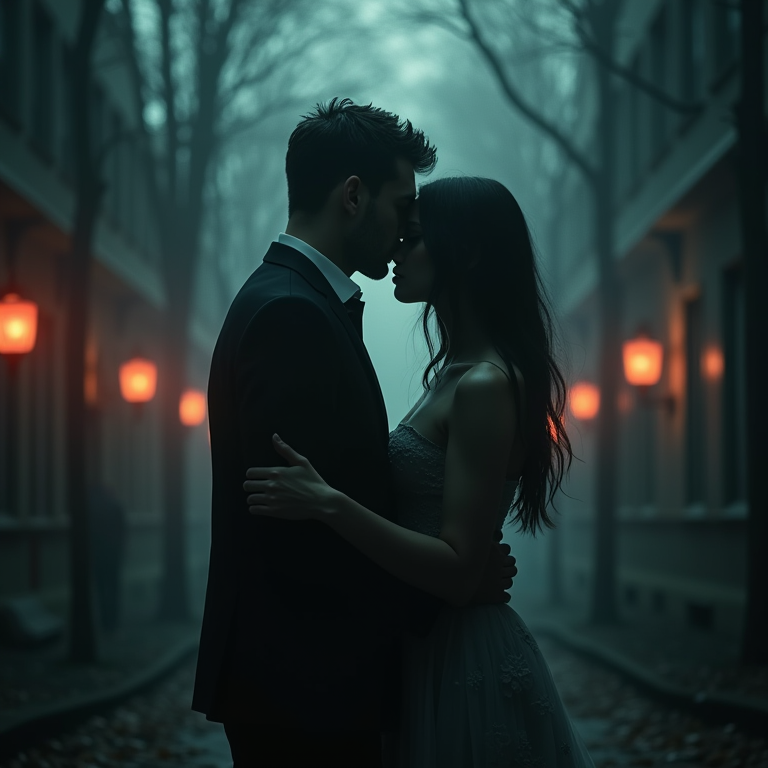
The Promise She Broke
The poisoner and the princess had been friends since childhood, bound by the secret of the queen’s slow death and the alliance of two lonely children who saw too much. She mixed the compounds that eased her mother’s suffering without knowing she was easing her out of the world; he held the princess’s hand through fevers and nightmares and never once mentioned the arsenic in the tea. By the time they understood what they had done and what they had become, it was far too late to go back, and they faced each other across a dying throne room with the full knowledge that they had murdered a queen together and that the love growing between them was the most toxic thing they had ever made.
She was a translator working in the language of the recently dead — decrypting the final messages of the executed, the erased, the disappeared — and the man who brought her his lover’s last letter was the most dangerous client she had ever taken. The letter was written in a code she recognized because she had invented it herself in another life, in a country that no longer existed under that name, and the dead woman’s handwriting matched her own with an accuracy that could not be coincidence. She was being asked to translate her own death sentence, written in her own hand, and she was going to do it, because some doors, once opened, cannot be closed by anything less than the truth.
The clockmaker’s daughter was born with a second heartbeat, and doctors could not explain why the ticking in her chest matched the rhythm of the great astronomical clock in the town square. When the inventor arrived to study her alongside the mechanism, she fell into his observations with a desperation that felt mechanical in its precision, and he studied her with an intensity that felt human in its inability to let go. He was building a machine that could predict the moment of death for any given soul, and she was his most fascinating data point, because her clock was still running and neither of them could agree on whether that was hope or horror. They fell in love in the space between one tick and the next, and they had less time than they thought.
She was a grief counselor who specialized in the mourning of the guilty — widows of monsters, children of criminals, the survivors who could not grieve in public because the world demanded they feel only relief — and the man who walked into her office carrying the weight of a massacre he had ordered in a war no one remembered was the first client who ever made her feel like crying. She listened to him confess to atrocities she could not verify and sins she was not certain were real, and she gave him permission to grieve for the lives he had taken, and somewhere in the space between her professional compassion and his theatrical remorse, something terrible and tender was born that neither of them had the right to name.
The archivist had spent thirty years cataloging the histories of cursed objects, and she had never once believed a word of it until the day she opened a box that had arrived without a return address and found a music box that played the exact melody she had been humming in her sleep for forty years. The music box had been owned by a woman who had died in circumstances that matched her own birth date, and inside the lid was a photograph of a face that was unmistakably hers. She was not a believer in ghosts, reincarnation, or any of the supernatural explanations that had filled her professional life, but the music box played on, and the woman in the photograph smiled at her across a century of silence, and she began to understand that some histories are personal, and some personal histories refuse to stay in the past.
He was a photographer specializing in the final portraits of the condemned, and he had been present at forty-seven executions before he met the woman who would make him question everything he believed about mercy, justice, and the terrible intimacy of watching someone die. She was a journalist who had come to document the end of an era, and she refused to look away even when the looking cost her something she could not name. He photographed her photographing the dying, and somewhere in that recursive mirror of witness and witness, they fell into a darkness that neither could describe without the other present, and when the state finally abolished the practice he had photographed, he realized that the thing he mourned most was not the death of his profession but the death of the woman who had taught him to see it.