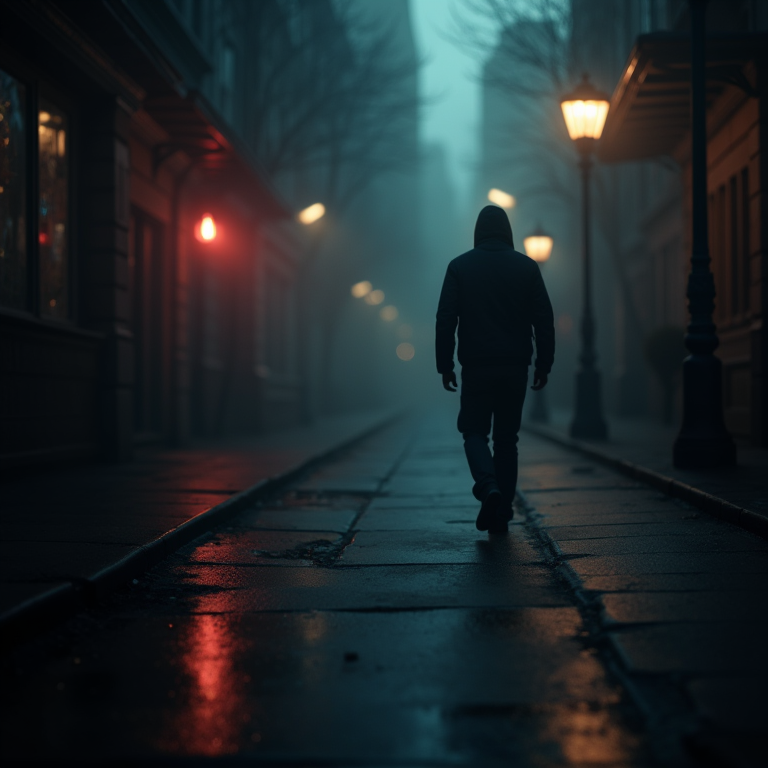
The Truth They Buried
The body was found at the bottom of the stairwell in the East Wing of the Hartwell Building, which had housed the university’s archaeology department since 1923 and had been scheduled for demolition in three months. Dr. Sarah Chen, forty-four years old and full of plans for what she would do with her retirement, had fallen seventeen steps and broken her neck in a way that the campus police would later describe as “consistent with loss of balance.” The stairwell was narrow, poorly lit, and had been the subject of twelve maintenance requests over the past two years, none of which had been fulfilled.
It was the second suspicious death in the department that semester. The first had been Marcus Webb, a doctoral candidate who’d been working on the contents of a sealed chamber discovered beneath the ruins of a third-century monastery in central Turkey. Marcus had died in his apartment from what appeared to be a heart attack, except that he was twenty-nine years old and had no history of cardiac problems. The medical examiner had ruled it natural causes, but the detective assigned to review the case had been unsatisfied and had quietly written a note suggesting the death might warrant “further consideration.”
That detective was now standing in Sarah Chen’s office, looking at the wall of photographs behind her desk—images of excavations spanning three decades, the faces of colleagues and students and ancient stones that had outlasted every civilization that had ever tried to claim them. His name was Robert Vasquez, and he had been with the campus police for eleven years, long enough to know that universities were ecosystems unto themselves, with their own hierarchies and grudges and secrets that ran deeper than any pothole on the campus roads.
“Dr. Chen,” he said, “I understand you were the last person to see Dr. Webb alive. Is that correct?”
“That’s not correct,” Sarah replied. She was a small woman with sharp features and gray-streaked hair pulled back in a ponytail that made her look younger than she was. “I was the last person to see him at the university. We had a meeting at four o’clock on the day he died. But after that, I went home. My husband can confirm I was home by six.”
“And the meeting. What was its purpose?”
Sarah was quiet for a moment. She looked at the photographs on the wall, at the face of Marcus Webb in a picture from two years ago, smiling at a dig site in Jordan. “Marcus had found something. In the chamber. Something that he believed changed our understanding of the period. He’d been acting strangely for weeks—paranoid, secretive. He wanted my advice on how to proceed.”
“Advice on what?”
“He wanted to know if he should go public. The discovery was significant enough that he was worried about being scooped, about someone else taking credit. But he was also worried about the implications. What he’d found suggested that certain texts from the period were not merely historical documents but something else entirely. Something that might have value to people who wouldn’t necessarily want that value publicized.”
Vasquez took notes. His handwriting was careful, precise, the kind of penmanship that came from years of practice. “What did Dr. Webb show you?”
“A tablet. A small clay tablet with writing on it. The writing was in a dialect we don’t have good records for, but Marcus had managed to translate portions of it. It described a group—a society, maybe, or a secret—that had existed during the late Roman period. They called themselves the Custodians. And they were protecting something. Something they referred to only as the Threshold.”
“Threshold to what?”
Sarah shook her head. “Marcus wasn’t sure. The tablet was damaged in places, and his translation was incomplete. But he believed the Threshold was some kind of portal or gateway. A way to access a place that existed outside of normal space and time. He thought it might be connected to stories about places like the Hall of the Seven Gates or the Chambers of Yesod—mythological locations that appear in texts from the period but that historians have always dismissed as symbolic.”
Vasquez looked at his notes again. “Dr. Chen, I’m going to be direct with you. In the past three months, two people in this department have died under circumstances that I find difficult to accept as coincidental. One of them had made what you’ve described as a significant discovery. You are now the last person who knew what he found, what he planned to do with it, and what he told you about the Threshold. Do you understand what I’m saying?”
Sarah was quiet for a long time. When she spoke, her voice was steady but smaller than before. “I understand that you’re suggesting I’m in danger.”
“I’m suggesting that whoever killed Marcus Webb might believe you know something that could put you at risk. I’m suggesting that you should be very careful about who you trust and what you do for the next few weeks.”
“And I’m suggesting,” said a voice from the doorway, “that the detective is asking the wrong questions.”
They both turned. A man was standing in the doorway—tall, lean, with the kind of tan that suggested time spent in places with strong sunlight. He was perhaps fifty, with deep lines around his eyes and a scar that ran from his left temple to his jaw. He wore clothes that were too expensive for a university setting, and he carried himself with the kind of ease that came from knowing exactly how much power he had.
“Dr. Chen,” he said, “my name is James Morrow. I represent an organization that has been monitoring certain archaeological developments for quite some time. Your colleague’s discovery was of interest to us. I understand you’ve seen the tablet he found. I’d like to discuss what you learned from it.”
Vasquez stepped forward. “And you are? I’m going to need some identification.”
Morrow smiled. It was not a reassuring expression. “Detective, your jurisdiction ends at the university gates. What I’m about to discuss involves matters that are well outside your authority. I’m here to speak with Dr. Chen, not to provide credentials to a campus policeman.”
“Then I’m here to make sure you don’t intimidate a witness,” Vasquez replied. “Dr. Chen, do you want this man in your office? Because I can escort him out.”
Sarah looked at Morrow. She looked at Vasquez. She thought about Marcus Webb, who had been so certain that what he’d found would change everything, who had died three days later with that certainty still burning in his chest. She thought about the Threshold, about the Custodians, about the possibility that the stories she’d spent her life studying might be something more than metaphors.
“Detective,” she said quietly, “I think you should leave.”
Vasquez stared at her. “Dr. Chen, I strongly advise—”
“Please. Let me handle this.”
The detective stood for a long moment, then nodded once and walked past Morrow without a word. The door closed behind him.
Morrow sat down in the chair Vasquez had vacated, uninvited. “Dr. Chen, I realize this is unusual. But the situation requires unusual measures. Marcus Webb came to us six weeks ago with his findings. He was frightened. He believed that if the wrong people learned about the Threshold, it could be used for purposes that would endanger millions. He was right to be frightened. He was right to come to us. But he was also wrong about one crucial thing.”
“What?”
“He believed we were the good guys.” Morrow’s smile faded. “We are not the good guys, Dr. Chen. We are the necessary guys. There is a difference. And now that Marcus is dead, and you know what he knew, you have become necessary too. The question is whether you want to be necessary in the way that keeps you alive, or necessary in the way that keeps Marcus company.”
Sarah felt her heart racing. She thought about the stairwell in the East Wing, about the maintenance requests that had never been fulfilled, about the way the light fell through the high windows of her office on autumn afternoons. She thought about the Threshold and what it might contain. She thought about the Custodians and whether they had been protecting something or hiding something.
“What do you want from me?” she asked.
“We want you to finish Marcus’s work. To translate the rest of the tablet and tell us what the Threshold actually is. And then we want you to show us where to find it.”
“And if I refuse?”
Morrow stood and walked to the window, looking out at the campus quad where students moved between buildings like corpuscles in an artery. “Dr. Chen, you’ve spent your career studying the past. You know better than most that some doors, once opened, cannot be closed. The Threshold exists. Marcus proved that. The only question now is whether anyone will ever reach it. If you help us, the answer is yes. If you don’t…”
He didn’t finish the sentence. He didn’t need to.
Sarah looked at the photographs on her wall, at the faces of people who had devoted their lives to understanding a world that was already dead, and she made her choice.