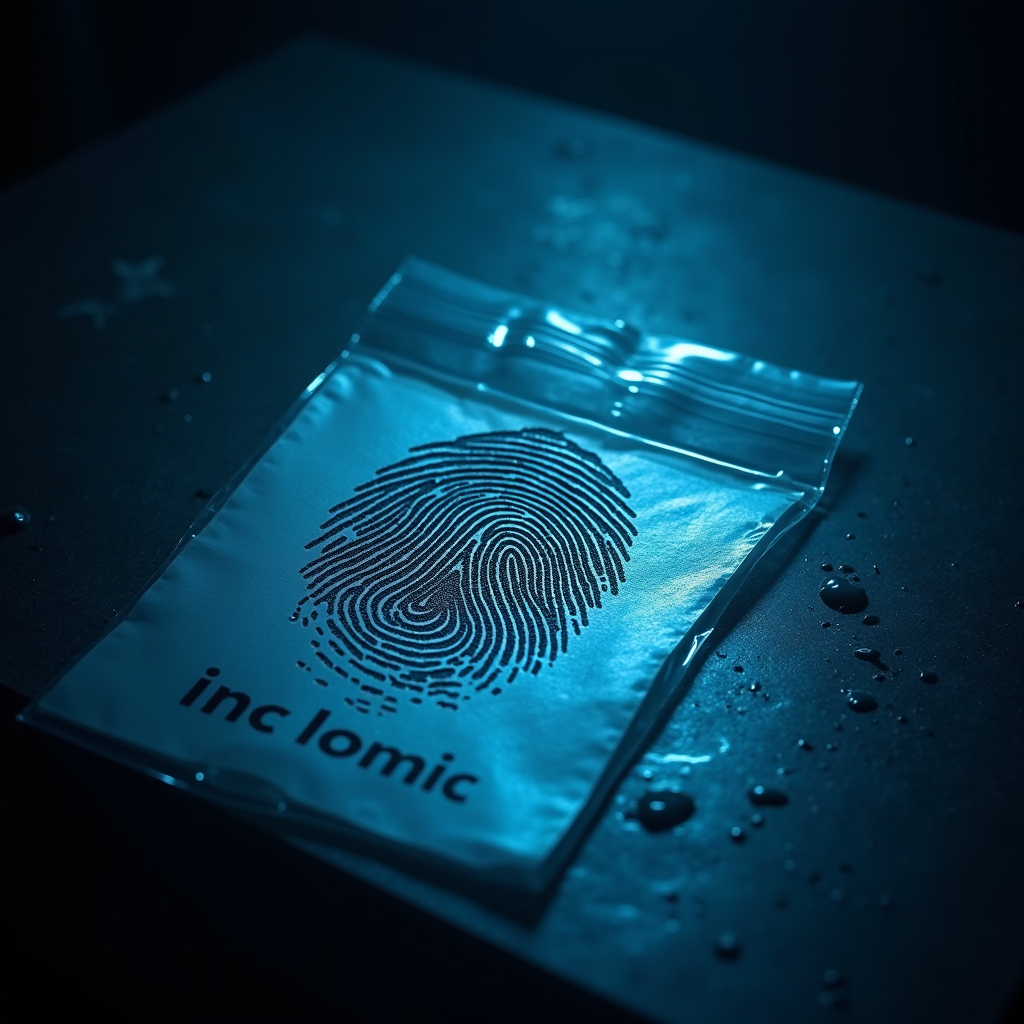
The Fingerprint That Wasn’t
The fingerprint was perfect. Not good — perfect. Seven swirls, all clearly defined, the kind of print that crime scene photographers put in cases because it was clean enough to be used as a training example. The problem was that it was on the inside of the safe deposit box at First Regional Bank on Main Street, and it belonged to a woman named Sylvia Platt, who had been dead for eleven years, and whose remains had been identified by dental records in an unidentified body found in the Columbia River gorge three months after she disappeared.
Detective Adele Chen was assigned the case because she was the only detective in the precinct who had not yet worked a cold case involving Sylvia Platt, and because her captain wanted this particular mystery off his desk before the state attorney general started asking questions about why eleven years had passed without an arrest in a disappearance that had, at the time, received significant local news coverage.
The safe deposit box had been opened by Sylvia’s daughter, Karen, who had inherited it along with the house and the car and the modest retirement account that Sylvia had left behind. Karen had been twenty-three when her mother disappeared. She was thirty-four now, and she had a two-year-old son she raised alone, and she had never stopped wondering what had happened to the forty thousand dollars in cash that Sylvia had withdrawn from her personal account three days before she vanished. The forty thousand dollars had never been found. Sylvia’s body had been found, but it had been in the water too long for useful forensic evidence, and the case had gone cold in the way that cases go cold — not because anyone stopped caring, but because no one could find anything new to look at.
The fingerprint changed this. A fingerprint was not ambiguous. A fingerprint was not a clue that could be interpreted differently by different investigators. A fingerprint was a name, or it was supposed to be, and when the name on the fingerprint came back as Sylvia Platt, the lab spent forty-eight hours confirming what seemed impossible before they sent the results to Adele with a note that said simply: Please verify.
Adele verified. She went to the morgue where Sylvia’s remains were stored — the county kept unidentified remains for seven years, and Sylvia’s had been claimed by her family after identification and reburied in the county cemetery, where they remained in an individual plot that was well-tended by Karen, who visited every Sunday. Adele exhumed the remains with a court order and had the fingerprint compared directly to the print from the safe deposit box. The prints matched. Not approximately. Not closely. Exactly. The ridge patterns were identical in every detail, which was impossible, because fingerprints change after death — they dry and crack and lose definition, and they certainly do not remain pristine for eleven years in a metal box in a climate-controlled vault.
Adele spent two weeks examining every possible explanation for what she was looking at. She interviewed the bank manager, who confirmed that the safe deposit box had been opened only twice in the past eleven years — once by Sylvia in the week before her disappearance, and once by Karen three months ago. She interviewed the vault security staff, who confirmed that there had been no breach of the vault in the relevant timeframe. She interviewed the coroner who had performed the original autopsy, who confirmed that the remains were Sylvia’s, who confirmed that he had taken fingerprints at the time of identification, and who confirmed that the fingerprints he had taken were consistent with the remains as he had found them.
Then she went back to the bank and asked to see the safe deposit box itself. She examined it with a magnifying glass under good light, and she found, on the inside wall of the box, in a location she had not thought to look during her first examination, a second fingerprint. This fingerprint was not pristine. It was smudged, partial, the kind of print that crime scene investigators might have missed because it was in a location where no one would have thought to look for it. Adele lifted it carefully and sent it to the lab.
The lab returned a match: not Sylvia Platt. A man named David Kern. David Kern had been Sylvia’s boyfriend at the time of her disappearance. He had been questioned and cleared eleven years ago because there was no evidence connecting him to her death. David Kern was now a real estate developer living in Bend, Oregon. He had a wife and two grown children and a reputation for being scrupulously honest in his business dealings. Adele drove to Bend and sat in his office and showed him the fingerprint and watched his face as he looked at it, and she saw something she had learned, over nineteen years as a detective, to recognize: the specific expression of a person who has just understood that something they believed was finished was, in fact, not finished at all.
David Kern confessed on the third hour of the interview. He had killed Sylvia — he did not dispute this, and he did not offer justifications beyond the fact that she had threatened to expose an affair he was having at the time, and he had panicked. He had disposed of her body in the gorge, as the coroner had determined. He had not known about the safe deposit box. He had not known how his fingerprint could have ended up inside it. He had not, as far as he could tell, ever been in the bank at the same time as Sylvia had accessed it.
Adele believed him. She also knew, with the certainty that came from nineteen years of looking at evidence that did not behave the way evidence was supposed to behave, that there was something about this case she would never understand. Sylvia’s fingerprint, pristine and impossible, in a box she had accessed eleven years ago. Kern’s fingerprint, smudged and explicable, in a place no one would have thought to look. Two fingerprints in the same box, belonging to a dead woman and the man who killed her, one of which told a story that made sense and one of which did not.
The DA accepted Kern’s plea. The case was closed. The fingerprint that was impossible was filed away in the evidence warehouse with a label that said unexplained, which was the department’s official designation for evidence that did not fit any theory anyone had been able to construct. Adele kept a copy of the photograph of Sylvia’s fingerprint on her desk for three months before she moved it to a drawer, where she kept it alongside the other things she had learned not to look at too directly, because some evidence was not there to prove something. Some evidence was there to remind you that proof was not the same as truth.