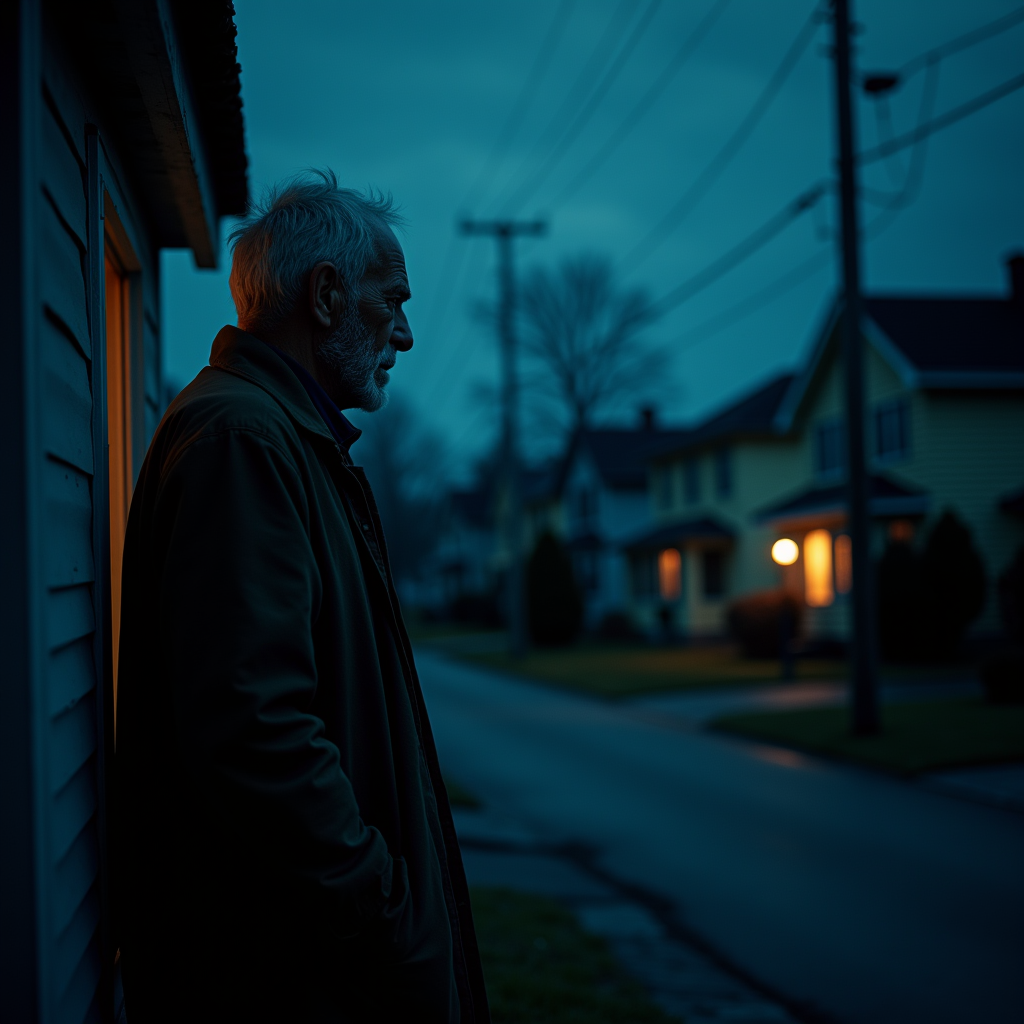
The Neighbors Who Stopped Using Their Names
Harold noticed first because he was retired and had nothing better to do than watch the street. The new family moved into number 47 on a Thursday — a man, a woman, and a girl of perhaps eight or nine. They arrived in a white van with no company name on the side, and they carried boxes inside for three hours without speaking to each other or to anyone else. Harold watched from his porch and thought they seemed fine. People were odd these days. It was not his concern.
The first strange thing was the mail. Not missing mail — worse. The mail for number 47 kept arriving at number 46, which was Harold’s house, and it was addressed not to the people at 47 but to names that Harold did not recognize and could not pronounce. He dropped the mail through their door slot without comment. He did this three times before the woman from number 47 appeared at his door with a casserole dish and an apology that was, he thought, overly formal for the circumstances.
The second strange thing was the girl. She did not go to school. She did not play in the yard. She stood at the window of the upstairs bedroom at various hours of the day and night, and she watched. Not the street. Not the other houses. She watched Harold’s house specifically, the way a person watches a clock when they are waiting for a specific time to arrive. Harold mentioned this to his wife Martha, who told him he was being uncharitable. Children were odd. It did not mean anything.
The third strange thing was the names. Harold learned this from Dorothy across the street, who had made it her business to know everyone. Dorothy said the family had been in the neighborhood for three weeks and she still did not know what to call them. They did not use names when she waved to them. They did not use names when she asked how they were settling in. They simply smiled and nodded and went back inside, and the door closed with a sound that was, Dorothy said, more final than most doors sounded when they closed.
Harold decided, after some deliberation, to introduce himself properly. He walked to number 47 on a Sunday afternoon and knocked on the door. The man answered. He was tall and thin and he had the kind of face that was difficult to look at directly, not because it was unpleasant but because it was somehow incomplete — as if the features were all correct but the arrangement was slightly off, the way a room could be furnished with expensive things and still feel empty.
Harold offered his hand and his name. The man shook the hand and held it for a moment longer than was comfortable and then released it and said: “We have not chosen names yet.” He said this in English, without an accent, and the sentence was grammatically correct in every way, and yet it contained something that made Harold’s stomach tighten. We have not chosen names yet. As if names were something you acquired, like furniture, when you decided you were ready for them.
Harold went home and did not mention the conversation to Martha. He was not sure, himself, what to make of it. But that night, standing at his bedroom window before bed, he looked across at number 47 and saw the girl in the upstairs room, and she was standing in exactly the same position he had seen her in every night for the past three weeks — facing his house, not moving, watching.
The girl’s face, in the window’s light, was pale and still and showed no expression at all, and Harold understood, without being able to articulate why, that she was not watching his house. She was watching him specifically. She had been watching him specifically since the day they arrived. And the reason she had not chosen a name yet was not because naming was something the adults in her family had not gotten around to. It was because she already had a name, a real one, the one her parents had given her before they moved to this street, and she was waiting to use it until she was sure she was talking to someone who would still be there to hear it.
Harold moved to the retirement community in Sarasota four months later. He told people he left because of the weather. He did not correct anyone who assumed this.