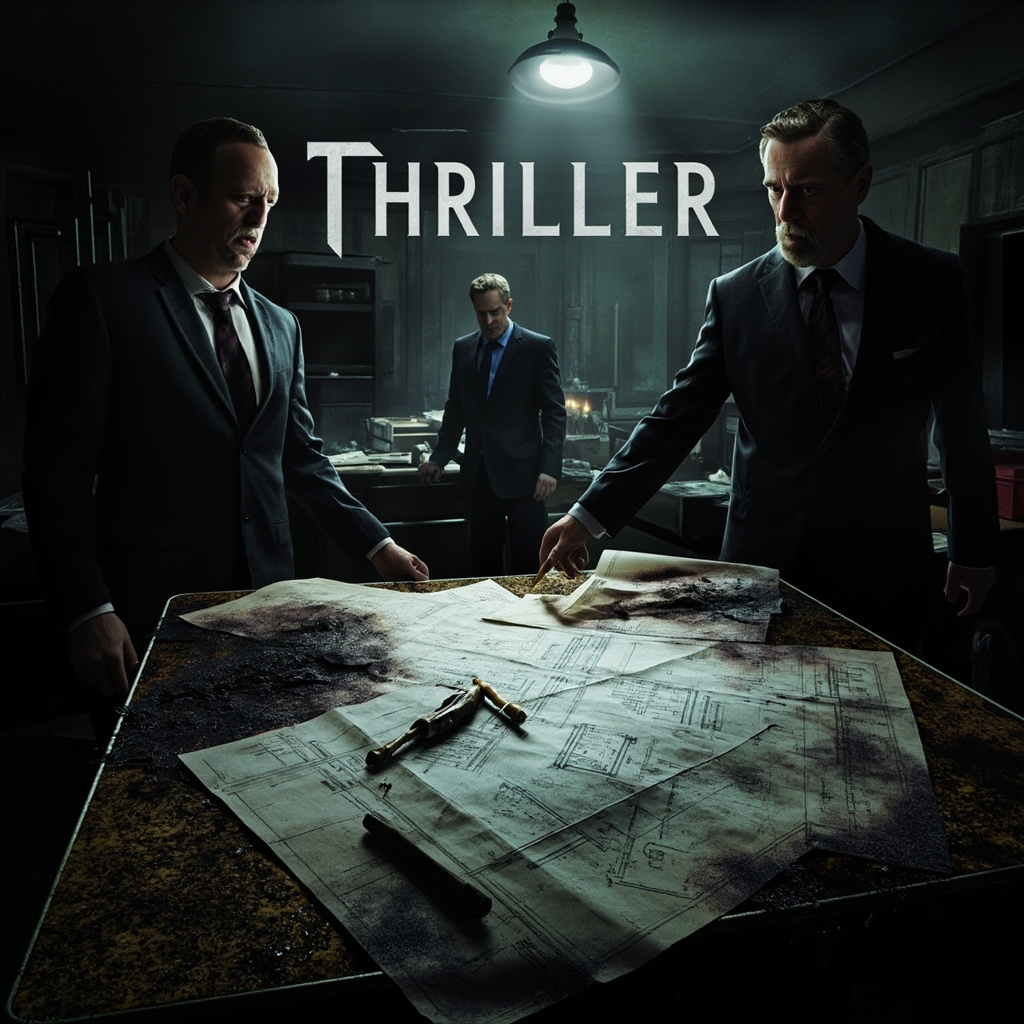
The Blueprint They Destroyed
The architectural firm of Hartley & Associates had been in business for sixty-two years. They had designed buildings that defined city skylines, bridges that won engineering awards, private residences that appeared in magazines and became the subject of coffee table books. They had survived wars and recessions and the deaths of founding partners. They had survived, in other words, everything that firms like theirs were expected to survive, and they had done it by being better than their competitors and by never, in sixty-two years of operation, allowing a project to fail.
Then the Hartley building burned down.
The fire started in the basement during the night. By the time the fire department arrived, the lower three floors were fully involved. The building had been constructed in an era when basements were used for storage and mechanical systems, not for the kind of active occupancy that might have triggered earlier detection. The sprinklers in the basement had been disabled for maintenance—a routine procedure that had been approved by the building manager and documented in the maintenance logs that no one would ever read because the logs were in the basement and the basement was ash.
The fire department brought the blaze under control in four hours. No one was injured. The building was a total loss. And in the rubble of the basement, among the ruins of sixty-two years of work, the partners of Hartley & Associates found something that changed everything they thought they knew about the fire.
The blueprints for the Hartley building had been stored in the basement vault. This was standard practice—the original drawings for a building were considered archival records, worth preserving for the life of the structure and beyond. The vault was supposed to be fireproof. The vault was supposed to protect its contents from exactly the kind of damage that fire could cause. When the partners found the vault in the rubble, they expected to find the blueprints intact. They found something else.
The blueprints were gone. Not destroyed—gone. The vault was empty. Its fireproofing had worked perfectly. The documents inside had not been burned because no fire had reached them. They had been removed before the fire started.
The investigation took three months. The insurance company conducted its own inquiry. The police conducted a criminal investigation. What they found was this: the fire had been set deliberately. An accelerant had been identified in the basement, in a location that was consistent with intentional ignition. The person who had set the fire had known exactly where to place the accelerant to maximize the damage, to ensure that the basement would be the first and most severely affected area, to guarantee that the vault and its contents would be destroyed.
But the vault’s contents had not been destroyed. They had been removed. Someone had entered the basement before the fire, had opened the vault, had taken the blueprints, and had then set the fire to destroy the evidence of the break-in. This was not the act of someone trying to destroy a building. It was the act of someone trying to steal something specific and then cover their tracks.
The partners spent months trying to understand what had been taken and why. The blueprints in the vault were for the Hartley building itself, yes—but they were also for every other project the firm had completed in the last twenty years. The vault contained the original drawings for the Riverside Tower, for the Whitfield Bridge, for a dozen other structures that had been Hartley projects. Those projects were currently under construction or in the planning stages for expansion. Their blueprints were supposed to be confidential. Their blueprints were supposed to be protected.
The question that haunted the partners was this: who would want to steal architectural blueprints? The answer, when they finally arrived at it, was both obvious and terrifying. Competitors would want to steal blueprints if they could learn from them, replicate them, use them as the basis for their own designs without incurring the cost of original development. Corporations would want to steal blueprints if they could use them to challenge Hartley & Associates in bids for new projects, knowing in advance what the firm’s designs looked like. And governments—foreign governments—would want to steal blueprints if they could use them to assess the structural vulnerabilities of buildings that their countries depended on.
The theft had not been about money. It had been about power. Someone had acquired the intellectual property of Hartley & Associates, and they had done it by burning down a building.
The proof came from an unexpected direction: a junior architect named Rachel, who had been with the firm for eighteen months and who had a reputation for being thorough in a way that her colleagues found slightly exhausting. Rachel had been reviewing the maintenance logs for the building’s security system—something that no one had thought to do until she did it—and she had found something that the insurance investigators and the police had missed.
The security system had been accessed remotely on the night of the fire. Someone with the correct credentials had logged into the system and disabled the basement sensors for a window of exactly twelve minutes. The credentials belonged to a member of the building management team—a team that was employed not by Hartley & Associates but by the building’s owner, a real estate investment firm that had been in negotiations with Hartley about the renewal of their lease.
The negotiations had been contentious. The owner wanted more rent. Hartley had refused. The owner had been threatening to not renew the lease, which would have forced the firm to relocate—a process that would have taken months and cost millions. The owner, it appeared, had found a different solution.
Rachel’s discovery was passed to the police. The building owner was investigated. The evidence was sufficient to bring charges—not for the fire itself, which could not be directly proven, but for the unauthorized access to the security system, which could. The building owner plea-bargained, paid a fine, and surrendered his professional licenses. The blueprints were never recovered.
Hartley & Associates rebuilt. They relocated to a new building, in a different part of the city, with better security and redundant storage for their most sensitive documents. They implemented new protocols for document protection. They spent two years rebuilding the project archives that the fire had destroyed, recreating from memory and secondary sources what they had lost in the vault.
The Whitfield Bridge was completed on schedule. The Riverside Tower was finished six months late. The firm’s reputation, which had been shaken by the fire, gradually recovered. They won new projects. They hired new staff. They continued to do what they had always done, which was to design buildings that outlasted the people who commissioned them.
Rachel was promoted to senior architect two years after the fire. She was given the corner office, the one with the view of the city that Hartley & Associates had helped to build. She kept the maintenance logs on her desk, even after the firm had moved, even after the protocols had been updated and the security systems had been replaced. She kept them because she believed, in the way that junior architects believe when they are still young enough to believe that thoroughness is its own reward, that documentation mattered. That records mattered. That the truth was always somewhere in the files, if you were willing to look for it.
Some fires are accidents. And some fires are arguments, made with flames instead of words, about who controls the things that matter. The fire at Hartley & Associates was the second kind. And the truth that it tried to destroy survived anyway, because some truths are stubborn enough to outlast the buildings that were built to contain them.