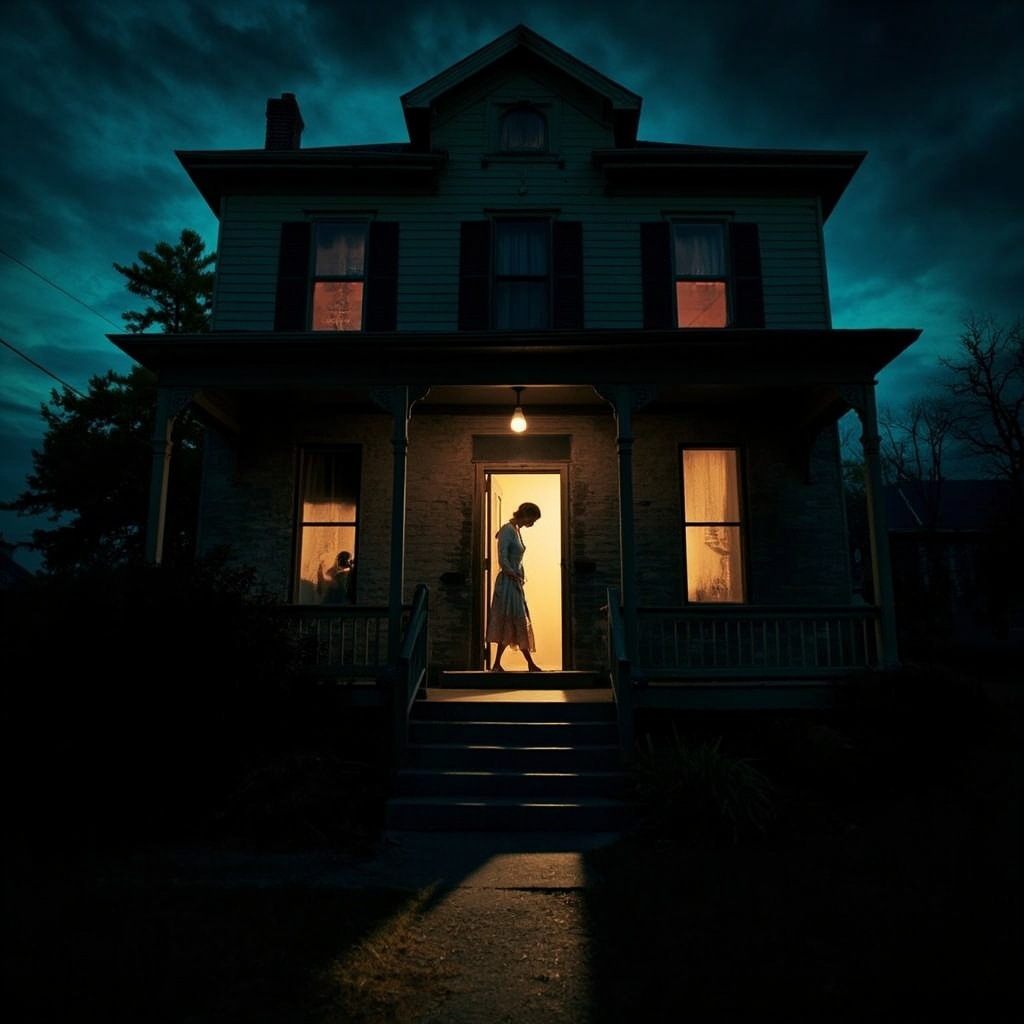
The House That Remembered Her Name
Margaret Chen returned to her childhood home on a Thursday in March, three days after her mother’s funeral. The house stood exactly as she remembered it—a Victorian on Maple Street that had been painted beige sometime in the 1980s and never touched since. The real estate agent had described it as “a fixer-upper with excellent bones.” Margaret had nodded, signed the papers, and begun the process of sorting through seventy years of accumulated life.
Her mother had died alone, which was not a surprise. Her mother had been alone for twenty years, ever since Margaret’s father had passed in his sleep and left her to navigate the world without him. She had refused to move. She had refused help. She had refused, in the way that stubborn old women refuse, everything that might have made her final years easier.
Margaret had visited when she could. She had called every Sunday at four o’clock, the same time, for fifteen years. Her mother had always answered, even when she was tired or confused or angry about something that Margaret would never understand. The phone calls had been their thread—the thin line that connected daughter to mother across three hundred miles of distance and decades of things that could not be said.
Margaret slept in her old bedroom, the room with the blue curtains that her mother had sewn when she was twelve. The mattress was different—she could feel the springs pressing into places that springs should not press—but the room itself was unchanged. Her posters were still on the walls. Her books were still on the shelf. Her name was still carved into the windowsill, letters that she had scratched there with a pair of scissors when she was eight and thought that permanence was something you could create with enough pressure.
She woke at three in the morning to the sound of footsteps in the hallway. The footsteps were slow and deliberate, the kind of footsteps that belonged to someone who was walking with purpose. Margaret lay still in the dark and listened. The footsteps stopped outside her door. They waited.
After a long moment, they continued down the hallway, toward the stairs, toward the front door, toward whatever destination they had been walking toward when Margaret’s attention had interrupted them. She did not get up to follow. She lay in the dark and told herself that the house was old, that old houses made sounds, that the wind and the settling foundations and the mice in the walls could account for anything if you were willing to look for the explanation.
She did not believe herself.
The second night, the footsteps returned. This time they stopped in front of her door and did not move. Margaret could feel them there—she could not explain this, could not point to any rational mechanism by which a person standing in a hallway could transmit their presence to someone lying in a bed on the other side of the door. But she could feel them. She could feel them the way you can feel someone watching you, even when your back is turned.
The voice that spoke was her mother’s voice.
“Margaret,” her mother said. “You came back.”
Margaret did not answer. She lay in the dark and listened to her mother say her name, again and again, in a tone that was not quite right—not quite the way her mother had actually spoken, but close enough that the wrongness made Margaret’s stomach turn.
“Margaret,” her mother said. “Don’t forget me.”
The voice stopped. The footsteps retreated down the hallway. Margaret did not sleep for the rest of the night.
In the morning, Margaret searched the house. She looked in every room, every closet, every space where a person might hide or a body might be placed. She found nothing. She found the house exactly as it had been—filled with her mother’s belongings, her mother’s smell, her mother’s presence in every object and surface and corner. Her mother had been dead for eleven days. There was no one in the house but Margaret.
She called her uncle, her mother’s brother, who lived two hours away and who had helped her mother through the last years when she could no longer manage alone.
“Your mother called out your name,” her uncle said. He was quiet for a moment before he said it. “In the last days. She called out for you. She kept saying, ‘Margaret, don’t forget me. Margaret, don’t forget.’”
Margaret sat down in the hallway of her mother’s house. She sat on the floor with her back against the wall and she pressed her palms against her eyes and she tried to breathe normally, the way you breathe when you are trying not to cry, the way you breathe when something has broken that cannot be unbroken.
“She was calling for me,” Margaret said.
“She was scared,” her uncle said. “I think she was scared of being forgotten.”
Margaret stayed in the house for three more days. She slept in her childhood bedroom and she listened to her mother’s footsteps in the hallway and she heard her mother say her name, every night, the same words, the same tone, the same presence that filled the space around Margaret’s bed like water filling a vessel.
She did not know if the experience was real. She did not know if her mother’s spirit was actually in the house, calling out to her from whatever place the dead go, or if she was simply grieving so deeply that her mind had created a loop—a recording, playing over and over, of the fear her mother had carried in her final days.
It did not matter. The fear was real, whoever was generating it. The love was real, whoever was expressing it. Her mother had died afraid of being forgotten, and Margaret had come back, and now she was here, in the house, saying her name in the dark.
“I won’t forget you,” Margaret said, to the voice in the hallway, to the empty house, to whatever had been listening all along. “I won’t.”
The footsteps came one more time. They stopped outside her door. They waited.
Then they walked away, and they did not return.
Some houses remember the people who lived in them. And some people, in the end, are remembered by the houses that held them—presences that persist in the walls and the floors and the spaces between, calling out to the ones who left, reminding them that leaving is not the same as forgetting.