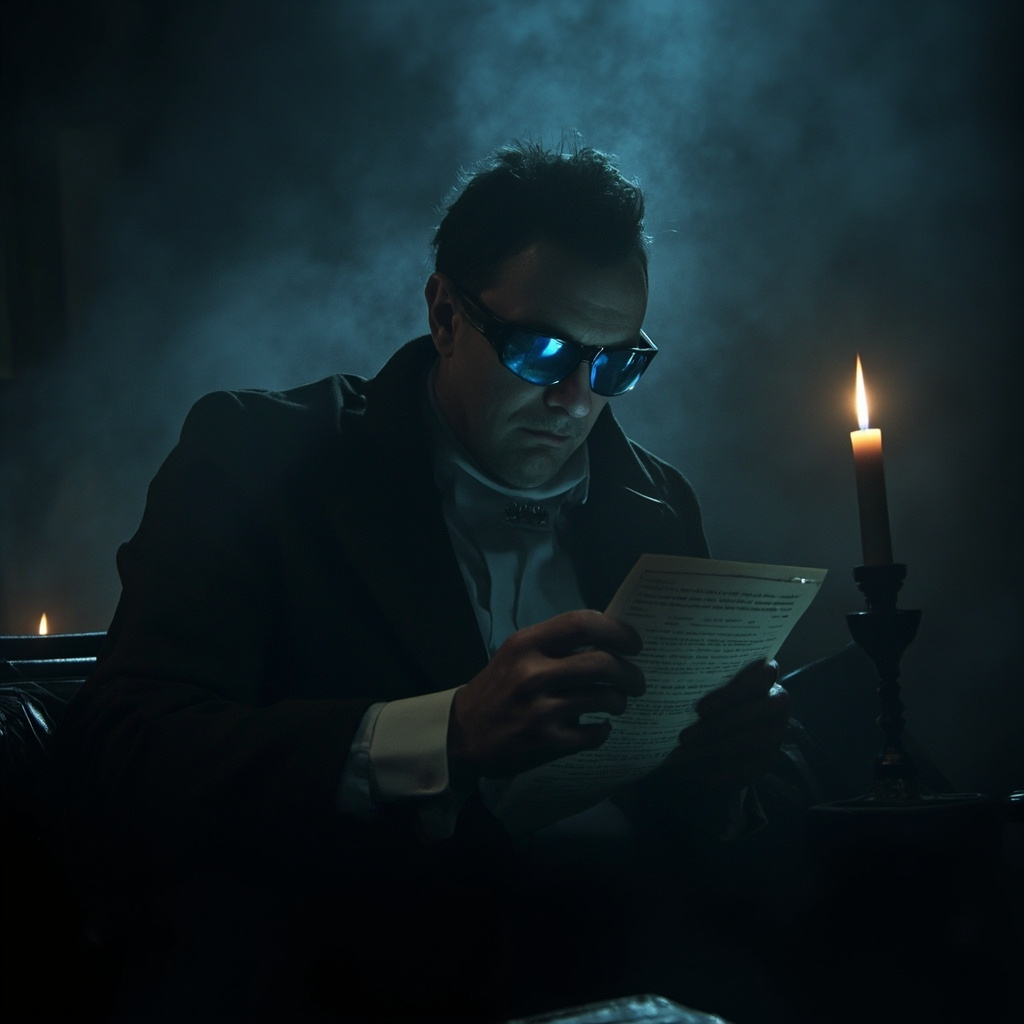
The Relative’s Request
The attorney’s correspondence arrived on a Tuesday, which seemed too mundane a day for the intelligence it conveyed. David was the sole beneficiary of his estranged relative’s estate—a man he hadn’t corresponded with in fifteen years, a man whose fortune was rumored to originate from questionable sources. The estate’s value was approximately forty million dollars. The stipulation: he had to occupy the residence for one night before claiming it.
“It’s an old tradition in our family,” the attorney explained during their phone conversation. “Very particular wishes. The heir must remain in the house unaccompanied.”
“That sounds like the opening to a horror film,” David remarked.
The attorney did not respond with laughter. “He was a man who valued tests. He wished to confirm his heir was… deserving.”
The residence was a Victorian manor at the town’s edge, three floors of shadowy timber and deeper shadows. David arrived as dusk fell, carrying merely a flashlight and his mobile device—a device that, he realized within minutes, possessed no signal.
The interior matched his expectations: furniture blanketed in dust, portraits whose gazes seemed to pursue him, a stillness so profound it felt tangible. The house had been vacant for three years, ever since his relative’s passing, yet it didn’t carry the scent of abandonment. It carried the scent of recent cooking. Of occupation.
He discovered the initial evidence in the kitchen— nourishment still set out, preserved in time, the plate coated with mold that had not extended beyond its original borders. The second discovery was more troubling: a newspaper on the entrance steps, dated three days prior.
The house was not unoccupied. David discovered her in the cellar—a woman in her sixties, emaciated, traumatized, restrained to the wall. Her name, she managed between sobs, was Helen. She had been his relative’s housekeeper. She had been imprisoned there for five years.
“He retained me because of the testament,” she explained. “He claimed someone would eventually arrive. Someone to complete what he initiated.”
“What did he initiate?”
That’s when Helen disclosed the fortune. Forty million dollars constituted merely spare change relative to his relative’s actual wealth. The genuine assets were offshore—concealed holdings, laundered across decades of meticulous criminality. And there existed a record—a journal chronicling everything.
“Your relative was a gatherer,” Helen murmured. “He gathered individuals. He gathered secrets. And when he perished, he bequeathed it all to you.”
David should have departed. He recognized this. He should have summoned authorities, liberated Helen, abandoned the house and the wealth and whatever sinister inheritance his relative had arranged. Yet curiosity—the same curiosity that had propelled him toward prosecution—compelled him to remain. To investigate.
He located the journal in his relative’s study, concealed behind a portrait of his grandfather. It was precisely what Helen had described: a comprehensive account of fifty years of criminality, money laundering, bribery, and beyond. Names of elected officials, law enforcement, magistrates. Documentation of prosecutable offenses. The variety of intelligence capable of dismantling power structures.
And at the document’s conclusion, in his relative’s script: “For my heir to determine. Obliterate it, and you inherit tranquility. Disseminate it, and you inherit turmoil. Regardless, the selection belongs to you. Decide prudently.”
Part Five: The Decision
David remained through the night. He occupied his relative’s chair, absorbing the journal, perceiving for the first occasion what manner of man his relative had truly been—and what manner of individual he was anticipated to become. The journal’s contents were toxic. They were also factual. And truth, he had perpetually held dear, outweighed tranquility.
At daybreak, he contacted his editor—the same editor he had collaborated with prior to transitioning from journalism toward legal work—and disclosed what he possessed. “This will constitute the most significant exposé of the century,” he stated. “And I will necessitate safeguarding.”
They published the journal three months subsequently. It generated precisely the turmoil his relative had foreseen. Officials resigned. Law enforcement leaders were detained. A dozen legislators fled the nation. And David became either the most admirable journalist of his era or the individual who had destabilized an entire administration—contingent on perspective.
He never claimed the forty million. Yet certain inheritances, he concluded, transcended monetary value. Certain truths demanded dissemination, even when circulation demanded everything.
Regarding the house—he conveyed it to the municipality for a single dollar. It was demolished six months subsequently, and on its former location, they constructed a community facility honoring Helen, who had ultimately been liberated and was recovering—gradually—from five years of obscurity.