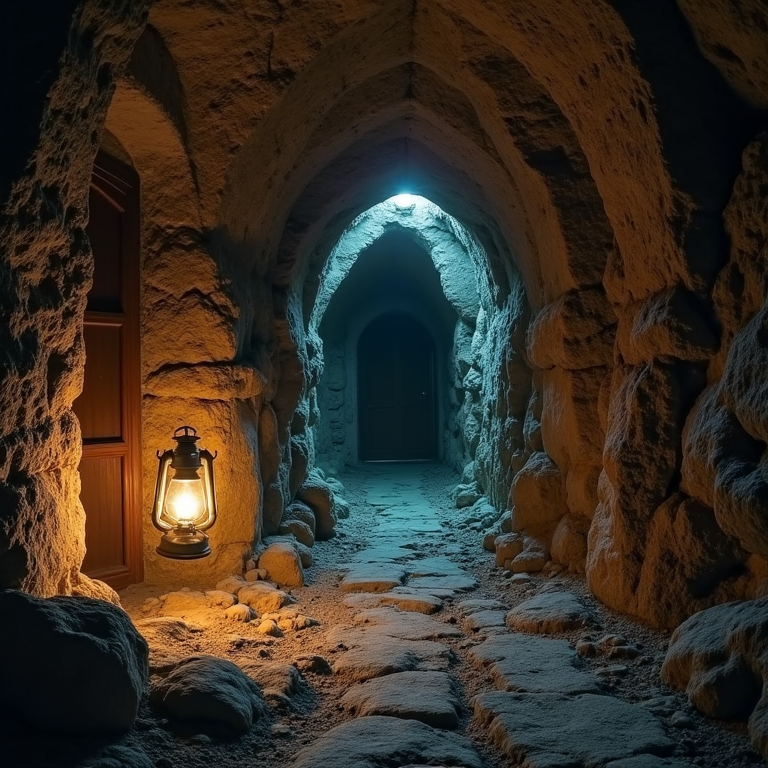
Beneath the Crypt Keeper’s Floorboards
The tour group paid fifteen dollars each to see the “haunted crypt,” but Dr. Chen knew they weren’t coming for the ghost stories.
As an archaeologist specializing in Victorian burial practices, he’d spent three years mapping the underground chamber beneath Riverside Cemetery’s oldest section. The floorboards above had been replaced dozens of times over the past century, always with new material that hid what lay beneath.
Until last Tuesday when a rotting board snapped under his boot.
Chen froze, flashlight beam cutting through decades of accumulated dust. Below, in the darkness where no living thing should have access, he saw movement—a shape shifting against stone walls that hadn’t moved since 1892.
He told himself it was rats again. Or settling foundations. Or maybe just his imagination after too many late nights reading parish records about the crypt keeper who’d vanished without explanation.
The Discovery
But the next morning he couldn’t shake the feeling that something was watching him from below. Not animal eyes—human intelligence tracking his movements across digital maps, measuring his progress like a predator stalking prey.
That afternoon he took the crew down personally. Three assistants, two shovels, one heavy-duty laser cutter, and a plan to document everything before removing the compromised floorboards entirely.
The space below was smaller than expected—only eight feet square instead of the twenty-foot chamber shown on original blueprints. Yet every surface bore marks: claw scratches, knife incisions, even fingerprints pressed into soft clay still wet enough to register modern temperature.
“Someone’s been here recently,” Chen whispered, kneeling beside a shallow depression filled with what looked like dried mud mixed with blood.
His assistant Marcus raised his head. “Maybe a maintenance worker?”
“From which century?” Chen asked quietly.
They found the first body by accident three hours later. Half-buried beneath loose stones near the far corner, wearing clothes that belonged to someone exactly their own age. A smartwatch on the wrist showed zero battery life—but the screen still displayed a timestamp from four hours ago.
The time stamp matched when Marcus had left the room to get coffee.
Chen didn’t say anything. He simply noted coordinates, photographed evidence, and instructed his team to leave immediately. No more measurements. No more documents. Just careful exit procedures and a promise never to return.
But that night, lying awake in his hotel bed, he heard scratching coming from beneath his mattress. And when he turned on the bedside lamp at 2 AM, he saw fresh footprints on his carpet—small bare feet leading from the bathroom door straight to where he slept.
The realization hit him like cold water: whatever lived in those crypts wasn’t dead anymore. It was waiting for someone smart enough to open the doors.
By morning, Chen had quit his position. Called in sick for the week. Told his wife he needed a vacation, somewhere far away from old cemeteries and buried secrets.
He packed a single bag. Left a note explaining everything except the part nobody would believe anyway—that his footsteps in the night led downward into darkness where something kept count of the living visitors and measured how close they were to becoming permanent residents.
On his way out of town, he stopped at a gas station. Bought three bottles of holy water he didn’t really think would help. Asked the clerk if there was a cemetery nearby he should avoid.
The clerk shrugged. “Plenty around here. But nothing you’d want to visit after dark.” That was all the warning anyone ever gave.
Chen drove west for six hours. Didn’t sleep in the same hotel room two nights running. Bought a new phone with cash and changed his number three times before finally convincing himself he was safe.
That’s when the letters started arriving—handwritten notes slipped under his motel door mentioning details only the person downstairs could know: the name of the girl he’d met at the office party, the exact words spoken during his mother’s funeral, the sound of his daughter laughing while playing in the yard.
Last night’s envelope contained something else entirely: a photograph showing Chen sleeping in his current hotel room, taken from a vantage point that shouldn’t exist—the ceiling.
Now he understood why the crypt keeper had disappeared. Why the original blueprints had been falsified. Someone had learned to dig not downward into dirt and stone, but downward through dimensions nobody else could access.
And if Dr. Chen thought running would save him, he’d already proven himself wrong twice.
Six months later, a tour guide reported seeing someone matching Chen’s description standing alone near the old crypt entrance. When approached, the figure simply smiled and walked backward into the ground itself.
No footprints remained behind.